

Health and Wellness Educators (HAWEs)
Mission
We as Health and Wellness Educators are students interested in promoting healthy lifestyles. Wellness for all cannot exist without social justice for all. As a result, we work together to educate the RWU community about alcohol & other drugs, safer sex, healthy relationships, nutrition, mental health and general wellness. We bring a lens that honors and respects difference and diversity, striving to always be inclusive.
We believe…
- That health is an individual choice while acknowledging health inequities
- That people can choose to make lifestyle changes
- That motivation for change comes from within an individual
Our Motto is:
"Helping Others Help Themselves"
- APPLY TO BE A HAWE HERE
- Applications available: Thursday, March 2nd, 2023
- Submission deadline: Sunday, March 26th, 2023
- First round of interviews: Week of April 3rd, 2023
- Second round of interviews: Week of April 10th, 2023
**Applications for the 2024-2025 academic year will be available in March 2024.
Benefits & Compensation
- $1,837.50 stipend per semester
- Student leadership and teamwork experience
- Event planning & community engagement
- Inter/intrapersonal skill development
- Professional development skills
Health and Wellness Educator (HAWE) Position Description
Under the supervision of the Director of Student Health Promotion & Wellness Education, HAWEs provide a range of educational activities consistent with the university’s mission. They plan and host wellness events and prevention campaigns for the student population at RWU.
5 HAWE Teams
- Mental Health Team
- Physical Health Team
- Alcohol and Other Drugs (AOD) Team
- Social & Digital Wellness Team
- Sex Education & Healthy Relationships Team
Duties & Responsibilities
- Attends fall, winter training.
- Works cooperatively with other HAWE's
- Plans and organizes campus wellness campaigns on their assigned topic
- Develops and presents workshops in residence halls and classroom presentations
- Collects and analyses national and RWU data on college student health behaviors
- Creates educational brochures, handouts, ads, publicity releases, posters and bulletin boards
- Provides wellness coaching to students
- Participates in self-evaluation and evaluation by the Director of Student Health Promotion
- Is knowledgeable of and has the ability to write CAS learning objectives for each program
- Engages in strategic planning and program evaluation
Knowledge & Skills
- Creative, energetic person with good listening skills
- Ability to work independently as well as on a team
- Good verbal and written communication skills
- Committed to self- development
- Ability to give and receive constructive feedback
- Is comfortable with public speaking and one-on-one interaction
- Is a role model of positive health behaviors
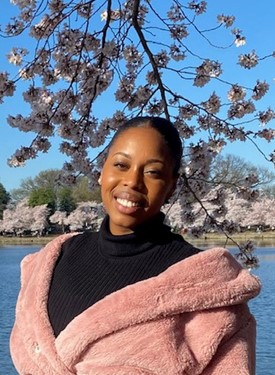 Cristelle Garnier, MBA, MPH
(she/her/hers)
Director of Student Health Promotion and Wellness Education/HAWE Supervisor
cgarnier@rwu.edu
Bianca Reyes: 
My name is Bianca Reyes (she/her/hers) and I am a senior and Psychology major with a Spanish minor. This is my first year as a HAWE and I am currently a member of the Digital and Social Wellness Team. I recently joined the HAWEs to learn more about health in a college setting. I also have the intentions of working towards making changes throughout campus, becoming an informational resource, and helping students with any wellness needs they may have.
 Dominique McMillian:
Hello! My name is Dominique McMillian; I use she/her/hers pronouns. I am a senior this year, studying Public Health, with minors in Psych and Cultural Studies. I am a third year HAWE on the Physical Health team. On campus, I am the Assistant Business Director of Hawkward, and also a member of Women of Color Club, Multicultural Student Union, and the Public Health Club! I decided to become a HAWE my freshman year and have loved watching our posters and workshops encourage students to make healthy choices that promote their overall wellness!
Jordyn Pugsley:
Hi! My name is Jordyn Pugsley (she/her/hers), graduating in 2024. I am from Wakefield, Massachusetts. I am currently a double major in Public Health and Psychology. I am a first-year HAWE on the Alcohol and Other Drugs team. On-campus, I am also a part of the Public Health Club and I am a staff assistant at Residence Life and Housing. I enjoy being active and spending time with my friends and family. I am excited to educate others on campus, while making new connections and getting involved. I want to be able to spread a positive message throughout campus in a fun and eye-catching way!!
 Sophia Gatto:
Hi! My name is Sophia Gatto and I am a junior and a 2nd year HAWE. I am a double major in Public Health and Psychology. This year, I am on the Social and Digital Wellness Team! On campus, I am also the Business Director for the school acapella group, Hawkward. I feel so grateful to be a part of a group that promotes safe practices and wellness for all. I am super excited to continue to be a HAWE and can't wait to see what we do this year!
 Meghan Harvey:
Hi! I’m Meghan Harvey (she/her/hers) and I’m from New York City (The Bronx). I am a sophomore and this is my first year as a HAWE on the Alcohol and Other Drugs (AOD) team! I major in psychology with a minor in legal studies and core concentration in education. I love to spend time with my friends and being outdoors, especially by the beach. I am so excited to connect with RWU students as a HAWE on the AOD team and spread awareness around campus! I’m super excited to have this opportunity and can’t wait to see what we do!

Lio Lynn:
Hi! My name is Lio Lynn (He/Him/His/They/Them/Theirs). I am a sophomore and a biology major. This is my first year as a HAWE. I joined HAWE because I think it is important to educate in a fun and informative way. I am excited to create fun and educational events centered around sexual wellness and healthy relationships this year as a member of the Sex Ed & Healthy Relationships Team.
 Meta Konte:
Hello! My name is Meta Konte (she/her/hers) and I am a Senior and I am a Biology major. I am a first year HAWE and a part of the Physical Health team! I decided to be a HAWE because of my interest in Healthcare and. After college, I hope to be a worker in the healthcare field with a concentration in dermatology. By being a HAWE, I hope to inform Roger students on the importance of physical health and to become more active around campus.

Tia Scotto:
Hi, I’m Tia Scotto (she/her/hers) ‘24 and I am from Leonia, New Jersey. I am currently majoring in Criminal Justice with a minor in Psychology. I am a first-year HAWE on the Mental Health team with Aaliyah and Sabrina! I became a HAWE because I want to host events on campus that promote mental health and allow students to take breaks from the stress college can bring. When I’m not with the HAWEs I am an office assistant for the Justice System Training & Research Institute, the President of John Jay Society, and a major ambassador. Some of my passions include listening to music, trying different cafes (I’m a coffee lover), and spending time with loved ones. I cannot wait to work on the HAWE team this year and help educate RWU on the 9 dimensions of wellness!
 Sabrina Stone:
Hi! My name is Sabrina Stone, I use she/her pronouns, and I am a junior majoring in biology and minoring in psychology. This is my first year on the HAWE team and I’m very excited to make a difference here on campus. As a part of the Mental Health team, I am passionate about educating others on coping with everyday stressors. Here on campus, I am the captain of the Overwatch eSports team. In my spare time, I like playing video games, drawing, boating, and exploring nature. A fun fact about me is I have a cat on campus as my ESA and his name is Zuko! I’m looking forward to this year and meeting new people to make campus safer, happier, and a more comfortable place for everyone.
Aaliyah Reynolds: 
Hi! My name is Aaliyah Reynolds (she/her/hers) and I am a Junior and first year HAWE on the Mental Health Team. I am double majoring in Public Health and Psychology. I decided to be a HAWE in hopes of improving the overall health of students and staff at Roger, while furthering my knowledge of Public Health topics and gaining hands-on experience.
Past Campaigns
How Much Did You Really Drink? Chart
Hard Liquor (40% alcohol):
1.5 oz of hard liquor = 1 drink
1 pint = 16 oz = 11 drinks
1 quart = 32 oz = 21 drinks
1 liter = 33.8 oz = 23 drinks
1 gallon = 128 oz = 85 drinks
A “5th” = 25 oz = 17 drinks
Beer (5% alcohol):
12 oz of beer = 1 drink
1 keg = 1,984 oz = 165 drinks
A “40” = 40 oz = 3 drinks
1 pint = 16 oz = 1.3 drinks
1 liter = 33.8 ox = 3 dinks
1 gallon = 128 oz = 11 drinks
Wine (12 % alcohol):
5 oz of wine = 1 drink
1 avg. bottle of wine = 25.4 oz = 5 drinks
1 liter = 33.8 oz = 7 drinks
I larger bottle of wine = 1.5 liters = 10 drinks
1 box of wine = 5 liters = 34 drinks
Studying Abroad Drinking & Drug Use
Drinking and Drug Issues for Students in the Study Abroad Program at Roger Williams University
Alcohol and drug use are the major causes of heath problems, injury and death for students in Study Abroad Programs. Students need to be aware that they are in a different culture with different laws regarding drinking and drugs. Certain circumstances are often not properly comprehended due to language and cultural differences.
Alcohol and drug use can further affect judgment of dangerous situations. When students are overseas they are subject to the laws for that country. In many countries legal procedures are very different from those in United States. U.S. citizenship does not provide immunity from local jurisdiction.
Differences in procedures often include:
- Bail not being granted when drugs are involved
- Evidence obtained illegally by local authorities may be admissible in court
- he prisoner does not have the right to be present in trial
Alcohol
The attitude toward alcohol in some countries is much different than in the United States. Europe is often thought of as being more liberal when it comes to drinking age laws. Many believe that this accounts for more responsible styles of drinking by Europeans compared to young people in the United States Although drinking in some countries is a part of the social experience excessive drinking or drunken behavior is often not acceptable. In fact, public drunkenness is illegal in most areas.
Blood alcohol content (BAC) is the amount of alcohol present in your blood. The legal BAC limit varies between countries.
Minimum Legal Ages for Alcohol Purchase and Consumption
Australia: 18
Belize: 18
England: 18
Greece: 18
Ireland: 18
Italy: 16
Mexico: 18
Portugal: 18
Prague: 18
Spain: 16
United States: 21
Legal BAC Blood Alcohol Content Comparison
Australia: .05
Belize: .08
England: .08
Greece: .05
Ireland: .08
Italy: .08
Mexico: n/a
Portugal: .05
Prague: Zero Tolerance
Spain: .05
United States: .10 or .08
Drug use while studying abroad can carry harsh consequences:
You can be stopped and searched if the police have reasonable suspicion that you are in possession of an illegal drug.
If a student is caught buying, selling, carrying or using any type of illegal substance, they could face the following consequences:
- Interrogation and delays before trial including mistreatment and solitary confinement.
- Lengthy trials conducted in a foreign language, with delays and postponements
- Two years to life in prison, often including heavy fines and hard labor.
If arrested on a drug charge, the U.S. cannot:
- Demand your immediate release from the country or from jail
- Represent you at a trial
- Pay legal fees and/or fines with U.S. government funds
Important facts regarding drug laws:
- If you are purchasing prescription medications in quantities larger than necessary, you could be arrested on suspicion of drug trafficking.
- Always keep prescription and non prescription medicines in their containers
- Drugs bought legally in one country can not be carried to another country. For example, marijuana bought in Amsterdam can not be brought to Italy.
- Tips for staying safe when studying abroad:
- Be aware of potential scams: people seeming to come from nowhere and bumping into you- this could be only to distract you while your wallet is being removed
- Be cautious when using public transportation especially when crowded. Always report an unattended package.
- Avoid deserted streets, subways, train and bus stops.
- Always try to stay where there are other people close by
- Make sure you know something about areas and neighborhoods you visit at night
- Walk in a confident and purposeful manner
- Do not expose large amounts of cash in public
- Keep your possessions in firm grasp – carry your passport with you
- Do not leave any luggage or valuables in plain view as it might be attractive to thieves
- Always let someone know when and where you are going and leave emergency contact information
Alcohol & Drug Referrals
Alcoholics Anonymous
410 North Broadway
East Providence, RI
1-800-439-8860
Addiction Medicine Associates Inc.
1-800-770-1904
Home Detoxification
Addiction Services of Focus Healthcare
1-800-234-0420
24 Hour Help line
Alcohol Abuse & Drug Help line
1-800-622-7422
Recovery (SOBER) Housing & RI Council On Alcoholism
Butler Hospital
345 Blackstone Blvd.
Providence, RI 02906
1-800-433-6888
(401)-455-6200
Offers Partial Hospital Programs, Outpatient programs, Inpatient Programs, and Detoxification.
Rhode Island Substance Abuse Coalition (RISAC)
229 Waterman St.
Providence, RI 02906
(401)-781-8831
Telephone Referral Only
Drug and Alcohol Treatment Association (DATA)
1 Richmond Square
Providence, RI 02906
(401)-521-5759
Telephone Referral Only
CODAC
93 Thames Street,
Newport RI 02840
(401) 846 4150
Drug and alcohol counseling, codependency, ACOA, DWI and other legally mandated counseling, urinalysis and breath screens
Alcohol/ Marijuana with Athletic Performances
Alcohol and Athletic Performance
- Consuming 5 or more alcoholic drinks in one night can affect brain and body activities for up to 3 days
- Two consecutive nights of drinking 5 or more drinks can affect brain and body activities for up to 5 days
Muscle Development and Recovery
- Alcohol use cancels out gains from your workout. Consuming alcohol after workout, practice, or game can cancel out any physiological gains from those activities. Alcohol use diminishes protein synthesis, which impedes muscle growth
- Alcohol causes dehydration and slows down the body’s ability to heal sore muscles and injuries
- Alcohol use prevents muscle recovery by impacting the production of human growth hormone while you sleep. Human growth hormone is a necessary part of the muscle-building and repair process. Alcohol can decrease the secretion of human growth hormone by 70%
- Alcohol use disrupts the water balance in your muscle cells, which harms their ability to produce adenosine triphosphate, which is your muscles’ source of energy
Nutrition and Endurance
- Alcohol use requires increased conditioning to maintain weight. Alcohol holds very little nutritional value; its calories are not converted to glycogen – a form of stored carbohydrates – and therefore are not a good source of energy during exercise. The body treats alcohol as fat, converting alcohol sugars into fatty acids
- Alcohol use inhibits absorption of vital nutrients such as thiamin (vitamin B1), vitamin B13, folic acid, and zinc. All of these nutrients are necessary for athletic performance; for example, thiamin plays a large role in how the body metabolizes carbohydrates
Brain and Memory
- Alcohol use affects your ability to learn new information, such as plays and strategies. Alcohol compromises the hippocampus (the part of the brain vital to the formation of memories)
- Memory formation is a complex process that requires a good night’s sleep. If you drink after a day of learning new information, you may not be able to retain as much information as you could if you did not drink
- Alcohol affects your sleep cycle for up to two nights after drinking
Marijuana and Athletic Performance
Heart, Lungs, and Performance
- Marijuana is known to increase heart rate while decreasing cardiac stroke volume, resulting in diminished peak performance
- Marijuana use can cause a condition called tachycardia – excessively rapid heartbeat; often defined as one above 100 beats per minute in an adult (also called tachyarrhythmia)
- Smoking any substance is harmful to your lungs and can reduce the effectiveness of the body’s ability to absorb the required amount of oxygen needed for optimum sports performance
- Marijuana use can result in reduced sport performance through slowed reaction time, problems with motor coordination, hand-eye coordination, and perceptual accuracy. These effects can last for 24-36 hours after smoking
- Marijuana reduces maximal exercise capacity resulting in increased fatigability
- Marijuana use can inhibit sweating and the body’s ability to regulate its temperature
Appetite and Nutrition
- Marijuana use can affect appetite and food cravings and potentially undermine body mass and nutrition
Brain and Memory
- Marijuana impairs concentration; time appears to move more slowly
- Marijuana causes short and long-term memory loss, affecting one’s ability to learn and retain new information such as plays or strategies
- Marijuana use increases the time needed to learn new information
- Marijuana can cause difficulty in thinking and problem-solving, skills necessary for thinking quickly during a game
Myth vs. Facts
There is a myth that smoking marijuana the night before a game will increase performance by relaxing the player and helping them sleep. In reality, marijuana use often causes increased anxiety, panic, nervousness, and restlessness. Marijuana use also negatively impacts sleep quality. The truth is that marijuana has no performance-enhancing potential. Skill impairment due to marijuana use may last up to 24-36 hours after usage, affecting one’s performance at the game the next day
Past Campaigns
Seasonal Affective Disorder: More Than Just the “Winter Blues”
What is “SAD?” According to the National Mental Health Association, Seasonal Affective Disorder (SAD) is a “mood disorder associated with episodes of depression related to seasonal variations of light.” During the winter, there is less sunlight available. SAD is a condition that results because there is less light. It is thought that this is caused by a shift in the body’s “biological clock.” It may also be caused by an increase of melatonin in the body.
Symptoms: Include regularly-occurring symptoms of depression (excessive eating and sleeping, weight gain) that occurs in the fall and winter; full remission of “depression” in the spring and summer; has been occurring for at least two years (with no nonseasonal depression); more seasonal episodes than nonseasonal; a craving for sugary and/or starchy foods.
Treatment: photo-therapy; one can try walking outside during the day for an hour more, or keeping window shades open in his or her room during the day.
Past Campaigns
Nutrition Information
Calculate Your Daily Caloric Needs
Activity Level
Score If You:
13: are confined to room and bed
14: do light work- most Americans
15: are active on weekends
16: do aerobic exercise three times weekly
17: are a competitive athlete- in training, working out, competing at all times
Calculate the following to find out how many calories you need daily to maintain your current weight:
Write your current weight X Multiply by your activity level score
Total = Daily calories needed to maintain your current weight.
If you want to lose weight, it is best to lose one and not more than two pounds a week. Since each pound is 3,500 calories, 500 fewer calories daily would result in a one-pound loss in one week. The best way to lose weight is to reduce your caloric intake and increase your activity level.
*To gain weight (one lb a week) increase by 500 calories a day
Smoking Information
Preparation: How to Quit Smoking
Deciding to quit smoking may be the most difficult decision smokers will ever have to make in their lives. However, it is also the healthiest one. Smokers will often say, “Don’t tell me why I should quit, tell me HOW.” There’s no right way, but there are certainly a few key elements:
- Making the decision to quit
- Setting a quit date and choosing a quit plan
- Accepting withdrawal
- Staying quit - maintenance
Picking and Preparing for Your Quit Day
Once you’ve decided to quit, you’re ready to set a date. It’s best to choose a day within the month you make your decision. Picking a date too far away allows too much time for you to change your mind. You may choose a date that has special meaning (birthday, anniversary, the Great American Smokeout, etc.) Or it could be completely random. Circle the date on your calendar. * Remember that if you are quitting with the help of a prescription, you will need to talk to your doctor about getting it in time.
On Your Quit Day…
- DO NOT SMOKE! (Not even one puff!)
- Keep active
- Stock up on oral substitutes (gum, hard candy, carrot sticks, coffee stirrers, straws, toothpicks, etc)
- Get rid of all the cigarettes and ashtrays in your home, car, and office
Dealing With and Accepting Withdrawal
Withdrawal from nicotine has 2 parts: physical and mental. The physical symptoms, while annoying, are not life-threatening. However, most smokers find that the mental aspect of quitting is more difficult. If you’ve been smoking for any length of time, smoking has become linked with almost everything you do: waking up, eating, reading, watching TV, etc. So it will take time to stop associating smoking with these activities. This is why you will have strong urges to smoke.
One way to overcome these urges is to identify rationalizations as they enter your mind. A rationalization is a mistake thought that seems to make sense to you at the time, but it is not based on reality. The following are common rationalizations of smokers:
- “I’ll just have one to get through this rough spot.”
- “Today’s not a good day. I’ll quit tomorrow.”
- “You’ve gotta die of something.”
- “How bad is it, really? Uncle Harry smoked his whole life and lived to be over 90.”
It’s helpful to write down rationalizations as you think of them and recognize that they are messages that can trick you into going back to smoking. Use these ideas to help you stay committed:
- Avoid temptation. Stay away from people and places where you are tempted to smoke. As you progress, you will be able to handle these situations with confidence.
- Change your habits. Switch to juice and water instead of alcohol or coffee. Take a different way to work. Talk a walk instead of a coffee break.
- Practice deep breathing. When you were smoking, you breathed deeply as you inhaled the smoke. When the urge strikes now, breathe deeply but visualize your lungs filling with clean, fresh air.
Remind yourself of your reasons for quitting and the benefits you’ll gain as an ex-smoker.
General Information
Spring Break Tips
Public Safety & Money Tips
- Plan to take emergency money for unexpected problems.
- Confirm reservations before leaving town and let someone know how and where to reach you.
- Make two copies of your passport, airline tickets, driver’s license and credit cards. Leave a copy with a friend and bring a copy with you in case the originals get misplaced or stolen.
- Call your credit card company to let them know you will be out of town to prevent against them placing a hold for suspicious activity.
- Avoid handbags, these are easy to steal. Put your money in multiple places on you.
- When in a group stay with each other. Don’t stray.
Sun Safety Tips
- Wear sunscreen and reapply every two hours. Use SPF 15 or higher, even when it’s cloudy.
- Apply sunscreen to dry skin 15 to 30 minutes before going outdoors.
- Drink a lot of water to remain hydrated. (1/2 of your body weight in ounces)
- Wear sunglasses with UV lenses.
Drinking Safety Tips
- Alternate drinks with water.
- No more than one drink an hour, no more than five drinks in a sitting.
- Eat a meal before you go out drinking.
- Avoid drinking games, know your limit.
- Know the signs of alcohol poisoning and get help if needed.
Sex Safety Tips
- Be in control. Alcohol and other drugs affect good judgment and self-control. Sober sex is the best sex.
- Protect yourself, always wear a condom. NO condom, NO sex!
Rape Awareness Tips
- Use the buddy system. Pair up with a friend and keep tabs on each other.
- In 1 out of 3 sexual assaults, the perpetrator and victim were intoxicated
- Speak up if you are uncomfortable. Only you should make decisions about your body.
- Don’t accept drinks from strangers, don’t leave drinks unattended.
Information
Condom Instructions
- Put the condom on when the penis is erect, before there is any contact between the penis and your partner’s body. Fluid from the penis during the early stages of an erection can contain sperm and organisms that can cause STIs.
- Tear along one side of the foil being sure not to rip the condom inside. Carefully remove the condom.
- Squeeze the tip of the condom between your forefinger and thumb (to avoid air trapped inside the condom, which could cause it to break) and place the condom over the erect penis. Be sure that the roll is on the outside.
- While still squeezing the tip, use your other hand to unroll the condom gently down the full length of the penis.
- Immediately after ejaculation, while the penis is still erect, withdraw the penis holding the condom firmly in place. Remove the condom only when the penis is fully withdrawn.
- Tie the used condom in a knot to prevent spillage and also to check for leaks. Throw the condom away in the trash. Do not flush condom down the toilet.
Never use a condom more than once.
Tips: Latex, nonoxynol-9 condoms are the most effective condom type in preventing pregnancy and STIs (the only 100% effective method is abstinence). Before using a condom always check for a valid expiration date and intact air pocket (condom should feel like a little pillow). If there is no air pocket, wrapper had leak or tear and condom is not good.
Sex Needs A New Metaphor
Why Baseball is Bad for Sex
On October 30th, we saw the Boston Red Sox take home a final win against in the Cardinals in the 2013 MLB World Series. After their first Championship victory at Fenway since 1918, baseball was on my mind, as I am sure it was on the minds of many other students. Therefore, the Health and Wellness Educators on campus would like to draw some attention to your minds about baseball, and, about sex.
This year, the HAWEs have put together a campaign focusing on sexual activity and the way it is perceived on college campuses. This past summer, Al Vernacchio delivered an insightful TED talk on the power of the baseball metaphor as it pertains to sex. In his talk, Sex Needs a New Metaphor, Vernacchio offers the idea that the baseball metaphor, while it is the dominant cultural metaphor for sexual activity in America, is incredibly problematic.
In this model, stages of sexual activity are referred to as bases: first base, second base, and third base. As we grow up and experiment with sexual activity, we are taught to progress through these stages. Although definitions of each stage may vary, the main point to draw from them is that no one really has the option of staying at a base. Because, like in baseball, we must round the bases in order to ultimately score a ‘homerun.’ But this isn’t the only sex metaphor we draw from baseball. You can be a pitcher or a catcher, or if you are unable to ‘score’ you ‘strike out’ instead. If you are bisexual, you may be referred to as a “switch-hitter,” and if you are gay or lesbian, then you ‘play for the other team.’ A penis can be referred to as a ‘bat,’ and a condom is a ‘catcher’s mitt’ or a ‘glove.’ It is overwhelmingly obvious that baseball sets a metaphor for sex, and that this model is sexist, heterosexist, and goal-oriented.
Vernacchio proposes an alternative to the baseball metaphor: pizza. Who doesn’t like pizza? Let’s examine playing baseball verses eating pizza. When do you play baseball? Only during baseball season! But not everyone has the skill set to play, and if you do, you can’t decide when you play baseball. Can you imagine Pedroia telling John Farrell that he didn’t feel like playing in game 6? No. In baseball, you play when you have to which serves as an unsuccessful metaphor for sex. You should have sex when both partners want to have sex. Not because your roommate is away or because you have time between classes. This idea is conveyed in the pizza model. You have pizza when you communicate with your partner and choose to have pizza: when you are both hungry and craving pizza.
What about the expected outcome of baseball? You play to win. If this corresponds to sex, then there is a winner and a loser: two people taking competitive roles. With pizza, there is no winner. When you sit down to have pizza with someone, you decide the kind of pizza you both like. You can go half and half, or decide to try one kind of pizza one night, and another kind the next night. The question you ask each other after is: “are you satisfied?” The whole premise behind the pizza model is that you, as an individual, get to communicate with your partner about when and what you want.
The HAWEs have decided to take Vernacchio’s advice and promote this new model for sex around campus. Look for our posters, and come to our fun and interactive workshop, This is HAWE Do It: Sex, December 3rd in GHH G-01, with free pizza of course!
Who Should Be Tested for HIV?
- You think you’ve been exposed to the virus
- You are sexually active
- You or your partner received a blood transfusion between 1977 and 1985
- You are uncertain about your partner’s risk behaviors
- You are a male who has had sex with another male
- You have used street drugs by injection or shared a needle or razor blade with someone else
- You have a sexually transmitted infection (STI) or pelvic inflammatory disease (PID)
- You are a health care worker with direct contact with blood products
- You are pregnant
- You want to make sure you are not infected with HIV before getting pregnant
How is HIV Spread?
- Anal, vaginal, or oral sex without a condom. If you have another sexually transmitted disease your chances of contracting HIV during sex are much greater
- Direct blood or mucous membrane contact with an infected person’s blood
- From an infected mother to her child, during pregnancy, birth or breast feeding
- Sharing needles or equipment for drug use
STI/STD Chart
Love Safely! Testing Available at RWU Health Services
STI/STD | Symptoms | Without Treatment |
|---|---|---|
Chlamydia |
Women:
Men:
|
|
Genital Warts |
|
|
Gonorrhea |
Women:
Men:
|
|
Hepatitis B |
|
|
Herpes |
|
|
HIV/AIDS |
|
|
Syphilis | 1st stage
2nd stage
|
|
Trichomoniasis |
Women:
Men:
|
|
Social Media
Follow us on Instagram!