Real Estate (M.S.)
Overview
About the Real Estate Graduate Program
QUICK LINKS
Master of Science in Real Estate Program Facts
Format
Low Residency with Asynchronous Online
Schedule
Spring, Summer and Fall Start terms;
Asynchronous online coursework plus two, 3-Day (in-person) residencies
Credits Required
Master's Degree: 30
Certificate: 15
Time Commitment
Master's Degree: 1 year full time, 2 years part-time
Certificate: 2 semesters
Cost
2026-2027 Academic Year
$1,176 per Credit
$2,437 Additional Fee for Studio Classes
Fees
2026-2027 Academic Year
$145 per semester (online students)
Ways to Save
Apply By
Fall: March 1 (priority), June 15 (regular), August 1 (final)
Spring: November 1 (priority), December 15 (regular), January 6 (final)
Summer: March 1 (regular), April 1 (final)
Upcoming Events
Master of Science in Real Estate Degree Requirements
You will participate in two, three day long in-person residencies throughout your program. Residencies will be held during the winter intersession term in January and the summer term in May or early June.
The residence will provide you with a much needed break from your online studies and allow you to build meaningful connections with your peers and faculty. These connections will sustain you throughout your studies and bring your online experience to life.
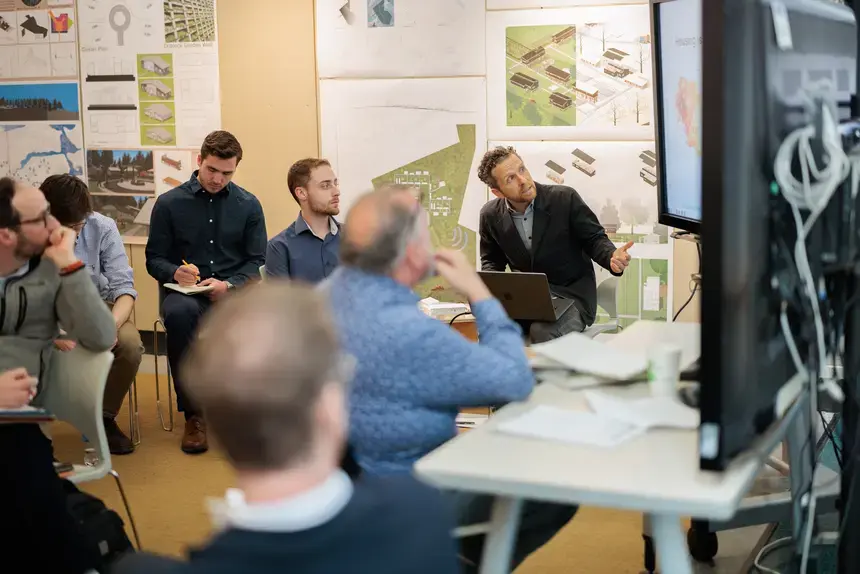
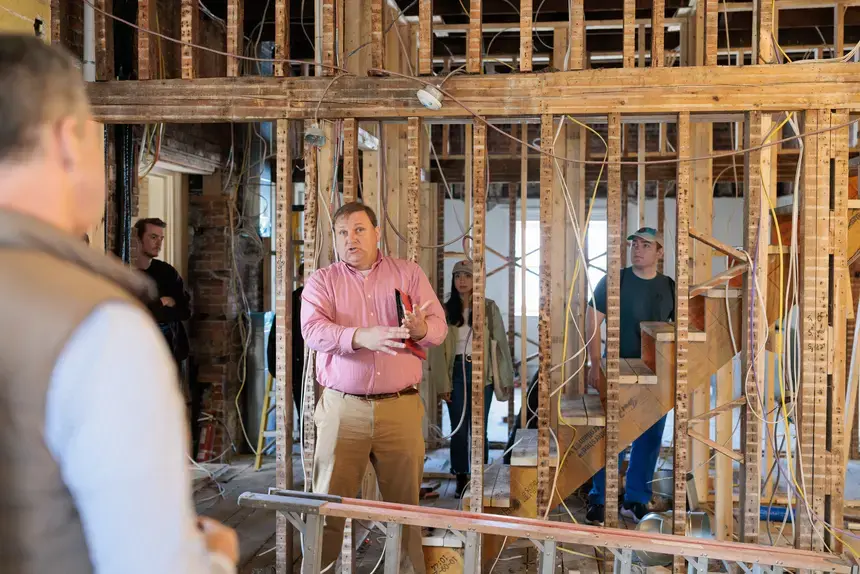
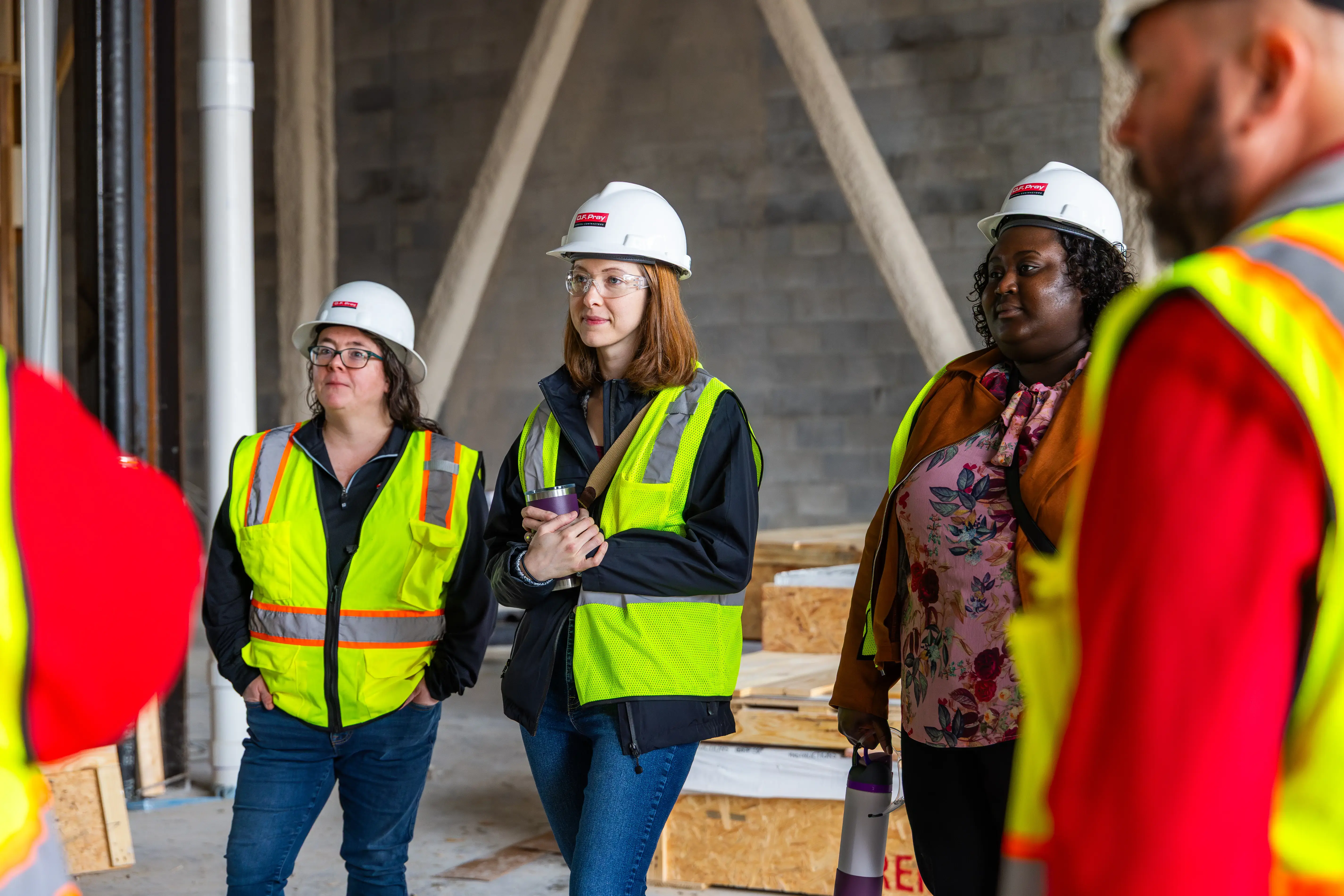
During this highly interactive and engaged learning experience you will participate in site visits, learn from guest speakers, participate in collaborative learning opportunities and attend networking events.
Benefits of the Low Residency program format
- Build Your Network
Connect with industry leaders, faculty, and peers during residencies to create valuable professional networks and foster community engagement. - Hands-On Learning
Experience immersive education with site visits, workshops, and mentorship in two top real estate markets—New York and Rhode Island. - Stay Motivated & Accountable
Benefit from structured in-person sessions that provide the motivation and accountability needed to stay focused on your academic and career goals. - Best of Both Worlds: Online and In-Person Learning
Enjoy the flexibility of online coursework, while breaking the isolation through dynamic 3-day residencies - Access Exclusive Resources
Take advantage of guest speakers, real estate site tours, and campus resources during your residencies for a comprehensive industry understanding.
Summer Residency 2025
- 3-day Rhode Island Based Residency (1.5 CH)
- Friday-Sunday in (May 30, 2025 through June 1, 2025)
- Technology and Fundamental Education Workshops during the weekend
- Networking Event
- Site visits
Winter Residency 2025
- 3-day New York City Residency (1.5CH)
- Friday-Sunday (January 16, 2026 through January 18, 2026)
- Site Visits
- Guest Speakers
Sample Curriculum Map
Full-time (1 year) Option
Student can start in any semester Spring, Summer, Fall or Winter Intersession.
Semester 1 (Summer) 7.5 Credits Hours
- 3-day Rhode Island Based Residency (1.5 CH)
- REAL 501 - Real Estate, Equity, and Environment (3CH)
- REAL 502 - Real Estate Economics, Capital Markets, and Investment (3CH)
Semester 2 (Fall) 9 Credit Hours
- REAL 544 - Real Estate Market Analysis and Decision Making (3CH)
- REAL 531 - Integrated Project Management and Technology (3CH)
- Open Elective (3CH)
Semester 3 (Winter Intersession) 4.5 Credit Hours
- 3-day New York City Residency (1.5CH)
- LAW 160 - Legal Principles in Real Estate (3CH)
- *Internship (can be fulfilled by related experience) (0 credits)
Semester 4 (Spring) 9 Credit Hours
- Elective (3CH)
- REAL 543 - Project Development and Finance (3CH)
- REAL 510 - Real Estate Case Studies and Project Proposal (3CH)
Part-Time (2 Year) Option
Our flexible schedule empowers students to begin their studies in the semester that best suits their needs.
Semester 1 (Summer) 4.5 Credit Hours
- 3-day Bristol Rhode Island Based Residency (1.5 Credit)
- Friday-Sunday (May 30, 2025 through June 1, 2025)
- Technology and Fundamental Education Workshops during the weekend
- Networking Event
- Site visits
- REAL 501 - Real Estate, Equity, and Environment (3CH)
Semester 2 (Fall) 6 Credit Hours
- REAL 544 - Real Estate Market Analysis and Decision Making (3CH)
- REAL 502 - Real Estate Economics, Capital Markets, and Investment (3CH)
Semester 3 (Spring) 6 Credit Hours
- REAL 531 - Integrated Project Management and Technology (3CH)
- Elective (3CH)
Semester 4 (Fall) 6 Credit Hours
- REAL 543 - Project Development and Finance (3CH)
- Elective (3CH)
- *Internship (can be fulfilled by related experience) (0 credits)
Semester 5 (Winter Intersession) 4.5 Credit Hours
- 3-day New York City Residency (1.5CH)
- Friday-Sunday (January 16, 2026 through January 18, 2026)
- Site Visits
- Pannel
- Interactive
- LAW 160 - Legal Principles in Real Estate (3CH)
Semester 6 (Spring) 3 Credit Hours
- REAL 510 - Real Estate Case Studies and Project Proposal (3CH)
*Internship and Engaged Learning Options
- The internship requirement will be waived for industry professionals with 6-9 months of related work experience. These students will be required to submit documentation related to their experience and present their learning to the Real Estate Club or to a REAL course.
- The internship requirement will be waived for students with 2 or more internship experiences during their undergraduate program. These students will be required to submit documentation related to their experience and present their learning to the Real Estate Club
- All other students should complete the internship either during their study in the program or in the summer after the program ends. They can still participate in the May graduation ceremony but will receive their degree after fulfilling their internship requirements.
MS in Real Estate Learning Outcomes
Outcomes may be applicable for Graduate and/or Undergraduate programs
The following student learning outcomes prepare students with the concepts and skills required to actively engage in the professional field of real estate. The learning outcomes provide students with multiple pathways to success that draw on related fields among the University’s variety of schools and programs including Architecture, Planning, Preservation, Law, Business, Engineering, Construction Management, Science, Humanities, Justice Studies, and University College. Students in the real estate program must demonstrate an understanding or ability for each learning outcome as defined below. Student work products, that demonstrate understanding or ability, are evidence that the students achieved the learning outcome.
The learning outcomes encompass two levels of accomplishment[1]:
Understanding – The capacity to classify, compare, summarize, explain, and/or interpret information.
Ability – Proficiency in using specific information to accomplish a task, correctly selecting the appropriate information, and accurately applying it to the solution of a specific problem, while also distinguishing the effects of its implementation.
REALM A: Fundamental Knowledge
Foundational knowledge in the subject matter, systems, and processes that are central to the field of real estate.
REALM B: Specialized Skills and Knowledge
Goal: Skills and knowledge for professional practice in real estate.
REALM C: Integrated Practice
Goal: Knowledge of multidisciplinary subject matter and perspectives of real estate using research skills and implementing integrated solutions in practice.
REALM D: Professional Development
Goal: Developing professional skills for real estate practice.
REALM A: Fundamental Knowledge
Foundational knowledge in the subject matter, systems, and processes that are central to the field of real estate.
A.1 Environment and Climate
A.1.1 Understanding of the environmental indicators of climate change related to the built environment and their mutual impacts.
A.1.2 Ability to evaluate environmental risk to buildings and land and develop solutions.
A.2 People and Community
A.2.1 Understanding of the economic and social factors that contribute to healthy and safe communities with vibrant economies.
A.2.2 Understanding of the various stakeholders in a development process for private and public real estate projects.
A.2.3 Understanding of the theories of community participation and engagement that can be used to create equitable planning outcomes for a real estate project.
A.2.4 Ability to distinguish the economic and social implications of real estate investment and development decisions for multiple stakeholders.
A.3 History and Theory
A.3.1 Understanding of the interdisciplinary nature of real estate and how the field contributes to broader economic, environmental, regulatory, and social systems.
A.3.2 Understanding of the development and land use patterns of communities, cities, and regions and their social, economic, and regulatory determinates.
A.3.3 Understanding of the history of government policies, programs, and institutions that have contributed to or alleviated inequitable patterns of development.
A.3.4 Understanding of regional building traditions and architectural history.
A.4 Regulatory and Legal Issues
A.4.1 Understanding of federal, state, and local policies and programs that shape decision-making in real estate development processes.
A.4.2 Understanding of the legal concepts and contract principles in buying, selling, and leasing buildings, land, and infrastructure.
A.4.3 Understanding of legal concepts of property development including zoning, entitlements, and condemnation.
A.5 Economics
A.5.1 Understanding of the role of the real estate sector in the national and global economies and how real estate impacts individual wealth and opportunity.
A.5.2 Understanding of the practical and theoretical perspectives on real estate markets and their micro- and macro-economic dynamics.
A.5.3 Understanding of market analysis techniques for evaluating residential and/or commercial real estate.
A.5.4 Ability to conduct market analysis with relevant data to measure the supply and demand for residential or commercial real estate.
REALM B: Specialized Skills and Knowledge
Goal: Skills and knowledge for professional practice in real estate.
B.1 Finance
B.1.1 Understanding of real estate investment and finance practices.
B.1.2 Understanding of property valuation techniques including comparison of market value, cost, and income approaches.
B.1.3 Understanding of the financial feasibility of a real estate project.
B.1.4 Understanding of negotiation strategies regarding the financial elements of a real estate transaction.
B.1.5 Understanding of development, finance, and operating proforma statements.
B.1.6 Ability to prepare development, finance, and operating proforma statements.
B.2 Design
B.2.1 Understanding of factors that support design decisions in projects.
B.2.2 Understanding of the processes that architects use to develop a project including schematic design, design development, construction documents, bidding and negotiation, and construction administration.
B.2.3 Understanding of sustainable and resilient building and site design principles.
B.2.4 Understanding of preservation principles and the processes of adaptive reuse in the built and natural environment.
B.2.5 Understanding of urban design principles and the role of the public realm in real estate development projects.
B.3 Construction
B.3.1 Understanding of how to plan the completion of a construction project using new technologies and emerging approaches.
B.3.2 Ability to evaluate construction documents for planning and management of the development process.
B.3.3 Understanding of construction project cost proposals.
REALM C: Integrated Practice
Goal: Knowledge of multidisciplinary subject matter and perspectives of real estate using research skills and implementing integrated solutions in practice.
C.1 Understanding of the social and political issues and contemporary challenges in the real estate development process.
C.2 Understanding of the phases a project including pre-development, construction, operations, and sale.
C.3 Ability to apply tools and techniques to manage and coordinate a real estate project.
C.4 Ability to effectively articulate idea, information, and proposals.
C.5 Ability to conduct a real estate feasibility analysis for a client based on the application of tools and techniques from economic, financial, regulatory, environmental, and community impact research and data.
REALM D: Professional Development
Goal: Developing professional skills for real estate practice.
D.1 Understanding of the multiple professional opportunities in real estate and their required qualifications.
D.2 Understanding of social equity and diversity in real estate practice.
D.3 Understanding of the ethical issues involved in professional practices.
D.4 Ability to effectively provide leadership and interpersonal communication skills in collaborative professional settings.
D.5 Ability to work with professionals engaged in real estate, as demonstrated through practical experience.
[1] Taxonomy for Learning, Teaching and Assessing: A Revision of Bloom’s Taxonomy of Educational Objectives. L.W. Anderson & D.R. Krathwold, Eds. (New York; Longman 2001).
You will participate in two, three day long in-person residencies throughout your program. Residencies will be held during the winter intersession term in January and the summer term in May or early June.
The residence will provide you with a much needed break from your online studies and allow you to build meaningful connections with your peers and faculty. These connections will sustain you throughout your studies and bring your online experience to life.
During this highly interactive and engaged learning experience you will participate in site visits, learn from guest speakers, participate in collaborative learning opportunities and attend networking events.
Benefits of the Low Residency program format
- Build Your Network
Connect with industry leaders, faculty, and peers during residencies to create valuable professional networks and foster community engagement. - Hands-On Learning
Experience immersive education with site visits, workshops, and mentorship in two top real estate markets—New York and Rhode Island. - Stay Motivated & Accountable
Benefit from structured in-person sessions that provide the motivation and accountability needed to stay focused on your academic and career goals. - Best of Both Worlds: Online and In-Person Learning
Enjoy the flexibility of online coursework, while breaking the isolation through dynamic 3-day residencies - Access Exclusive Resources
Take advantage of guest speakers, real estate site tours, and campus resources during your residencies for a comprehensive industry understanding.
Summer Residency 2025
- 3-day Rhode Island Based Residency (1.5 CH)
- Friday-Sunday in (May 30, 2025 through June 1, 2025)
- Technology and Fundamental Education Workshops during the weekend
- Networking Event
- Site visits
Winter Residency 2025
- 3-day New York City Residency (1.5CH)
- Friday-Sunday (January 16, 2026 through January 18, 2026)
- Site Visits
- Guest Speakers
Sample Curriculum Map
Full-time (1 year) Option
Student can start in any semester Spring, Summer, Fall or Winter Intersession.
Semester 1 (Summer) 7.5 Credits Hours
- 3-day Rhode Island Based Residency (1.5 CH)
- REAL 501 - Real Estate, Equity, and Environment (3CH)
- REAL 502 - Real Estate Economics, Capital Markets, and Investment (3CH)
Semester 2 (Fall) 9 Credit Hours
- REAL 544 - Real Estate Market Analysis and Decision Making (3CH)
- REAL 531 - Integrated Project Management and Technology (3CH)
- Open Elective (3CH)
Semester 3 (Winter Intersession) 4.5 Credit Hours
- 3-day New York City Residency (1.5CH)
- LAW 160 - Legal Principles in Real Estate (3CH)
- *Internship (can be fulfilled by related experience) (0 credits)
Semester 4 (Spring) 9 Credit Hours
- Elective (3CH)
- REAL 543 - Project Development and Finance (3CH)
- REAL 510 - Real Estate Case Studies and Project Proposal (3CH)
Part-Time (2 Year) Option
Our flexible schedule empowers students to begin their studies in the semester that best suits their needs.
Semester 1 (Summer) 4.5 Credit Hours
- 3-day Bristol Rhode Island Based Residency (1.5 Credit)
- Friday-Sunday (May 30, 2025 through June 1, 2025)
- Technology and Fundamental Education Workshops during the weekend
- Networking Event
- Site visits
- REAL 501 - Real Estate, Equity, and Environment (3CH)
Semester 2 (Fall) 6 Credit Hours
- REAL 544 - Real Estate Market Analysis and Decision Making (3CH)
- REAL 502 - Real Estate Economics, Capital Markets, and Investment (3CH)
Semester 3 (Spring) 6 Credit Hours
- REAL 531 - Integrated Project Management and Technology (3CH)
- Elective (3CH)
Semester 4 (Fall) 6 Credit Hours
- REAL 543 - Project Development and Finance (3CH)
- Elective (3CH)
- *Internship (can be fulfilled by related experience) (0 credits)
Semester 5 (Winter Intersession) 4.5 Credit Hours
- 3-day New York City Residency (1.5CH)
- Friday-Sunday (January 16, 2026 through January 18, 2026)
- Site Visits
- Pannel
- Interactive
- LAW 160 - Legal Principles in Real Estate (3CH)
Semester 6 (Spring) 3 Credit Hours
- REAL 510 - Real Estate Case Studies and Project Proposal (3CH)
*Internship and Engaged Learning Options
- The internship requirement will be waived for industry professionals with 6-9 months of related work experience. These students will be required to submit documentation related to their experience and present their learning to the Real Estate Club or to a REAL course.
- The internship requirement will be waived for students with 2 or more internship experiences during their undergraduate program. These students will be required to submit documentation related to their experience and present their learning to the Real Estate Club
- All other students should complete the internship either during their study in the program or in the summer after the program ends. They can still participate in the May graduation ceremony but will receive their degree after fulfilling their internship requirements.
MS in Real Estate Learning Outcomes
Outcomes may be applicable for Graduate and/or Undergraduate programs
The following student learning outcomes prepare students with the concepts and skills required to actively engage in the professional field of real estate. The learning outcomes provide students with multiple pathways to success that draw on related fields among the University’s variety of schools and programs including Architecture, Planning, Preservation, Law, Business, Engineering, Construction Management, Science, Humanities, Justice Studies, and University College. Students in the real estate program must demonstrate an understanding or ability for each learning outcome as defined below. Student work products, that demonstrate understanding or ability, are evidence that the students achieved the learning outcome.
The learning outcomes encompass two levels of accomplishment[1]:
Understanding – The capacity to classify, compare, summarize, explain, and/or interpret information.
Ability – Proficiency in using specific information to accomplish a task, correctly selecting the appropriate information, and accurately applying it to the solution of a specific problem, while also distinguishing the effects of its implementation.
REALM A: Fundamental Knowledge
Foundational knowledge in the subject matter, systems, and processes that are central to the field of real estate.
REALM B: Specialized Skills and Knowledge
Goal: Skills and knowledge for professional practice in real estate.
REALM C: Integrated Practice
Goal: Knowledge of multidisciplinary subject matter and perspectives of real estate using research skills and implementing integrated solutions in practice.
REALM D: Professional Development
Goal: Developing professional skills for real estate practice.
REALM A: Fundamental Knowledge
Foundational knowledge in the subject matter, systems, and processes that are central to the field of real estate.
A.1 Environment and Climate
A.1.1 Understanding of the environmental indicators of climate change related to the built environment and their mutual impacts.
A.1.2 Ability to evaluate environmental risk to buildings and land and develop solutions.
A.2 People and Community
A.2.1 Understanding of the economic and social factors that contribute to healthy and safe communities with vibrant economies.
A.2.2 Understanding of the various stakeholders in a development process for private and public real estate projects.
A.2.3 Understanding of the theories of community participation and engagement that can be used to create equitable planning outcomes for a real estate project.
A.2.4 Ability to distinguish the economic and social implications of real estate investment and development decisions for multiple stakeholders.
A.3 History and Theory
A.3.1 Understanding of the interdisciplinary nature of real estate and how the field contributes to broader economic, environmental, regulatory, and social systems.
A.3.2 Understanding of the development and land use patterns of communities, cities, and regions and their social, economic, and regulatory determinates.
A.3.3 Understanding of the history of government policies, programs, and institutions that have contributed to or alleviated inequitable patterns of development.
A.3.4 Understanding of regional building traditions and architectural history.
A.4 Regulatory and Legal Issues
A.4.1 Understanding of federal, state, and local policies and programs that shape decision-making in real estate development processes.
A.4.2 Understanding of the legal concepts and contract principles in buying, selling, and leasing buildings, land, and infrastructure.
A.4.3 Understanding of legal concepts of property development including zoning, entitlements, and condemnation.
A.5 Economics
A.5.1 Understanding of the role of the real estate sector in the national and global economies and how real estate impacts individual wealth and opportunity.
A.5.2 Understanding of the practical and theoretical perspectives on real estate markets and their micro- and macro-economic dynamics.
A.5.3 Understanding of market analysis techniques for evaluating residential and/or commercial real estate.
A.5.4 Ability to conduct market analysis with relevant data to measure the supply and demand for residential or commercial real estate.
REALM B: Specialized Skills and Knowledge
Goal: Skills and knowledge for professional practice in real estate.
B.1 Finance
B.1.1 Understanding of real estate investment and finance practices.
B.1.2 Understanding of property valuation techniques including comparison of market value, cost, and income approaches.
B.1.3 Understanding of the financial feasibility of a real estate project.
B.1.4 Understanding of negotiation strategies regarding the financial elements of a real estate transaction.
B.1.5 Understanding of development, finance, and operating proforma statements.
B.1.6 Ability to prepare development, finance, and operating proforma statements.
B.2 Design
B.2.1 Understanding of factors that support design decisions in projects.
B.2.2 Understanding of the processes that architects use to develop a project including schematic design, design development, construction documents, bidding and negotiation, and construction administration.
B.2.3 Understanding of sustainable and resilient building and site design principles.
B.2.4 Understanding of preservation principles and the processes of adaptive reuse in the built and natural environment.
B.2.5 Understanding of urban design principles and the role of the public realm in real estate development projects.
B.3 Construction
B.3.1 Understanding of how to plan the completion of a construction project using new technologies and emerging approaches.
B.3.2 Ability to evaluate construction documents for planning and management of the development process.
B.3.3 Understanding of construction project cost proposals.
REALM C: Integrated Practice
Goal: Knowledge of multidisciplinary subject matter and perspectives of real estate using research skills and implementing integrated solutions in practice.
C.1 Understanding of the social and political issues and contemporary challenges in the real estate development process.
C.2 Understanding of the phases a project including pre-development, construction, operations, and sale.
C.3 Ability to apply tools and techniques to manage and coordinate a real estate project.
C.4 Ability to effectively articulate idea, information, and proposals.
C.5 Ability to conduct a real estate feasibility analysis for a client based on the application of tools and techniques from economic, financial, regulatory, environmental, and community impact research and data.
REALM D: Professional Development
Goal: Developing professional skills for real estate practice.
D.1 Understanding of the multiple professional opportunities in real estate and their required qualifications.
D.2 Understanding of social equity and diversity in real estate practice.
D.3 Understanding of the ethical issues involved in professional practices.
D.4 Ability to effectively provide leadership and interpersonal communication skills in collaborative professional settings.
D.5 Ability to work with professionals engaged in real estate, as demonstrated through practical experience.
[1] Taxonomy for Learning, Teaching and Assessing: A Revision of Bloom’s Taxonomy of Educational Objectives. L.W. Anderson & D.R. Krathwold, Eds. (New York; Longman 2001).
The Real Estate Industry: A Growing Opportunity
The global real estate market was valued at $7.2 trillion in 2023 and is expected to reach $8.65 trillion by 2032 (Research and Markets, IMARC). This growing industry is driven by:
- Rapid urbanization
- Rising demand for high-quality housing and infrastructure
- Increased investments in technology and sustainable practices
In the U.S., commercial real estate alone generated $4.34 trillion in 2023 (Research and Markets).
Real Estate Industry Opportunities
With the real estate market exceeding $10.5 trillion globally and $16 trillion in the U.S., now is the time to position yourself for success. The industry is evolving, and skilled professionals are in high demand to:
- Navigate finance, investment, and sustainability
- Tackle the social implications of real estate development
- Lead with a broad understanding of real estate’s impact on society
Real Estate Education Aligned with Industry Growth
With employment in real estate management projected to grow 3% from 2022 to 2032, and urban and regional planning positions expected to grow by 4% over the same period (BLS), our programs equip you to meet these industry demands head-on.
These programs are part of the Cummings School of Architecture, which offers additional graduate programs in Architecture, Preservation Practices, and Urban and Regional Planning. The School is also home to the Cummings Institute for Real Estate.
RWU Master of Architecture and M.S. Preservation Practices students can earn the Real Estate Graduate Certificate as part of their degree with no additional cost or coursework.
Why Choose Roger Williams University?
At Roger Williams University, we prepare you to thrive in the fast-growing real estate industry. Our program prepares you for success across all sectors of the industry—including residential, commercial, industrial, retail, hospitality, and more.
Our master’s degree and graduate certificate programs offer a multidisciplinary education that will develop your expertise in:
- Project development and finance
- Design principles
- Urban and regional planning
- Historic preservation
- Project management and construction
- Regulatory affairs, law and social policies.
- Sustainability and environmental conditions
Application Requirements
Application Process
To be considered for admission to the M.S. Real Estate or Graduate Certificate programs, applicants must hold an earned Bachelor’s Degree from an accredited college or university.
Each application will be reviewed using a portfolio approach - all parts of the application will be considered, inclusive of grades and trend of grades, letters of recommendation, the letter of intent, and other information that candidates for admission may wish to submit.
Application Materials
1. Completed application form and $55 application fee
An application fee is not required for RWU students.
2. Official transcripts of all undergraduate and graduate coursework
The Office of Graduate Admission will obtain transcripts on behalf of RWU students.
3. Letter of Intent (no more than two double-spaced pages) describing your interest in the M.S. Real Estate Program or Graduate Certificate, career goals, and how you can positively contribute to the graduate program at Roger Williams University
4. Two letters of recommendation, academic or professional, attesting to your potential to succeed in graduate school
Required for applicants into M.S. Real Estate
5. Current Resume
Uploading Materials
Once an applicant has submitted the application form they will have access to a portal to upload all supplemental materials (transcript copies, letter of intent, portfolio, resume, etc.)
Alternatively, documents can be submitted via email to gradadmit@rwu.edu.
Any official documents that must be mailed (i.e. transcripts) should be sent directly to:
Office of Graduate Admission
1 Old Ferry Rd.
Bristol, RI 02809
International Applicants
International applicants are required to submit an external transcript evaluation. If your first language is not English, an official report of TOEFL or IELTS results is also required to apply to graduate programs.
This program is visa eligible.
International applicants should read additional requirements for non-U.S. residents using the link below.
Upcoming Events
The Office of Graduate Admission hosts Open Houses and Virtual Information Sessions throughout the year.
View our upcoming events for the most current opportunities to hear about the graduate programs in Real Estate.
Real Estate Symposium
RWU holds an annual Real Estate Symposium to showcase and address the complexity and interconnected challenges facing the real estate industry.