
Community Engagement For Faculty
The Faculty Guide to Community Engagement provides starting points for exploring how ethical community engagement can be practiced across disciplines, course and project types, and with community partners situated locally and more distantly.
Roger Williams University (RWU) states that its core purpose is “to strengthen society through engaged teaching and learning.” Community engagement traverses a broad range of pedagogical practices and learning strategies, all designed to increase students’ involvement in their learning, enhance academic achievement, deepen understandings of diversity and social justice, and expand one’s sense of civic responsibility.
In RWU’s General Education program and in majors, minors, and courses across the curriculum, RWU faculty have articulated learning outcomes associated with “ethical community engagement.”
Faculty Guide to Community Engagement
Community-engaged learning, service-learning, and engaged scholarship are approaches to teaching and learning that integrate academic inquiry and skills development with collaborative work with communities. These practices extend teaching and learning beyond the boundaries of the traditional classroom, enabling students to apply their learning in real-world contexts while addressing significant community needs. As a faculty member, understanding and implementing community-engaged pedagogy can have significant benefits for both students and communities.
Eyler and Giles (1999) define service-learning as “a form of experiential education where learning occurs through a cycle of action and reflection as students work with others through a process of applying what they are learning to community problems, and at the same time, reflecting upon their experience as they seek to achieve real objectives for the community and deeper understanding for themselves.” This definition draws on the work of experiential learning theorists from Dewey to Kolb to Mezerov
In recent decades, scholars and practitioners of community engagement have distinguished between traditional and critical service-learning (or critical community-engaged learning). As Tania Mitchell writes:
“Rice and Pollack (2000) and Rosenberger (2000) employed the term ‘critical service learning’ to describe academic service- learning experiences with a social justice orientation. This explicit aim toward social justice challenges traditional perceptions of service ‘as meeting individual needs but not usually as political action intended to transform structural inequalities’ (Rosenberger, p. 29). A recent study by Wang and Rodgers (2006) shows that a social justice approach to service-learning results in more complex thinking and reasoning skills than traditional service-learning courses. A critical approach embraces the political nature of service and seeks social justice over more traditional views of citizenship. This progressive pedagogical orientation requires educators to focus on social responsibility and critical community issues.” (Mitchell, T. (2008). Traditional vs. critical service-learning: Engaging the literature to differentiate two models. See bibliography below for full citation.)
Definition and Principles
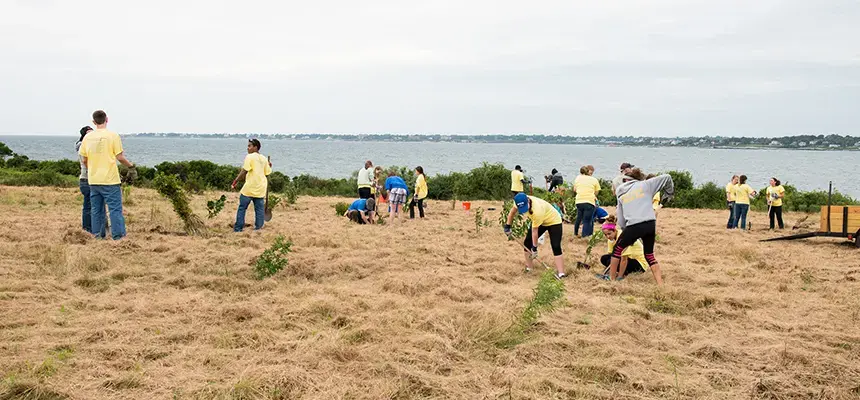
Community-engaged teaching and learning involves partnering with community organizations, groups, or individuals to collaboratively address community-identified needs and challenges. It aims to create reciprocal relationships between students, faculty, and community members that foster mutual learning, social responsibility, and the co-creation of artifacts, research, and other products useful to communities.
Some key principles of community-engaged teaching and learning include:
- Reciprocity: Recognizing that students, faculty, and community partners all have diverse types of expertise and can learn from each other.
- Community-Driven: Identifying and engaging in meaningful, relevant, and impactful activities and projects that address genuine community needs.
- Collaboration: Working together on some or all phases of the teaching and learning cycle, from designing community-responsive projects to developing preparatory training and assignments for students to sharing in teaching, mentoring, and assessment work.
- Ethical Practice: Incorporating ethical reflection and practice to ensure respectful and responsible engagement. This includes understanding the social and historical contexts of communities and community organizations; analyzing structures of power and privilege; being transparent about the benefits and costs of collaboration; and providing adequate preparation for students embarking on community-engaged work.
- Reflection: Providing opportunities for students to critically reflect on their experiences in community and to connect them to academic content.
Benefits for Students
Community-engaged learning opportunities offer multiple benefits for students, including:
- Enhanced Learning: Students gain a deeper understanding of course content through practical application in real-world settings.
- Development of Transferable Skills: Students develop skills such as critical thinking, problem-solving, teamwork, and communication, which are valuable for future careers.
- Civic Engagement: Community engagement promotes active citizenship and a sense of social responsibility among students by exposing them to community issues and encouraging their active involvement in understanding and addressing important social challenges.
- Intercultural Fluency: Community-engaged learning provides students with opportunities to interact with individuals and organizations from diverse cultural backgrounds, enabling them to learn about and appreciate cultural differences, recognize their own biases, and actively listen to community members' experiences and perspectives.
- Personal Growth: Students often experience increased self-confidence, empathy, and cultural competence as they engage with diverse communities.
Benefits for Communities
Community-engaged teaching and learning can have positive impacts on the communities involved, including:
- Addressing Community Needs: The expertise and resources of faculty and students can contribute to addressing community-identified challenges, thereby benefiting the community.
- Building Sustainable Partnerships: Establishing long-term relationships with community organizations and individuals can foster ongoing collaborations and create positive community-university partnerships.
- Empowering Communities: Involving community members as active participants in the teaching and learning process can provide new tools and resources for addressing challenges and developing solutions.
- Generating Knowledge: Community-engaged pedagogy can contribute to generating new knowledge, insights, and innovative approaches through collaborative research and problem-solving.
Properly structured, community-engaged teaching and learning practices can advance diversity, equity, and inclusion (DEI) learning goals. Integrating community-engaged learning within a DEI framework can lead to more inclusive educational experiences and equitable outcomes. How is community engaged learning internally linked to explorations of diversity, equity, and inclusion?
- Addressing Inequities: Community-engaged learning provides opportunities to learn about and address systemic inequities and social injustices present in communities. By engaging with diverse communities and actively listening to their needs and concerns, students can develop a deeper understanding of social issues and community challenges and work towards more equitable solutions.
- Empathy and Intercultural Competency: Community-engaged learning allows students to interact with individuals from diverse backgrounds, cultures, and perspectives. Through these interactions, students can develop empathy and a deeper appreciation of different life experiences. Engaging with individuals and organizations from diverse communities challenges students' preconceived notions and helps foster more inclusive attitudes and behaviors.
- Centering Marginalized Voices: Community-engaged learning provides a platform for marginalized communities to have their voices heard and their needs more fully recognized. It allows for meaningful community participation and collaboration, ensuring that community members are active contributors and decision-makers in the learning process. This helps to counter power imbalances and promote inclusivity and equity.
- Collaborative Problem-Solving: Community-engaged learning and a social justice orientation share a common goal of addressing complex societal challenges. By bringing together diverse perspectives and expertise, community-engaged learning encourages collaborative problem-solving that considers multiple viewpoints and experiences. This approach leads to more comprehensive and sustainable solutions that consider the needs of all community members.
- Critical Reflection and Self-Awareness: Community-engaged learning prompts students to critically reflect on their own identities, biases, and privileges. Through this reflective practice, students can develop a better understanding of social inequalities and their own roles in perpetuating or challenging them. This practice of critical reflection is a fundamental aspect of both DEI and CE work and can lead to personal growth and a commitment to fostering more inclusive institutions.
- Building Inclusive Learning Environments: Community-engaged learning can contribute to creating more inclusive learning environments within educational institutions. By incorporating diverse voices, perspectives, and experiences into a course structure, faculty can create a learning experience that values and respects differences. This promotes an inclusive learning environment where all students feel supported, validated, and able to contribute their unique insights.
- Advancing Social Justice: Both community engaged learning and DEI initiatives are driven by a commitment to social justice. By combining these approaches, students can develop the knowledge, skills, and motivation to actively work towards creating more equitable and just societies.
It's important to note that community-engaged learning alone may not automatically develop intercultural fluency. Integrating community-engaged learning with DEI requires intentional design, ongoing reflection, and collaboration with community partners. Faculty should strive to create inclusive spaces for community engagement, facilitate dialogue and understanding, and ensure that the benefits of community-engaged learning are accessible to all students, including those from marginalized and minoritized backgrounds. This integration can have a transformative impact on students' understanding of social issues, their commitment to social justice, and their ability to contribute to the creation of a more equitable society.
To build community engagement into your teaching, consider the following strategies:
- Identify Learning Outcomes: Determine the specific learning outcomes you want students to achieve through community engagement. Consider how the learning outcomes associated with the traditional classroom setting, pedagogical approaches, and academic topics shift when moved into a community-engaged learning environment. Also think about the role that your community partner(s) can play in identifying and advancing learning outcomes. See Select Bibliography below (esp. Heffernan and Motoike).
- Establish Community Partnerships: Seek out community organizations or individuals who align with the course goals and have identified needs that can be addressed by student projects. RWU’s Community Engagement office (both the Community Partnerships Center and the Feinstein Center for Engaged Learning) can help with identifying and approaching community partners and in developing a memorandum of agreement (MOA) that outlines timelines, expectations, roles and responsibilities, and other aspects of community partnerships. (See below for more on the Partnership Development Process.)
- Design Engaged Learning Assignments: Incorporate assignments that prepare students for working with community partners, including through investigations of the histories, social and political contexts, and economic structures of specific communities as well as reflective assignments that have students consider their own identities and positions vis-à-vis community partners. Other reflective assignments should help students connect their outside-of-the-classroom experiences with key course concepts. Students should be prompted to consider the ethical implications of their work.
- Provide Guidance and Support: Offer clear guidelines, resources, and ongoing support to students throughout their community engagement experience.
- Assess and Evaluate: Develop appropriate methods to assess student learning and evaluate the impact of community engaged pedagogy on students and communities. This should include obtaining structured feedback from community partners.
Community-engaged teaching requires careful planning, effective communication with community partners, and ongoing reflection to ensure meaningful and ethical engagement. By adopting this approach, faculty can create transformative learning experiences that benefit students, communities, and society.
Finding a Community Partner and Developing a Partnership Agreement (MOA)
RWU’s Community Engagement office (both the Community Partnerships Center and the Feinstein Center for Engaged Learning) can assist with identifying and approaching community partners and in having preliminary conversations about timelines, expectations, roles and responsibilities, and other aspects of a proposed community partnership.
Just as research involving human subjects requires review by RWU’s Human Subjects Review Board (HSRB) to ensure that research projects are designed and implemented in an ethically responsible way, so too does RWU require the development and execution of a Memorandum of Agreement (MOA) for community-engaged teaching and learning projects and courses involving collaborations with external (non-university) partner organizations.
All parties involved in the partnership should be involved in the discussion, whose aim is to identify and articulate roles and responsibilities, timelines, and key outputs and outcomes of the collaboration. Once these items are articulated, they can then be embedded formally in the partnership agreement/memorandum.
Key questions include:
- Who are the key parties involved in the community-university partnership? Specify organizational affiliation, individual names, titles/roles.
- Is there a history of collaboration between the parties?
- What kinds of challenges to collaboration might the parties encounter?
- What are the primary goals of the partnership? (E.g., is it a community-engaged and/or service-learning course; a community-based participatory research project; other?)
- What are the expected benefits for each/all the parties to the partnership (i.e., faculty, community partner, and student)?
- What is the anticipated duration of the partnership (semester, multiple semesters, ongoing)?
- What are the roles and responsibilities of the different parties to the collaboration? What are the key tasks they will undertake?
- How will all partners and stakeholders be oriented to the partnership activities? For example, how will students be oriented to the community agency and vice versa?
- How will students be supervised/evaluated on work they do off-campus?
- What is the timeline for key milestones to the collaboration (i.e., planning, execution of agreement, launch of course, projects completed, etc.)?
- What is the partnership’s “feedback” strategy and agreed upon ways to address all parties’ concerns and achievements (e.g., periodic check-ins)?
- What is the partnership’s evaluation plan of its work and how will the findings be used?
- How will products of the collaboration be publicized/shared publicly?
- How will the partnership share credit and celebrate success?
- Are there specific risks to the proposed work that need to be anticipated and planned for?
Instructions
The following worksheet provides guidelines and questions to inform the development of a partnership agreement or memorandum of agreement (MOA). All parties involved in the partnership should be involved in the discussion, whose aim is to identify and articulate roles and responsibilities, timelines, and key outputs and outcomes of the collaboration. Once these items are articulated, they can then be embedded formally in the partnership agreement/memorandum. The Community Engagement office can assist with developing the MOA and in obtaining approvals from relevant parties.
Please review and draft responses to the questions. While not all of the issues addressed below will need to be included in the partnership agreement or memorandum, the questions posed here will help you to clarify the goals of your collaboration and form the foundation for the MOA.
- Who are the key parties involved in the community-university partnership? Specify organizational affiliation, individual names, titles/roles.
- Is there a history of collaboration between the community partner and RWU? (Any specific challenges/opportunities arising from prior interactions?)
- What are the primary goals of the partnership? (E.g., is it a community-engaged and/or service-learning course; a community-based participatory research project; other?)
- What are the anticipated benefits for each/all of the parties to the partnership (i.e., faculty, community partner, and students)?
- What are the roles and responsibilities of the different parties to the collaboration? What key tasks will they undertake?
- What is the timeline for key milestones to the collaboration (i.e., planning, execution of agreement, launch of course, projects completed, etc.)?
- How will all partners and stakeholders be oriented to the partnership activities? For example, how will students be oriented to the community agency and vice versa?
- How will transportation be arranged if students will be working off campus? See Transportation Resources for Faculty for more details.
- How will students be supervised/evaluated on work they do off-campus?
- What is the partnership’s “feedback” strategy and agreed upon ways to address all parties’ concerns and achievements (e.g., periodic check-ins)?
- What is the partnership’s evaluation plan of its work and how will the findings be used?
- How will products of the collaboration be shared and/or publicized?
- How will the partnership celebrate success?
- Are there specific risks to the proposed work that need to be anticipated and planned for? (This could include work with minors or vulnerable populations.)
- Are there specific mobility or accessibility requirements to the work that could restrict participation by some individuals and that need to be planned for?
- Does your project require review/approval by the RWU Human Subjects Review Board (HSRB)?
How We Can Help To Support Your Community Engaged Project:
- We can make an introduction between faculty members and local community partners who are seeking project support – finding the ideal project match to be incorporated into a course, student club, or organization.
- Schedule and coordinate initial meetings with faculty and community partners to determine a scope of work for a designated project.
- Provide resources to the faculty throughout the life of the project including administering a Memorandum of Agreement between RWU and the community partner.
- Arrange transportation to and from site visits.
- Provide refreshments/catering for kick-off meetings, partner presentations etc.
- Provide student support through our marketing team to attend events – taking pictures of events, promoting events on social media platforms etc.
- Our team is a liaison with other RWU departments like MarComm and the provost office to help promote events
- Print posters, end-of-project reports, and other deliverables for both faculty and the community partner at the end of the project.
What We Ask of RWU Faculty:
- Work with our staff and the community partner to develop a scope of work.
- Provide our staff with the dates for the initial scoping meeting, the kick-off meeting, the initial site visit, and end-of-semester presentations that may be scheduled with the partner.
- Provide our staff with a completed syllabus and scope of work prior to the beginning of the semester.
- Provide students with a hands-on learning experience that combines classroom knowledge with real-world skills for the workplace.
- Provide our staff with feedback throughout the semester.
- Ask our staff for assistance as soon as any issues arise during the course of the semester.
- Provide our staff with all final papers, photos, renderings, and other final work at the end of the semester.
Find Us Online
Instagram: @engage.rwu
Tiktok: @engage.rwu
How To Become An Authorized Driver
Authorized drivers are sometimes needed to drive for course-engaged projects when visiting a community partner for a site visit.
- Students must have a current driver's license and be at least 20 years old.
- Online training must be completed to drive a 7-passenger van. To drive a vehicle larger than the 7-passenger van, you must also schedule and complete a road test through public safety.
- Please plan accordingly as this process can take a few weeks to process and approve.
Read more about the driver authorization and RWU motor vehicle policy.
Project Statement
The City of Central Falls needs assistance in creating a “Welcome” gateway structure to the city that will sit at the corner of Dexter and Clay Streets. The client envisions a design that would be used in the rebranding of the city and could extend to other areas in the City. They envision a nice welcome area with brick – to reflect the industrial history of the City – flora and fauna arrangements, signage that could be changed for different events, lighting, maybe even a water feature.
Project Steps & Timeline
What research steps and processes will take place and by what date? Please include meetings with the partner in this step.
March 27
Site visit to downtown Central Falls Meeting with Steve Larrick, City Planner and Jerauld Adams, property owner, to discuss the scope of the project
Week of April 1
Begin researching examples of Welcome Gateways for cities and keeping a record of best examples and materials used. Create a pattern book for the City of common New England/Latin Quarter/Latin American sign types for both the welcome sign and main street signage.
Week of April 8
Site visit to Central Falls Working in the downtown area, conduct interviews with business owners on Broad Street and Dexter Street, and residents in the area/using the area, asking what they envision as being welcoming for the community. Survey groups may show business owners and the pattern book that has been established and ask for feedback based on a set of pre-designed questions.
Example
“Do you think it’s important for the welcome sign to be more modern looking or historic looking?”
“Out of these samples, which signs which design of a sign would draw you in to the business?”
“What colors are most representative of the Central Falls Community?” etc.
Week of April 15
Based on research and feedback from the community, incorporate findings in to conceptual drawings and renderings for the Welcome Sign.
Week of April 22
Present first draft of the design book, welcome sign to the CPC staff for suggestions and review Site visit with Steve Larrick and Jerauld Adams – or video conference – to go over conceptual designs/sketches and manual. Survey business owners and residents on which signage styles they have a preference for and why. What feelings do these signs invoke for them?
Most of the publications are available for free online. When not the case, Community Engagement has hard copies in our lending library.
Bibliography
Ash, S.L. & Clayton, P.H. (2009). Generating, deepening, and documenting learning: the power of critical reflection in applied learning. Journal of Applied Learning in Higher Education, 1, 25-48.
Avila-Linn, C., Rice K., Akin, S. (2015). Faculty Toolkit: Designing Community-Engaged Courses, UC Berkeley Public Service Center. Excellent overview of history of community engagement and engaged scholarship; partnership and course types (service learning, project-based learning, community-based participatory research, etc.); assignment design; assessment and evaluation; and other resources.
Bringle, R.G. & Hatcher, J. A. (1999). Reflection in service learning: Making meaning of experience. Educational Horizons., 77(4), 179-185.
Eyler, J. (2009). The Power of Experiential Education. Liberal Education, 95(4) 24-31. https://eric.ed.gov/?id=EJ871318 (See embedded link).
Heffernan, K. (2001). Fundamentals of service-learning course construction. Providence, RI: Campus Compact. (Copies available in Community Engagement)
Kuh, G. D. (2008). High-impact educational practices: What they are, who has access to them, and why they matter. Washington, DC: Association of American Colleges & Universities.
Mitchell, T. (2008). Traditional vs. critical service-learning: Engaging the literature to differentiate two models. Michigan Journal of Community Service Learning, 14(2), 50-65.
Mitchell, T.D., Donahue, D., & Young-Law, C. (2012). Service-learning as a pedagogy of whiteness. Equity and Excellence in Education, 45(2), 612-629.
Motoike, P.T. (2017) Service learning course construction and learning outcomes. The Cambridge Handbook of Service Learning and Community Engagement (pp. 132-146). Cambridge: Cambridge University Press.
Norris, K.E. et al. (2017) Critical reflection and civic mindedness: Expanding conceptualizations and practices. The Cambridge Handbook of Service Learning and Community Engagement (pp. 168-182). Cambridge: Cambridge University Press.
Suiter, S. V., Morgan, K.Y., Thurber, A. (2023). The struggle animates the learning: Exploring student experiences with a community-engaged, project-based course on evaluation. The Journal of Higher Education Outreach and Engagement, 27 (1).
Audubon Society of Rhode Island
Barrington Preservation Society
Bristol Warren School District Athletics
International Tennis Hall of Fame
NE Council on Latin American Studies
Providence Cultural Equity Initiative
Town of Bristol Bristol Parks and Recreation
Town of Bristol Police Department
Engaged Learning Graduation Requirement - for complete details related to the Engaged Learning graduation requirement.
Hawklink - our platform for finding community engagement experiences and submitting the Engaged Learning graduation requirement proposal and final report (under Forms).