
3 RWU Students Take Different Approaches to Understanding Protein Stability
Mackenzie Marshall, Taylor Mark, and Maggie Fleming explored how proteins maintain their structure — and developed new questions and methods that could help researchers better understand their connections to disease and medicine.
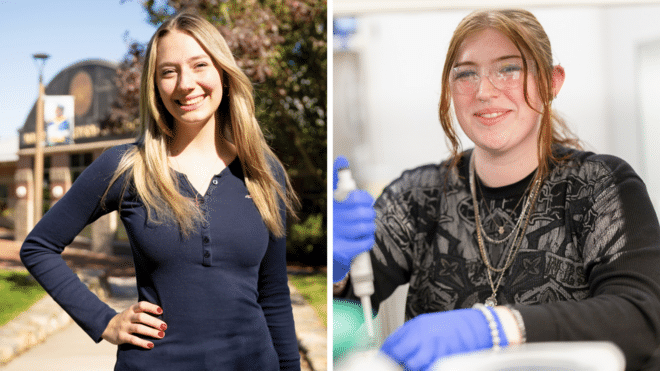
BRISTOL, R.I. – When Taylor Mark began her summer research, she expected the protein at the center of her project to behave a certain way.
It didn’t.
Instead, the unexpected result changed the direction of her research and gave the sophomore something even more valuable than confirmation of a hypothesis: a new question to pursue.
“My original project was to explore multiple oxidative stress proteins to see if kinetic stability was a conserved property across these proteins,” said Mark, a Chemistry and Biology double major with Mathematics and Business minors who is part of the Honors Program. “However, when my research found that not to be true, my project had to shift.”
Across the lab, senior Mackenzie Marshall, a Forensic Science major and Criminal Justice minor, was confronting a different kind of uncertainty. Her project began with a liquid chromatography/mass spectrometry instrument that had not been used regularly in months and a larger challenge: developing a more accessible and reproducible way to measure protein stability.
“I started from the ground up on an instrument that had not been used in six months to a year,” Marshall said. From replacing parts and preparing buffers to restoring basic instrument functions, designing experiments, and eventually learning coding to analyze the resulting data, she built the workflow piece by piece.
Mark, Marshall, and fellow researcher Maggie Fleming, a senior Biochemistry major and Mathematics minor, spent the summer working in Assistant Professor of Chemistry Jane Thibeault’s lab, where their distinct projects approached a fundamental biological question from different directions: What makes some proteins unusually stable, how can that stability be measured, and what might it ultimately tell researchers about how proteins function in the body?
An Unexpected Result Opens a New Question
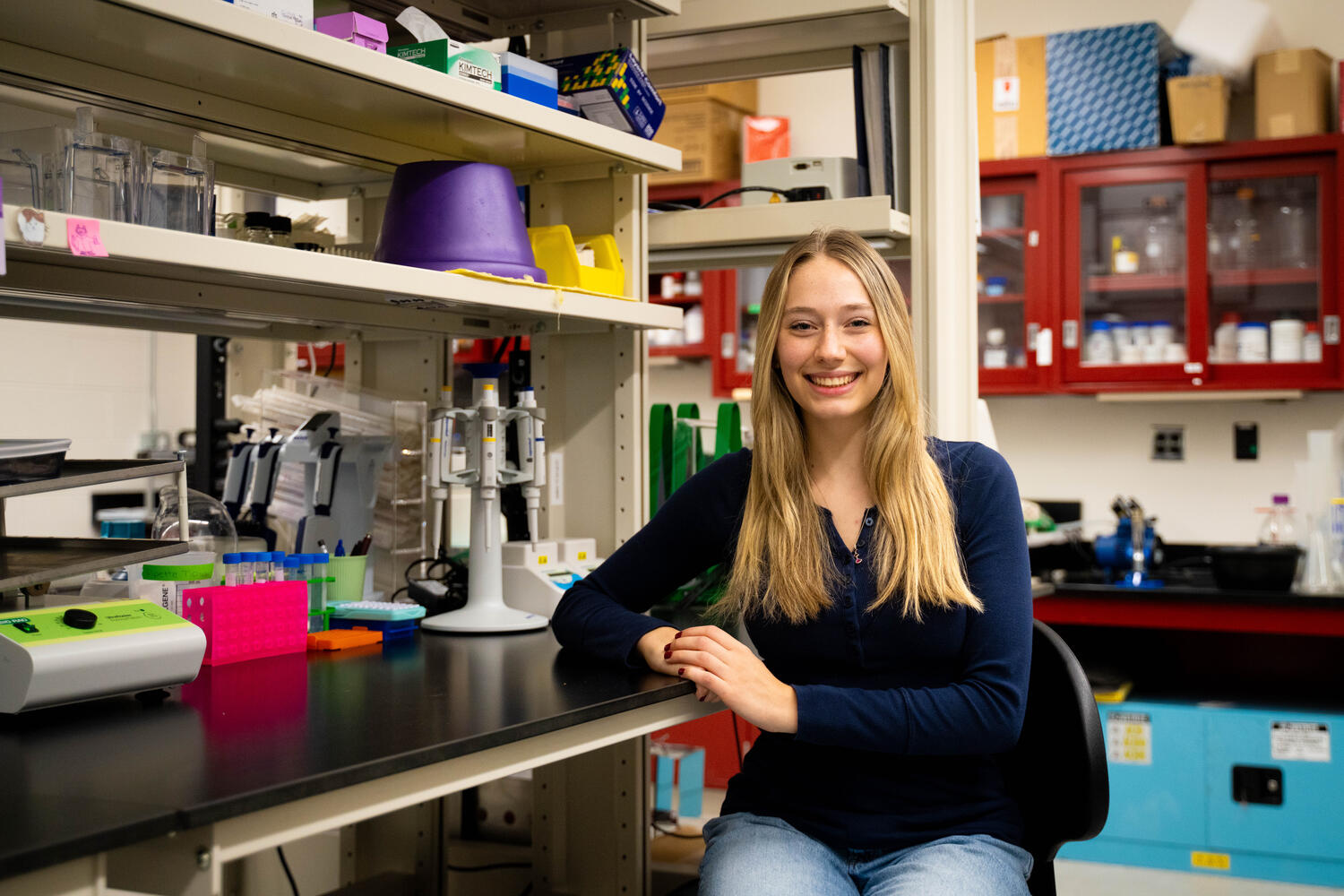
Mark and Fleming worked on related projects examining oxidative-stress proteins, which help cells respond to reactive oxygen species — unstable molecules that can damage cells.
Their research focused on the unusual property of hyper kinetic stability, in which certain proteins resist unfolding and require additional energy, such as heat, before their structures come apart.
Thibeault was intentional about giving the students projects that overlapped without being identical.
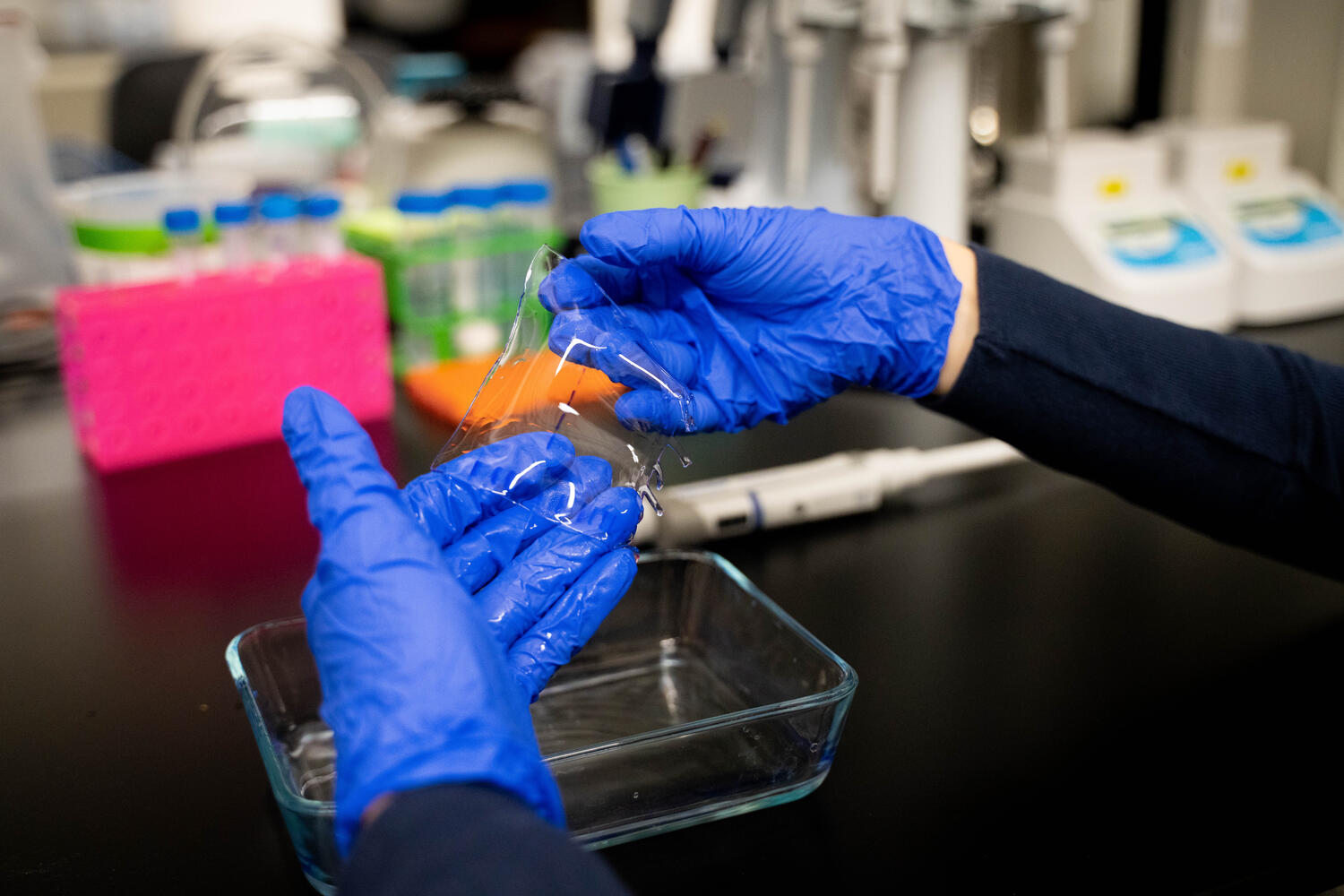
Mark focused on the protein SOD2 and its largely unknown stability, while Fleming focused more closely on SOD1 and the stability of its mutant forms, Mark said. The two nevertheless collaborated throughout the summer, sharing experimental information, helping one another move gels through different stages of analysis, and adjusting time points and temperatures as they worked with proteins that behaved differently.
Mark’s project began from the hypothesis that SOD2 would exhibit hyper kinetic stability.
Tests using SDS trapping and gel electrophoresis showed something different: while bovine and human SOD1 exhibited the expected unusual stability, human and mouse SOD2 did not.
That result changed the project from asking whether oxidative-stress proteins generally share this property to asking why proteins performing related functions can have very different stabilities.
Mark began examining possible explanations. Structure alone did not appear to account for the difference because a bacterial SOD2 with a similar structure is kinetically stable. Evolutionary distance also did not provide a complete answer. That led her toward questions involving the different cellular environments in which the proteins function and their electrostatic properties.
“This study piqued my interest in the stability of other SOD proteins, as well as other methods to measure stability. I believe that the most important question is how protein stability relates to functions in the body. If we answer this question, then maybe we can answer the question of how it affects the diseases related to the SOD protein.”
Proteins in the SOD family have been associated with diseases including ALS, making understanding their stability and behavior potentially relevant to future disease research and medicine development.
Building a New Way to Measure Stability
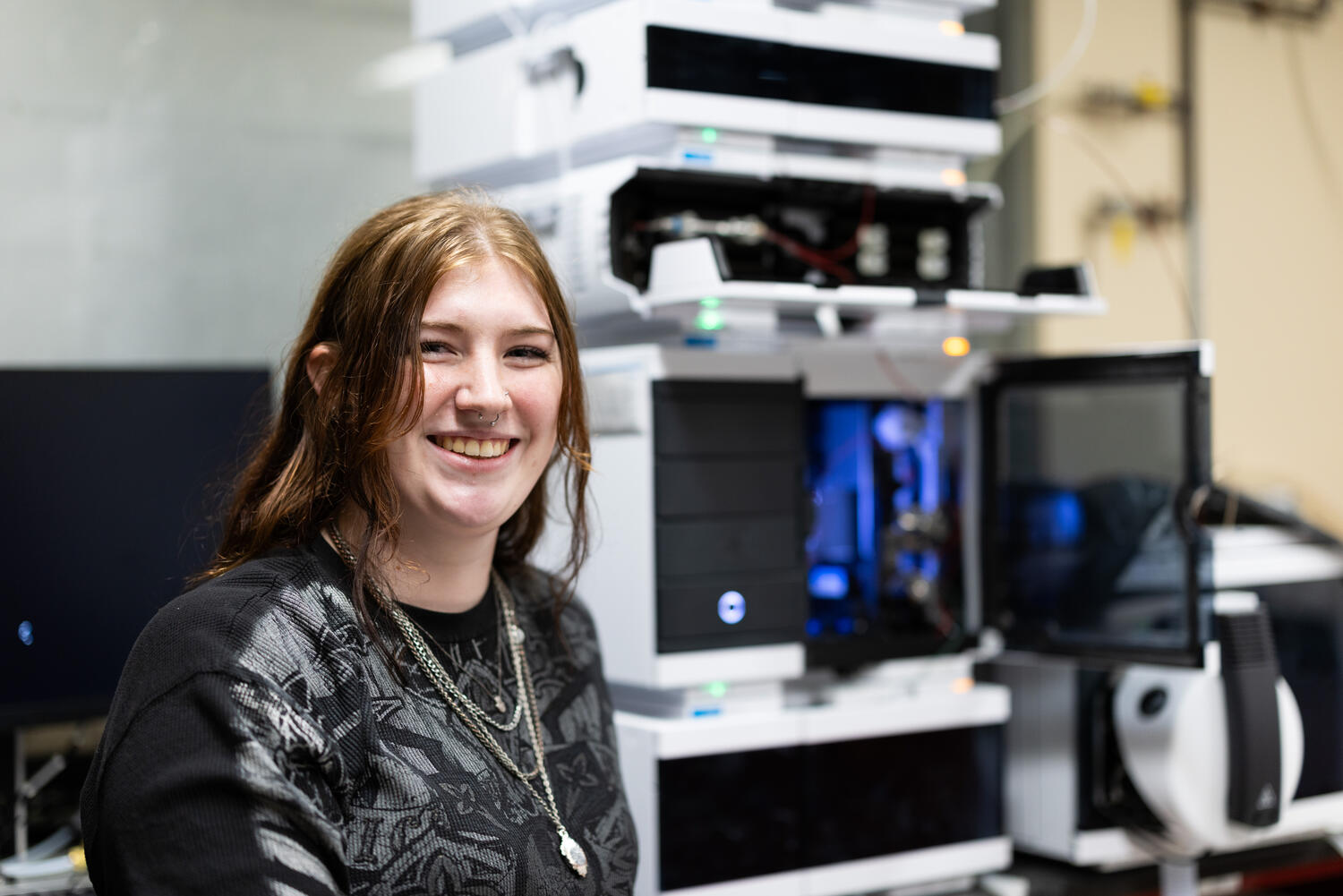
Marshall’s summer project, “Building LC/MS Workflows for Protein Stability Measurements,” tackled the larger protein-stability question from another direction.
Traditional approaches can require relatively large quantities of purified protein and may make it difficult to compare stability measurements across many proteins and experimental conditions.
Marshall set out to develop an LC/MS workflow that could produce comparable, reproducible stability measurements while lowering the amount of protein needed for analysis.
Before she could do that, however, she had to make the instrument itself reliable.
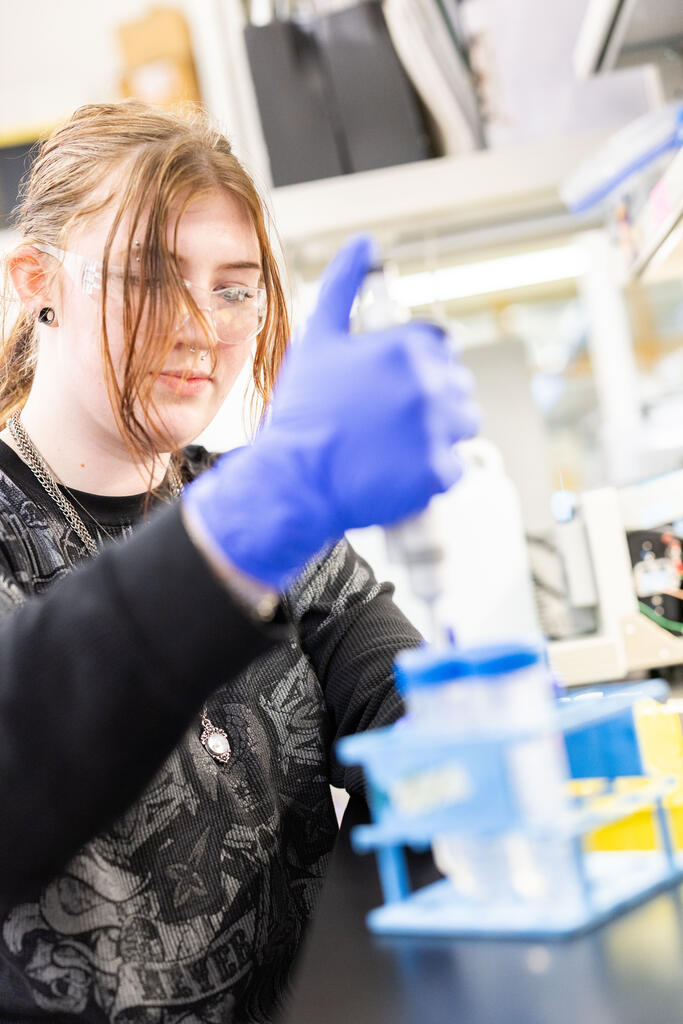
Marshall restored basic functions, replaced components, prepared the liquid chromatography system, and learned how to maintain and troubleshoot the instrument. She then designed initial experiments using a standardized BSA protein.
At first, analysis meant manually combing through chromatograms and mass spectra. As the summer progressed, Marshall began learning basic coding to make both analysis and experimental design more efficient.
By the end of the summer, she had begun conducting stability measurements and had developed the foundation of the method itself, including isolating a single peptide for comparison and reducing the protein concentrations required for analysis.
“The big-picture goals for the LC/MS workflow were to make a method of stability measurements that are comparable to one another as well as being easily reproducible,” Marshall said.
The next step would be applying the method to more types of proteins and running timed stability experiments. Longer term, Marshall envisions collected measurements contributing to larger datasets that could potentially be analyzed using machine learning.
Such a database, she said, could ultimately have applications in areas including drug development, where protein stability is an important consideration.
Separate Projects, Shared Research
Although all three students worked within Thibeault’s broader protein-stability research, their projects were mostly separate during the summer.
That was intentional.
Every Tuesday, Mark said, members of the lab presented slides showing what they had accomplished during the previous week. Those meetings exposed students to techniques beyond their own projects and gave them opportunities to critique one another’s work, workshop poster titles and captions, and think about how to communicate complicated science clearly.
“Science is based around peer review, which is why I think it’s so important to discuss such things with others. It really made a difference in my project as a whole.”
There is also a potential future point of convergence.
Marshall said her project would have been used alongside Mark and Fleming’s research if there had been enough time to collect additional data. Mark likewise said the long-term plan could involve applying Marshall’s LC/MS method to samples from her own project once the workflow is further developed.
The connection illustrates how research advances through more than one type of question: one project can investigate why a protein behaves a certain way, while another develops better tools for measuring that behavior.
Learning to Work Without a Recipe
For Mark, one of the sharpest differences between summer research and a classroom laboratory was the absence of predetermined instructions.
“When working in a classroom lab, you’re following a set of directions given to you,” she said. “I believe this does not allow for exploration and curiosity to thrive.”
Research required her to write many of those directions herself.
She read scientific papers to develop standard operating procedures, dissecting published methods closely enough to reproduce them and adapt them to her own experiments. The process strengthened not only her laboratory skills but her understanding of how scientific work must be documented so another researcher can repeat it.
When her original hypothesis failed, Thibeault also gave Mark significant freedom to decide where the research should go next.
“There was a lot of discussion between the two of us,” Mark said. “I ended up with pages of ideas and directions to take the project, but ultimately I decided to take the route that interested me most and that told the best story.”
That ownership changed how deeply she engaged with the work.
“Having ownership over your work, I feel, is so important. I could tell you everything about my project because I care so much about it.”
Marshall experienced that independence differently.
Working with an instrument whose maintenance history was incomplete meant encountering unknown components, unexplained errors, and problems she initially lacked the experience to diagnose. She learned not only instrument upkeep and troubleshooting but also how to determine the next logical experiment, develop protocols, and maintain detailed records.
Those records took on added importance because Marshall is a senior and knows someone else may eventually inherit the project.
For her, developing a reproducible method meant leaving behind not just results, but a pathway another researcher could follow.
Finding a Future in the Lab
Both experiences helped clarify what comes next.
Marshall said her Forensic Science background has long drawn her toward laboratory work and instrumentation. The summer gave her a much deeper understanding of mass spectrometry and its applications than she had encountered in traditional coursework.
“In the future I hope to be working in a lab setting as a forensic expert, applying my knowledge to the law."
Mark entered RWU as a declared Chemistry major after wrestling with a choice between Chemistry and Psychology. Since then, professors helped deepen her interest in chemistry, biology, and mathematics, eventually leading to her current combination of majors and minors.
She had also been warned that her outgoing personality might make research an unlikely fit.
The experience convinced her otherwise.
“I found that I really enjoyed working in a lab and it only ensured my decision to continue my path into research after college,” Mark said. “I’ve also found that I enjoy working on such a small scale, like proteins.”
As only a sophomore, Mark sees the opportunity to begin that work early as one of the advantages of undergraduate research at RWU.
“This experience has also made me gain a lot of confidence presenting academic work,” she said. “I had a background in speech and debate, but I hadn’t ever presented a scientific work to people with both STEM and non-STEM backgrounds.”
For Mark, Fleming, and Marshall, the summer did not produce one final answer to the question of protein stability.
It produced several better questions, a developing new method for investigating them, and three student researchers better prepared to continue looking for the answers.