
RWU’s KidWind Program Turns Wind Energy Into Hands-On Discovery for Local Fourth Graders
Seven-year partnership with Bristol-Warren schools has introduced nearly 1,500 fourth graders to engineering design while giving Roger Williams University Education and Engineering majors real-world teaching, mentoring, and problem-solving experience.
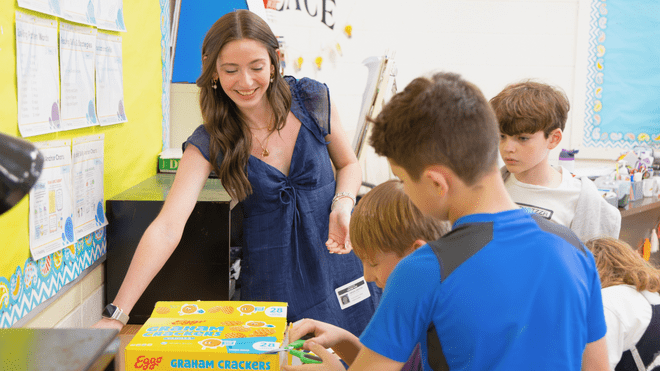
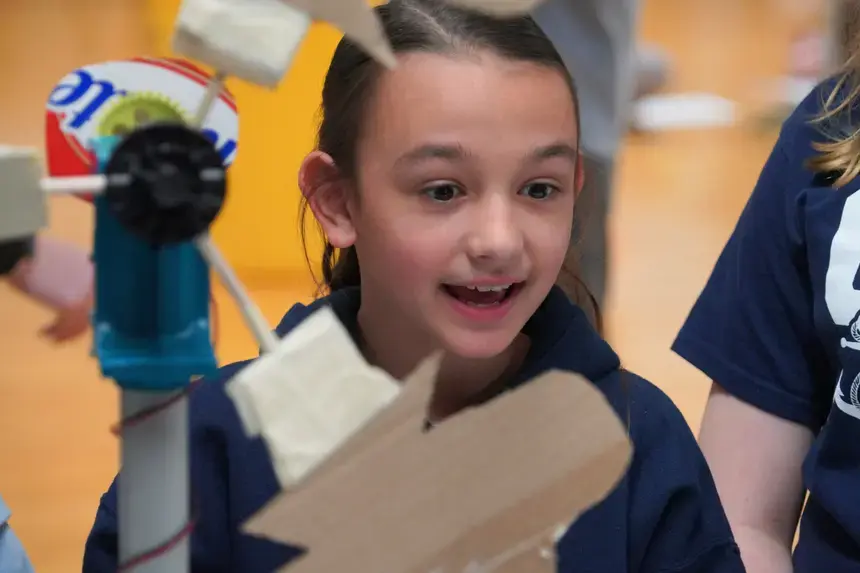
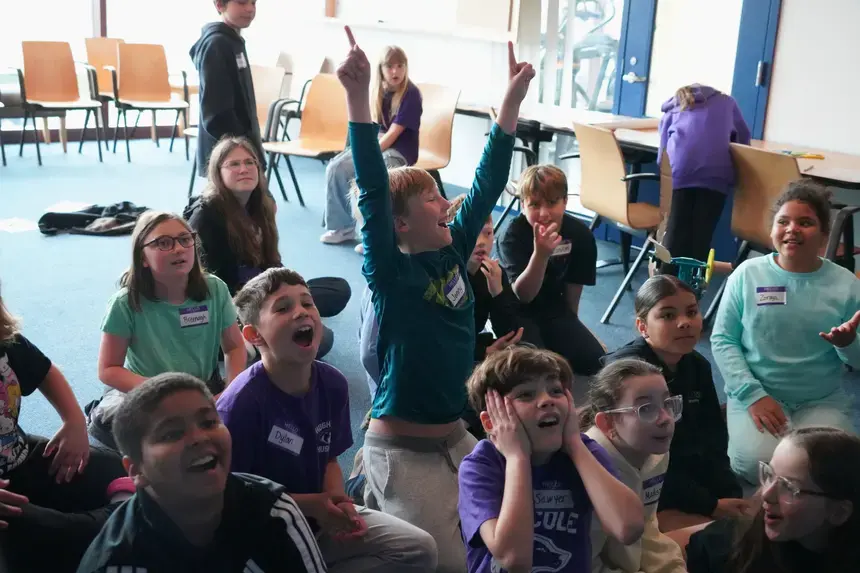
BRISTOL, R.I. – With the roar of spinning turbines and cheers of excitement, local fourth graders watched as their handmade wind turbines came to life.
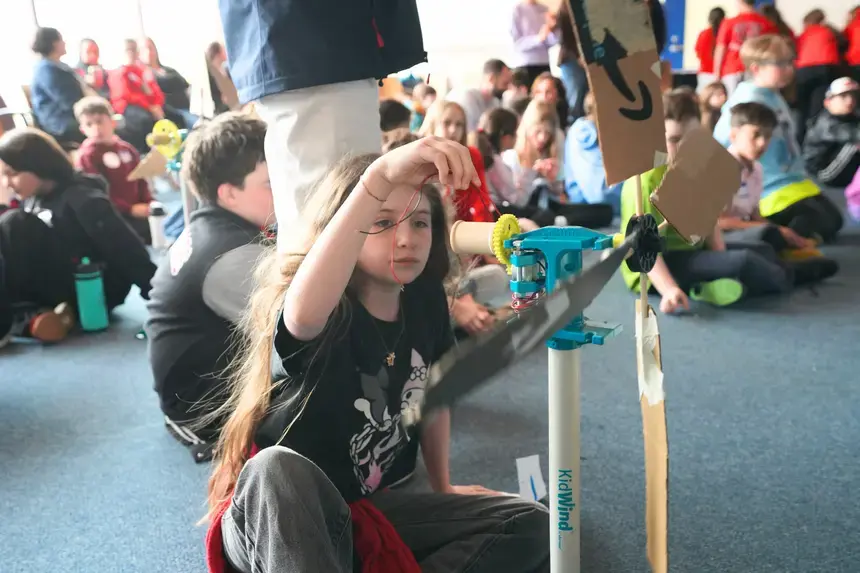
Some tested the pitch of their blades. Others explained their designs to engineers. All of them were part of a project that has become a signature example of experiential learning at Roger Williams University.
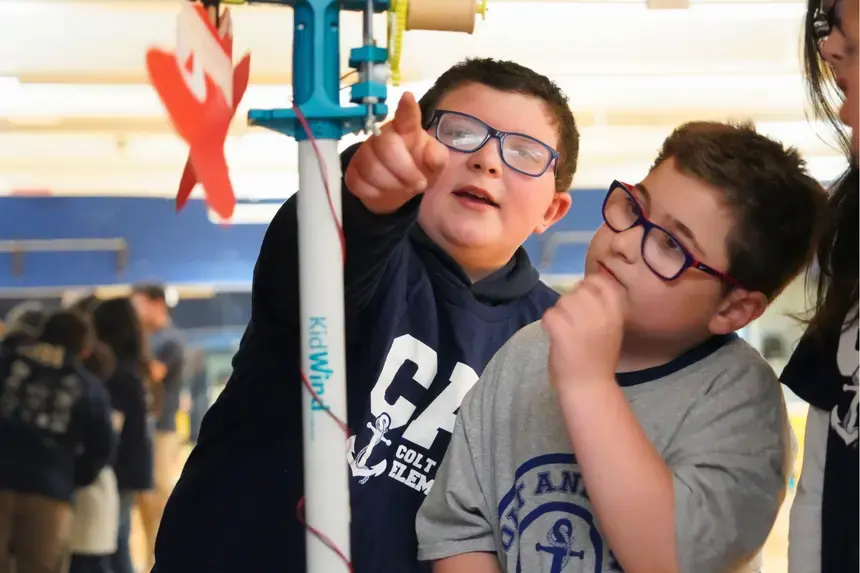
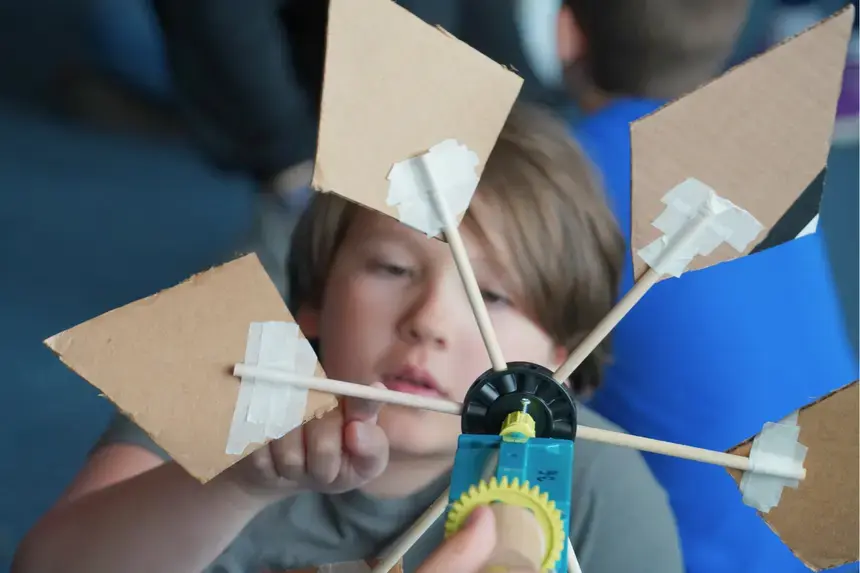
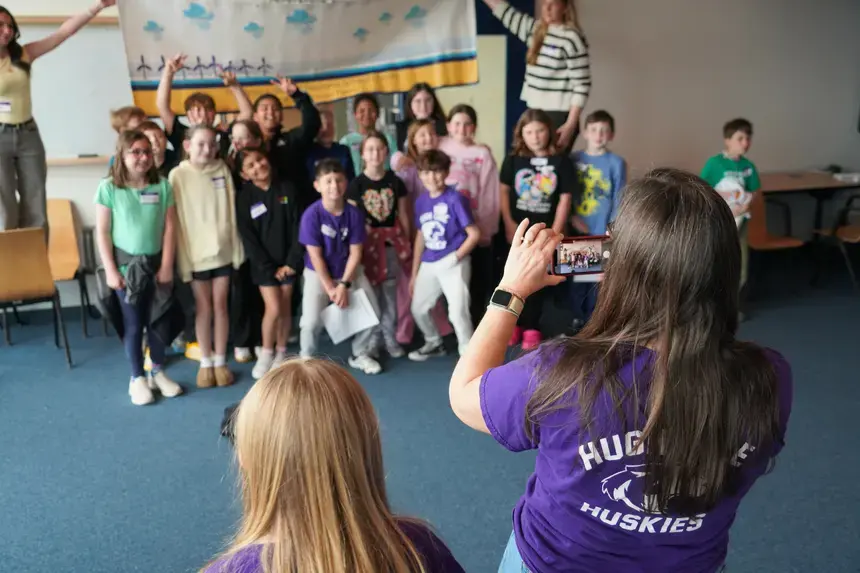
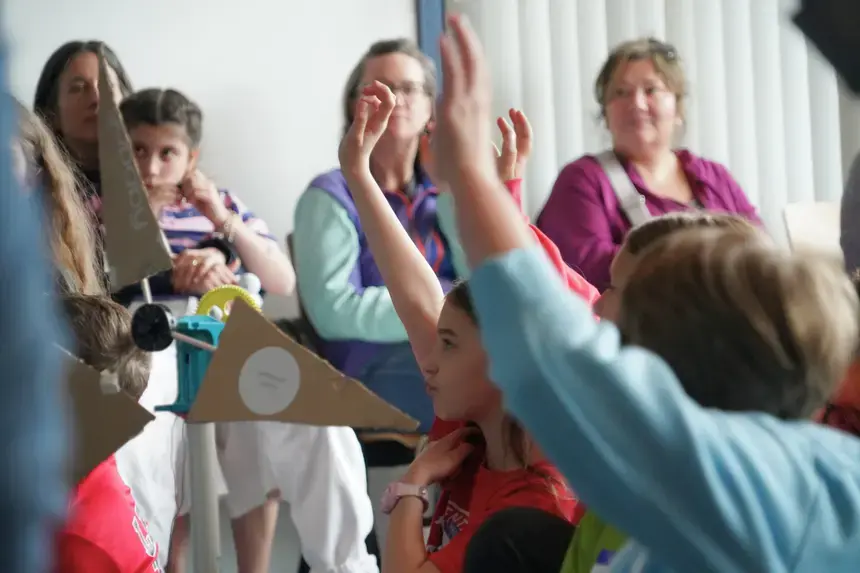
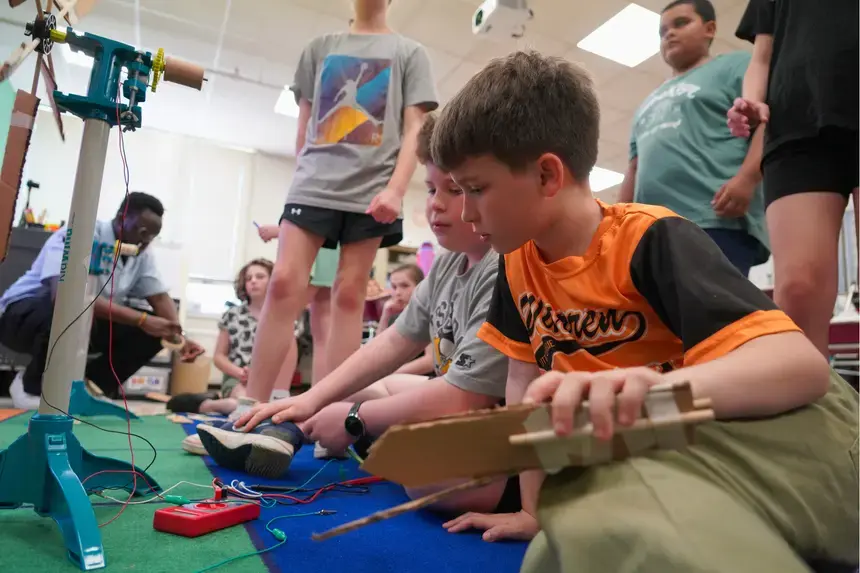
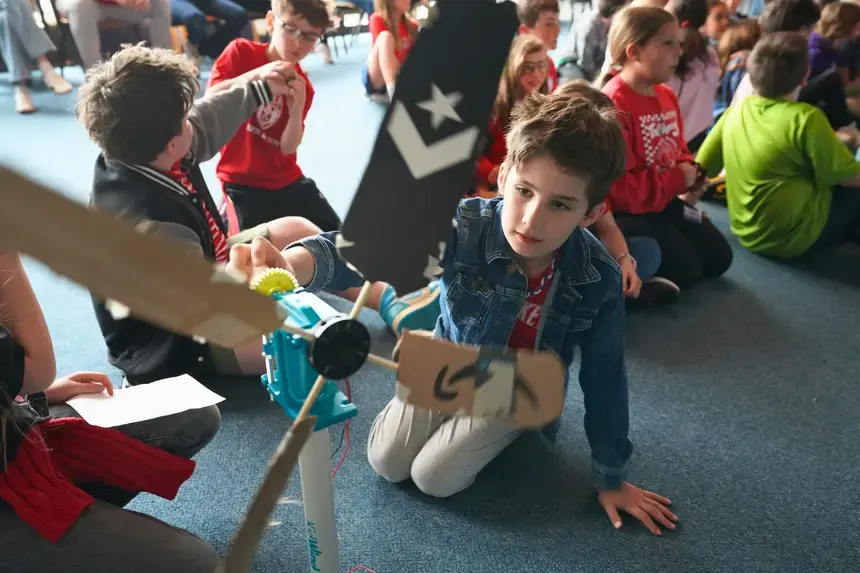
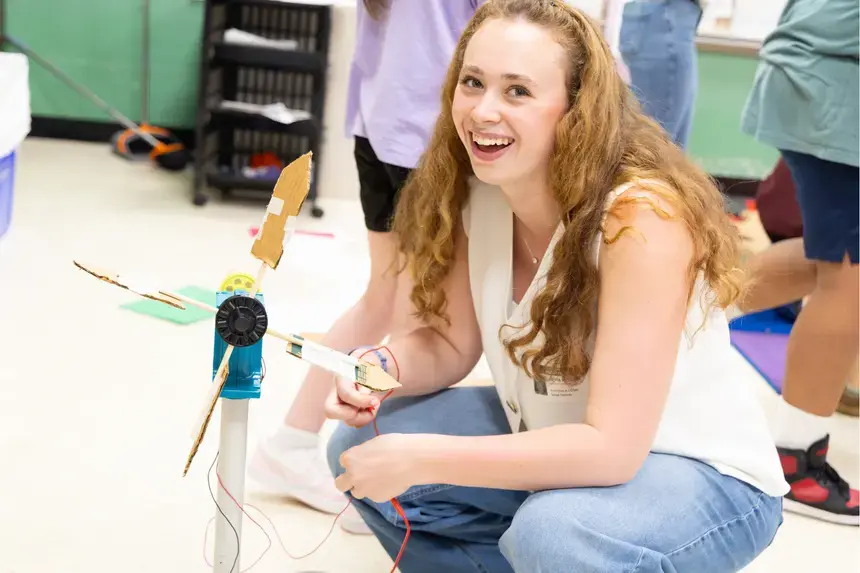
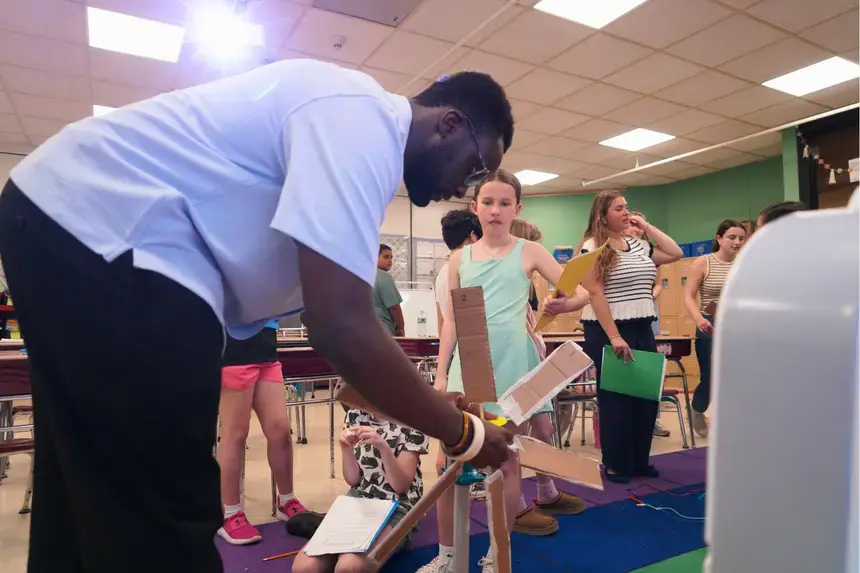
This year, KidWind, a partnership between RWU and the Bristol-Warren Regional School District (BWRSD), brought together 199 fourth graders and 10 teachers from three local elementary schools to explore wind energy, sustainable design, and the engineering design process. Throughout the spring semester, 22 Education majors and 17 Engineering majors worked alongside the entire BWRSD fourth-grade class, teaching lessons on sustainable energy and guiding students as they designed, built, tested, and refined their own wind turbines using recycled materials.
Now in its seventh year, KidWind has reached 1,499 fourth graders since its launch in 2019. The initiative began when Associate Professor of Engineering Maija Benitz and Professor of Science Education Li-Ling Yang saw an opportunity for the university to help fill a gap in the local school district while creating a powerful interdisciplinary learning experience for RWU students.
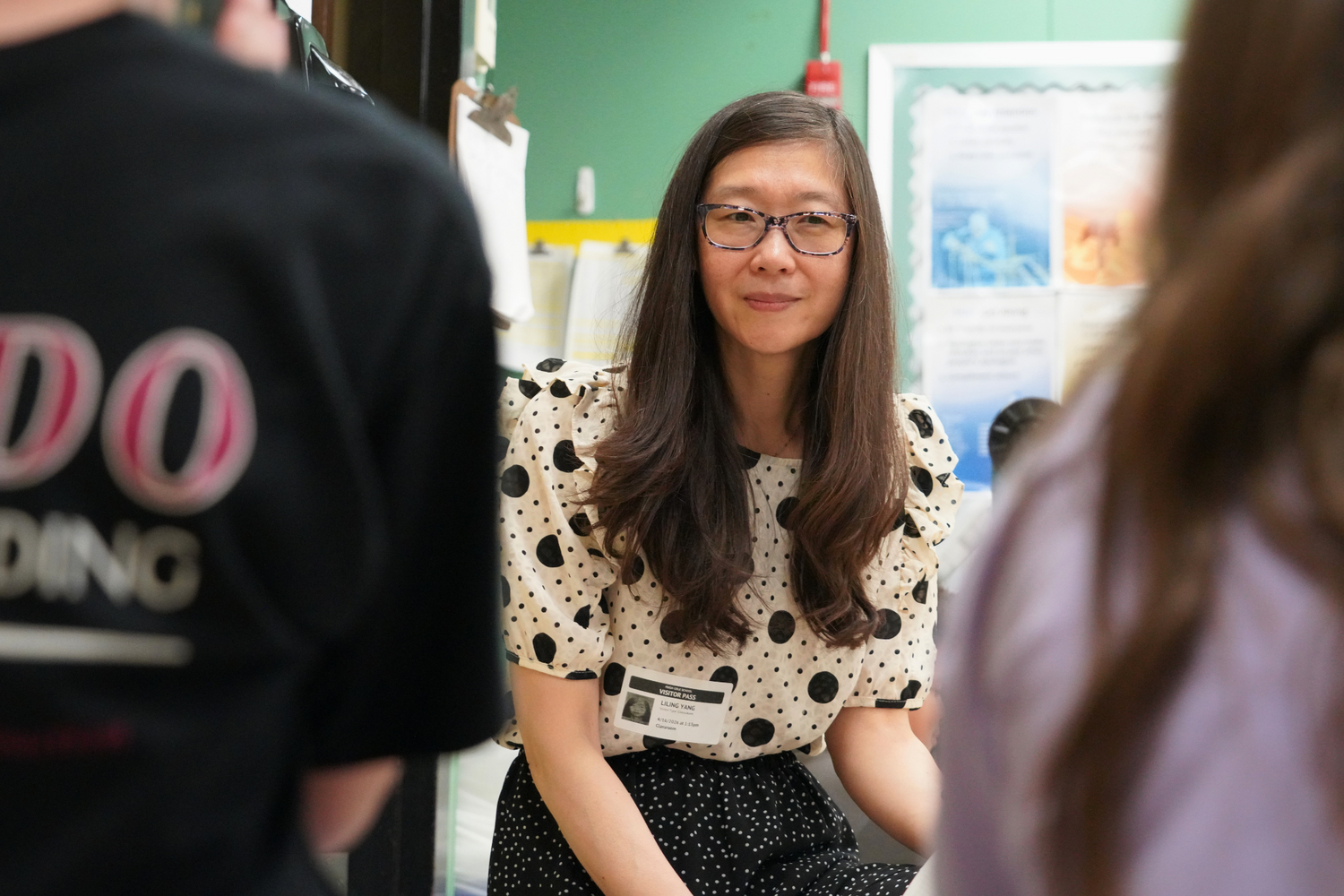
“KidWind creates a powerful learning partnership between our RWU students and the fourth graders in the Bristol-Warren Regional School District,” Yang said. “Our students learn to translate engineering and science concepts into meaningful, age-appropriate instruction, while the fourth graders engage in hands-on STEM learning that feels relevant and exciting. It’s a model that brings real-world learning to life for everyone involved.”
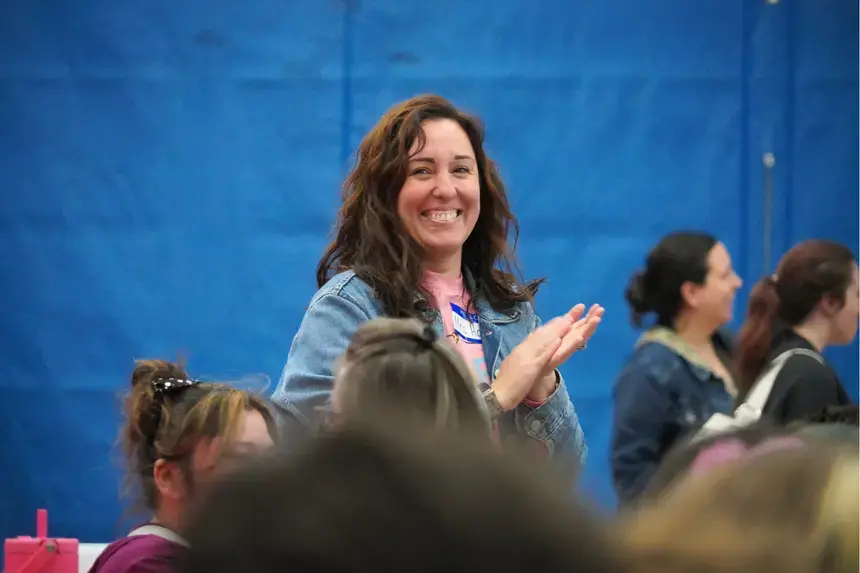
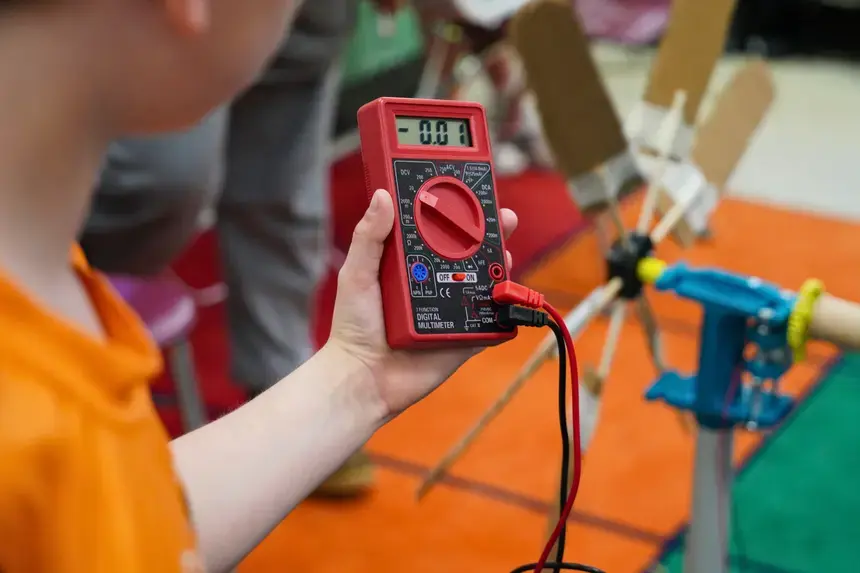
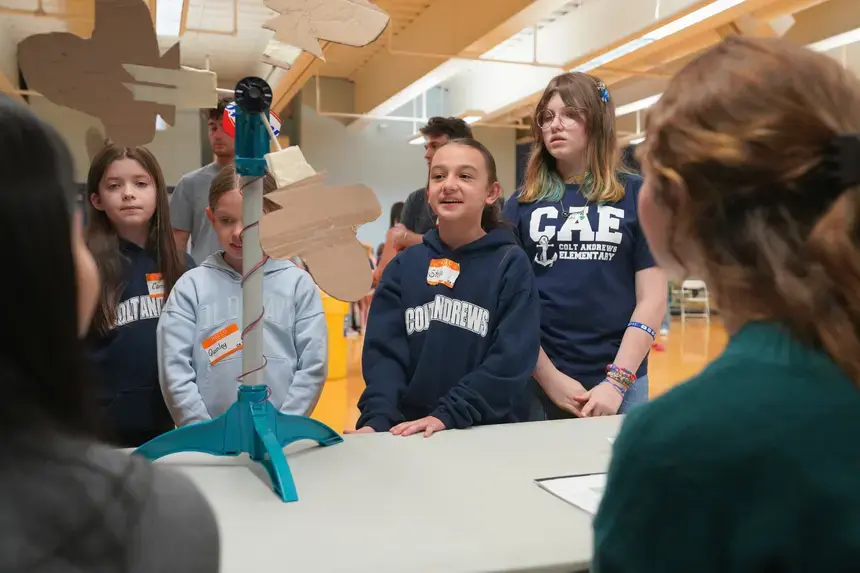
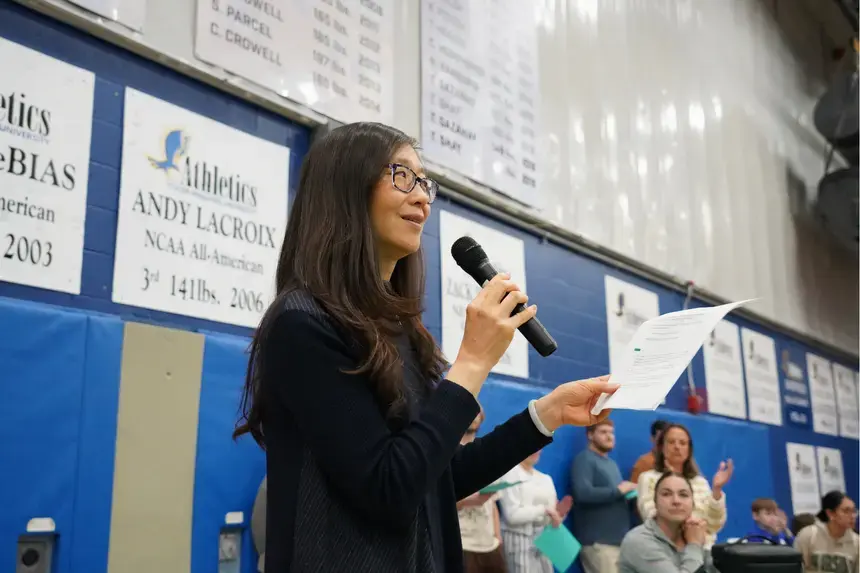
Supported by more than $130,000 in grants and awards over the years, KidWind has continued to expand through funding and support from partners including the SouthCoast Community Foundation and Ørsted. This year also marked the return of the KidWind Celebration Event at RWU, where fourth graders rotated through five activities facilitated by RWU students, research assistants, alumni, and volunteers from local wind energy companies. The event included three hands-on engineering design stations, wind turbine testing in a wind tunnel, and presentations to a panel of experts.
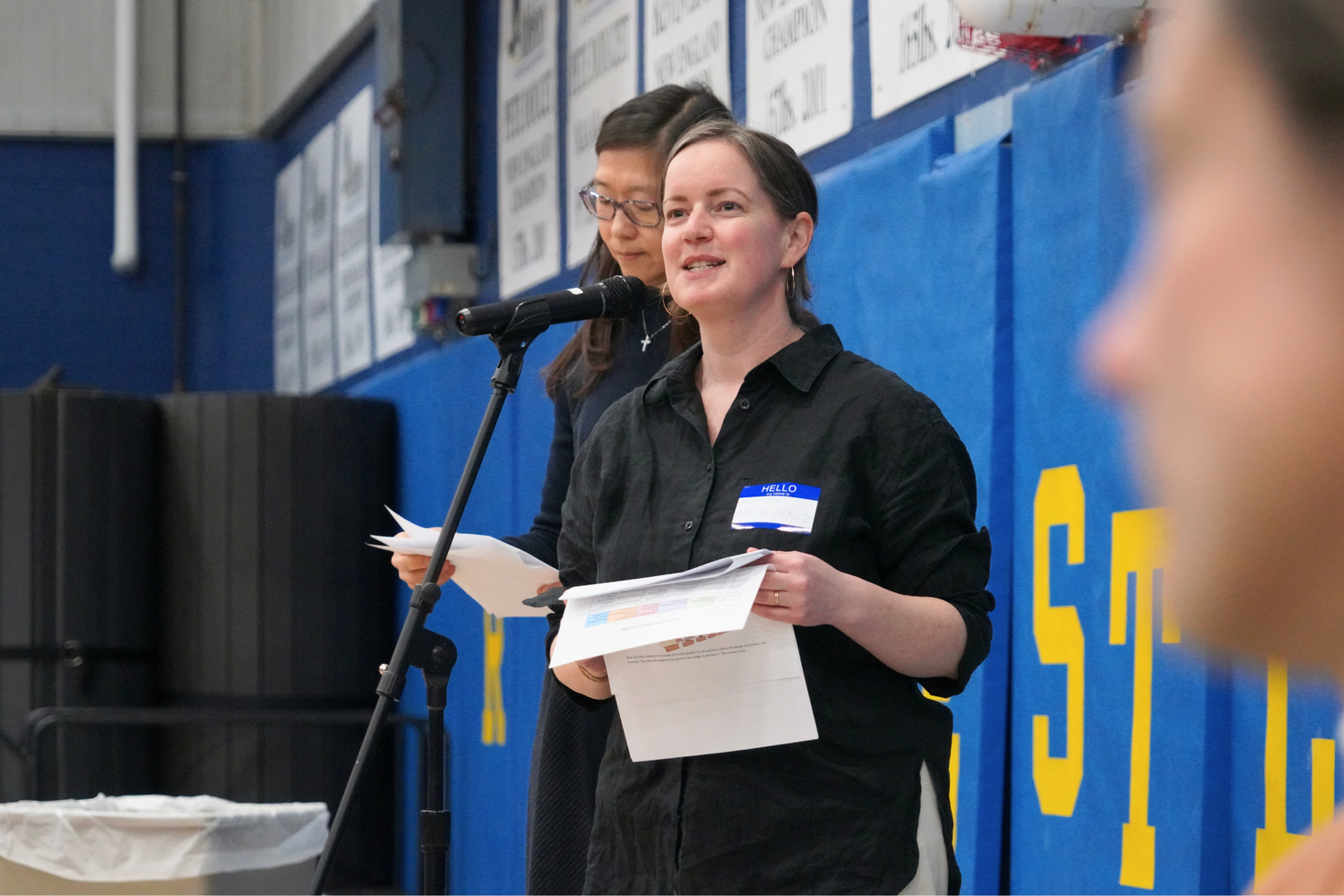
“We are so glad to welcome our many partners from the community to the KidWind Celebration Event this year, made possible with support from the SouthCoast Community Foundation and Ørsted,” Benitz said. “It’s incredibly rewarding to watch the fourth-graders present their model wind turbines to practicing engineers and researchers – a powerful moment that connects future engineers with those already in the field. And to see the fourth graders test their designs in a wind tunnel highlights the strength of the interdisciplinary collaboration between our engineering and education students, who spent five weeks guiding the fourth graders through the full engineering design process: brainstorming, building, testing, and refining their wind turbines.”
Teaching Wind Energy Through Discovery
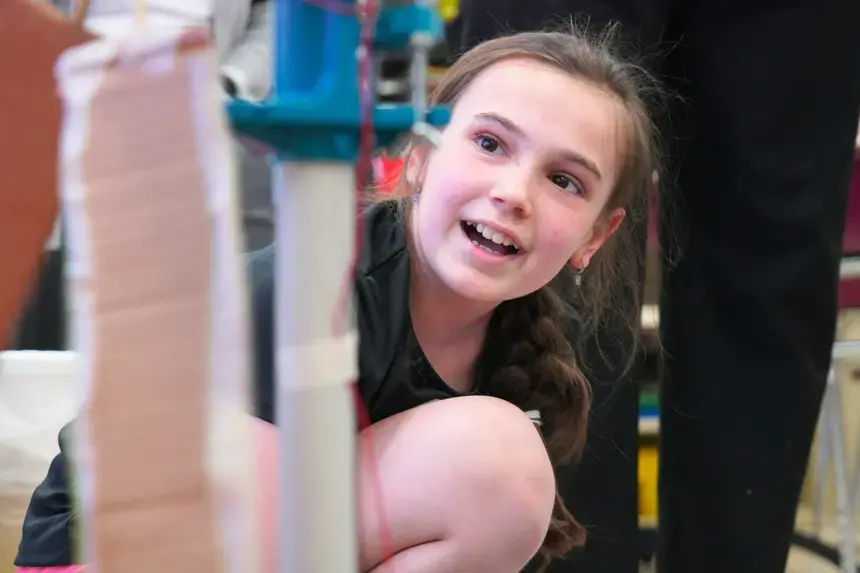
For the fourth graders, KidWind turns science from something abstract into something they can touch, test, and improve. Working in teams, students apply concepts such as energy transfer, blade design, variables, and iteration, while also practicing communication, teamwork, and problem-solving.
Jessica King, a fourth-grade educator at Rockwell Elementary School, said the project gives students an engaging way to experience engineering firsthand.
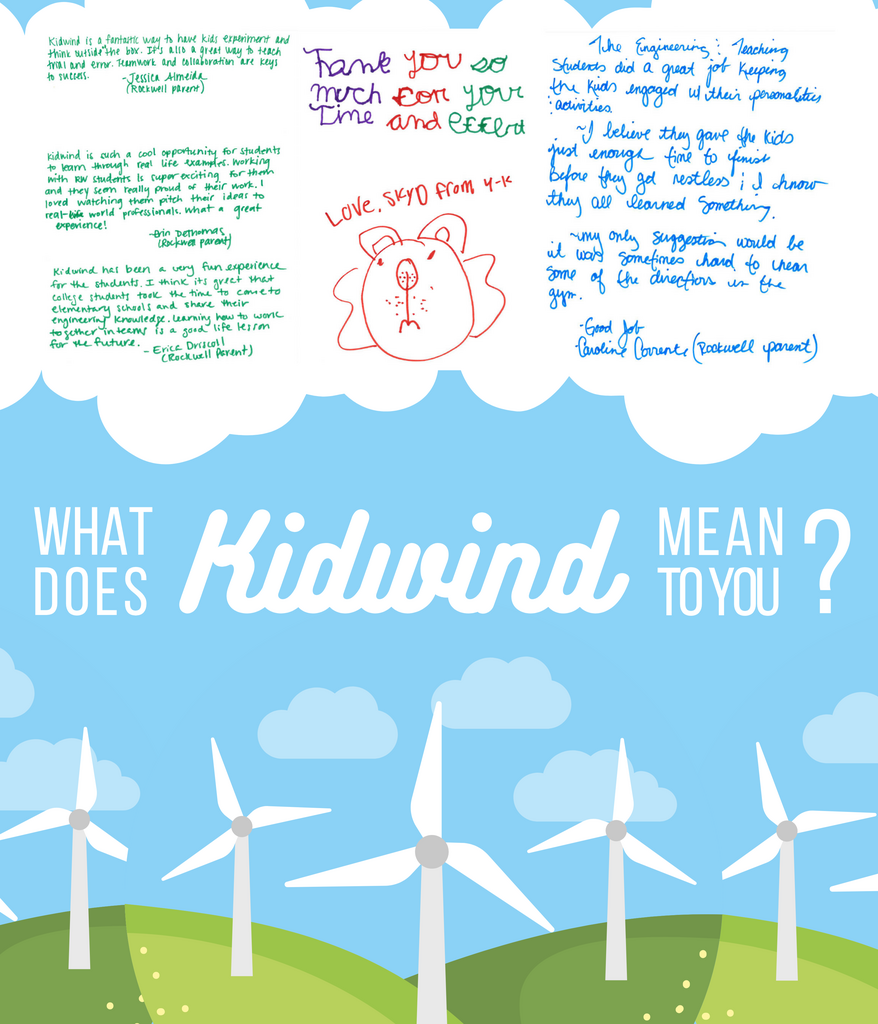
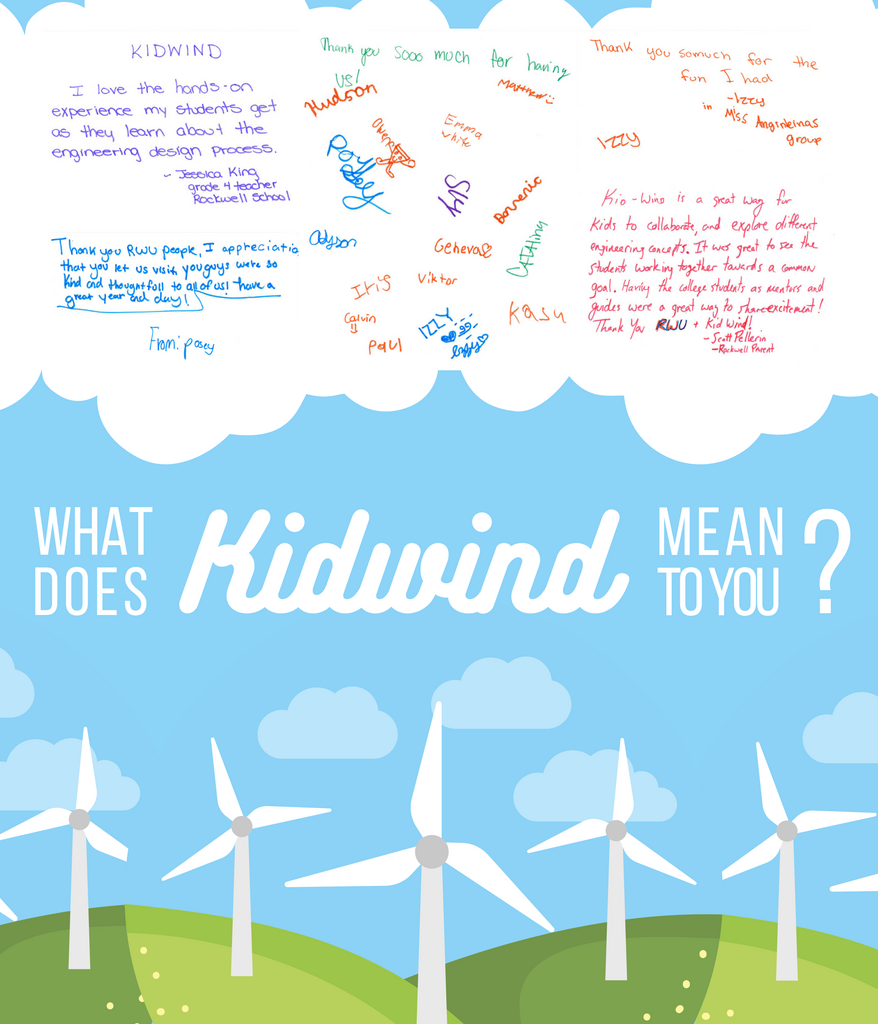
“I love the hands-on experience my students get as they learn about the engineering design process,” King said.
Students echoed that excitement.
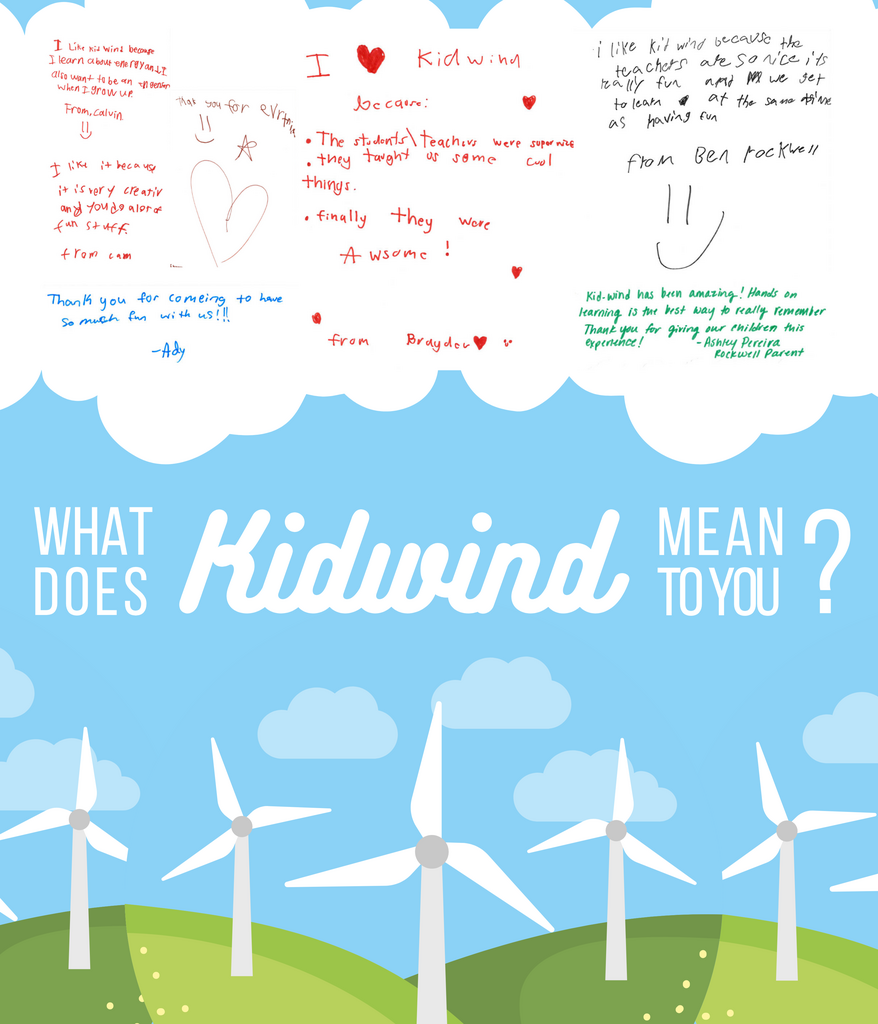
“I like KidWind because it helps me improve in school and teaches me more about school in mechanics and engineering, and I got to learn about different types of energy,” said Geneva, a BWRSD fourth grader.
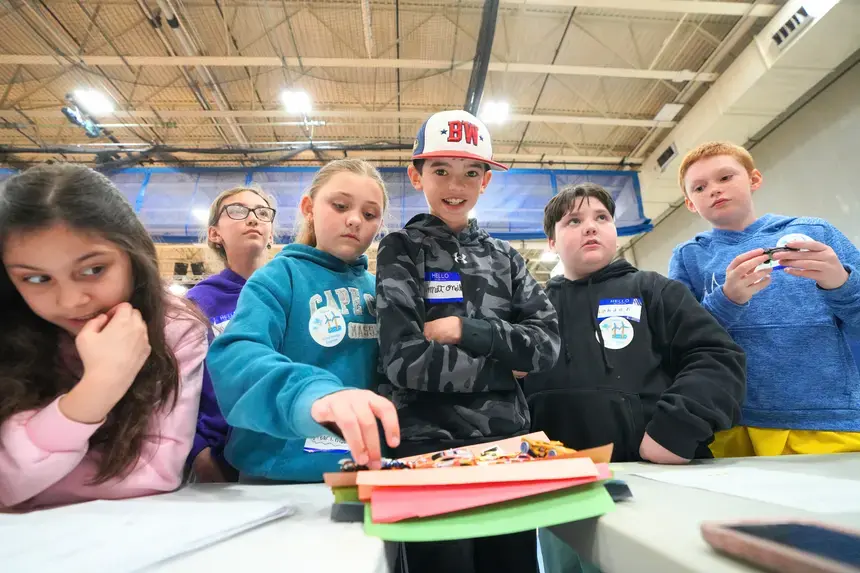
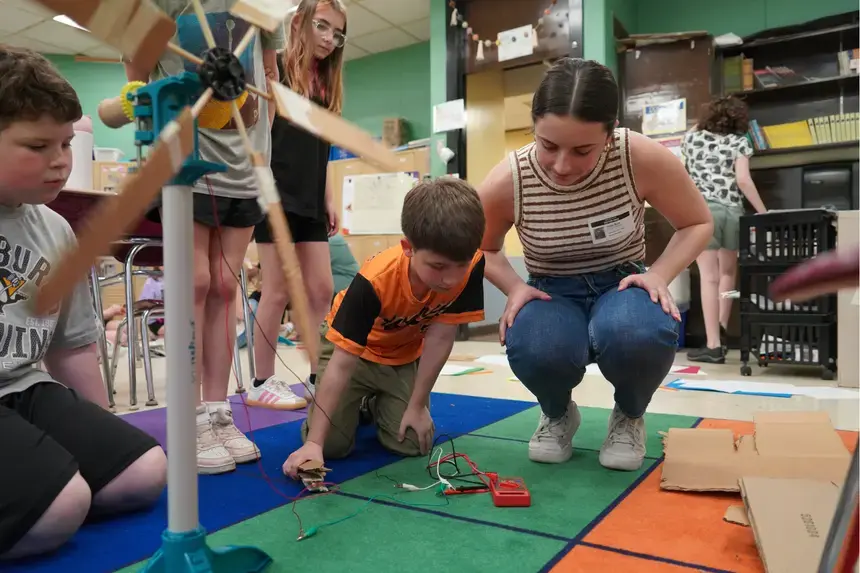
Brayden, another fourth grader, said the RWU students made the experience memorable.
“I love KidWind because the student-teachers were super nice,” he said. “They taught us some cool things – and finally they were awesome!”
Parents also saw the impact of the program during the Celebration Event, where students presented their work and tested their turbines.
“KidWind is such a cool opportunity for students to learn through real-life examples,” said Erin Dethomas, a parent of a Rockwell Elementary School fourth grader. “Working with RWU students is super exciting for them and they seem really proud of their work. I loved watching them pitch their ideas to real-world professionals. What a great experience!”
Erica Driscoll, another Rockwell parent, said the project helped students practice skills that extend beyond science.
“KidWind has been a very fun experience for the students,” Driscoll said. “I think it's great that college students took the time to come to elementary schools and share their engineering knowledge. Learning how to work together in teams is a good life lesson for the future.”
Research Assistants Help the Program Thrive
Behind the classroom lessons and Celebration Event is a team of RWU research assistants who help organize, refine, and strengthen the program. This year, KidWind was supported by five Education research assistants and two Engineering research assistants, whose work ranged from lesson planning and classroom support to technical feedback, materials preparation, event logistics, and program assessment.
Yang said the Education research assistants play a key role in helping this year’s student teaching teams create meaningful learning experiences for fourth graders.
“Education research assistants are essential to KidWind’s success,” Yang said. “Drawing on their prior experience planning and teaching KidWind lessons, our five education research assistants support this year’s interdisciplinary teaching teams with both lesson planning and instruction. They help ensure that effective teaching practices and meaningful learning experiences are implemented so fourth graders can understand wind-energy concepts and refine their turbine blade designs throughout the engineering design process. Their leadership and mentorship elevate lesson quality and provide the structure that allows the program to thrive.”
Benitz said the Engineering research assistants are equally important to managing a program with many moving parts.
“Our engineering Research Assistants play a pivotal role in project management, coordinating with a wide range of stakeholders, including fourth-grade students and their teachers, our Education and Engineering majors, and practicing wind energy professionals, across a variety of programming,” Benitz said. “Their thoughtful technical feedback on lesson plans, equipment organization, classroom support, and logistical planning ensures that this large and multimodal program runs smoothly each year. In the process, they develop real-world skills that cannot be taught in a classroom or lab, skills that become invaluable as they begin their careers after graduation.”
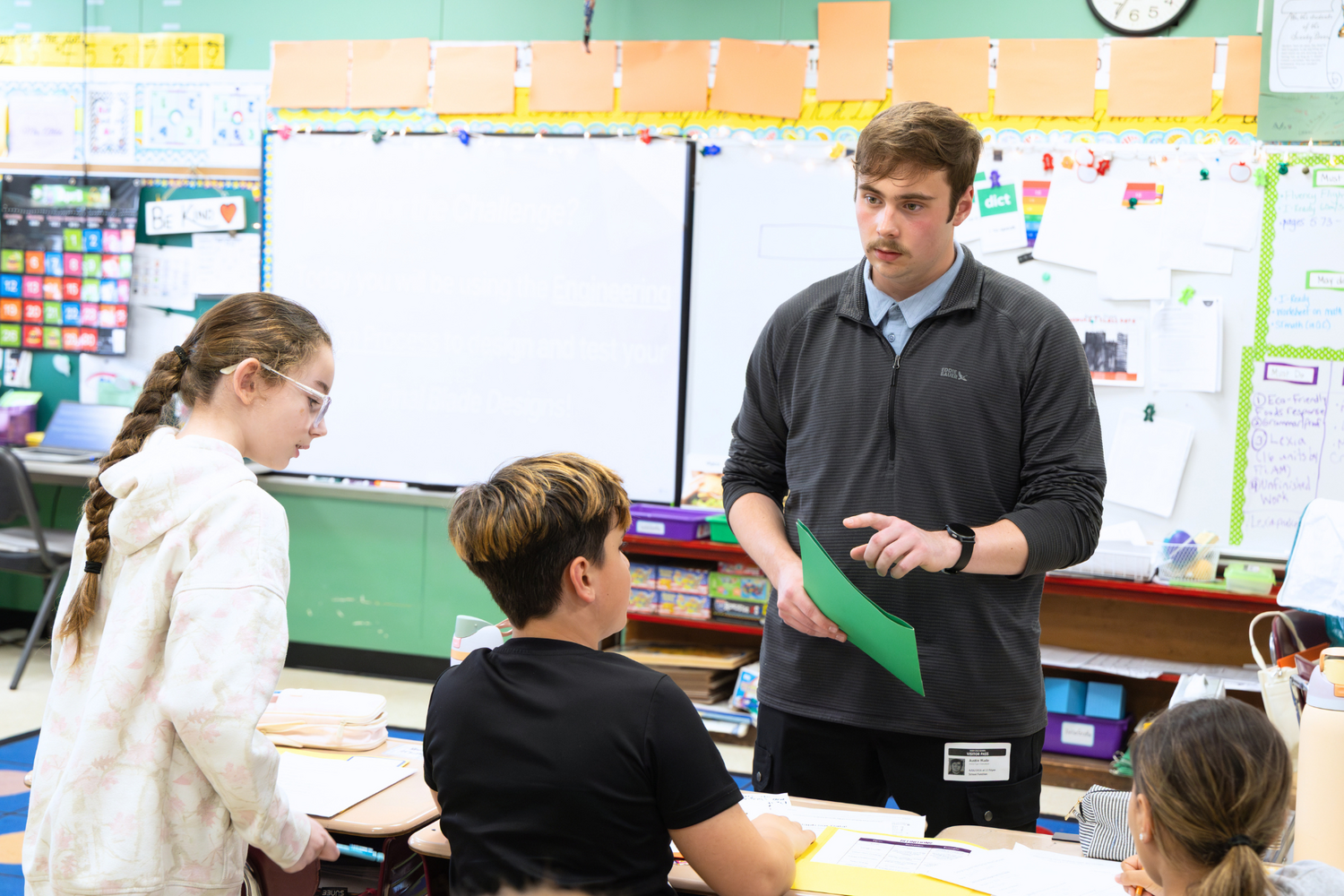
Cassie Allen, a junior Mechanical Engineering major with minors in Marine Biology and Mathematics from Foxboro, Mass., participated in KidWind last year as a student teacher and returned this year as an Engineering research assistant. She said the new role helped her see the full scope of the program.
“As both a student teacher and a research assistant, the most impactful moment for me is always seeing how excited the fourth graders get about the project,” Allen said. “It always makes me proud when they are designing their blades and I hear them applying the concepts they learned to their design ideas.”
Allen said the experience also challenged her to think differently about the role engineers can play in public education and communication.
“A lot of the engineering students, myself included, go into this project worrying that we won't be able to teach the material in a way that fourth graders can understand, but by the end of the project gain a lot more confidence in being able to communicate with a different kind of audience,” Allen said. “I think it goes to show that engineers can share what we know with a much wider range of people than we think.”
For Emma Lussen, a junior Elementary Education major with minors in Psychology, Spanish, American Sign Language, STEM Education, and Mathematics Education from Blauvelt, N.Y., serving as an Education research assistant has strengthened her confidence in planning and teaching science and engineering lessons.
“KidWind has really strengthened my confidence in planning and teaching effective science and engineering lessons,” Lussen said. “I went from not knowing where to start with a lesson plan to being able to design a full, effective lesson independently. It also pushed me to adapt in the moment, respond to students, and guide them toward their own understanding, which has been a huge area of growth for me.”
Lussen said the program has also helped her prepare for her senior residency and student teaching.
“I do not think I will ever feel completely ready, but if I had to choose what has prepared me the most so far, it would be KidWind,” Lussen said.
Preparing Future Educators and Engineers
For Education majors, KidWind offers an early and meaningful classroom experience. For Engineering majors, it provides a chance to translate technical knowledge for a young audience. Together, the students learn to work across disciplines, combining teaching strategies with engineering knowledge to make complex STEM concepts accessible.
Mattia McIntyre, a sophomore Elementary Education major with minors in STEM Education and Psychology from Norton, Mass., said the project helped her grow in lesson planning and classroom confidence.
“Prior to this class, I really struggled with lesson planning,” McIntyre said. “I had a hard time following the structure of them, was not exactly sure how to order certain things, and in all honesty very intimidated to even start one. I have expressed this to Dr. Yang multiple times but this project has boosted my confidence in planning through the roof.”
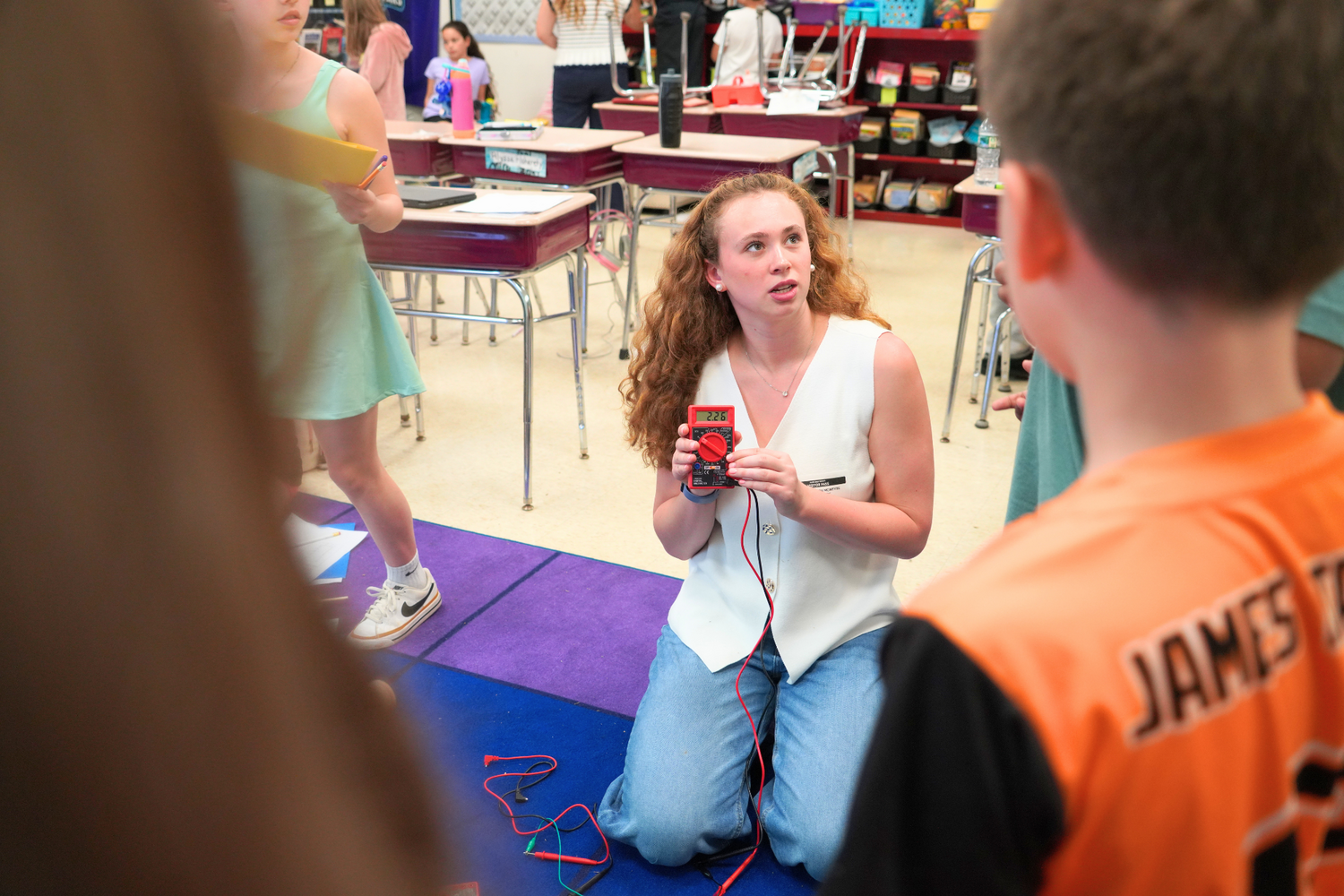
McIntyre said working with Engineering students helped her teach complex topics with greater confidence.
“I have learned so much from working with the engineering students, but I also feel that they have learned a lot from us in return,” McIntyre said. “They taught us about the complexities of science and engineering and important concepts we needed to understand in order to show the students how to work with the wind turbine as well as wind energy and in return, we as educators taught them how to classroom manage, deliver lessons, and take on sometimes complex questions that students like to ask.”
Daryl Kyabayinze, a senior Mechanical Engineering major and Mathematics minor from Uganda, said KidWind required him to adapt his communication style and connect engineering to students’ everyday lives.
“It reminded me that engineering is everywhere because you have to break it down to a level that they can understand,” Kyabayinze said. “You spend so much time in college and learning technical aspects of it, you forget to see that the fact that you're sitting on a chair, it's not falling down, came from somewhere.”
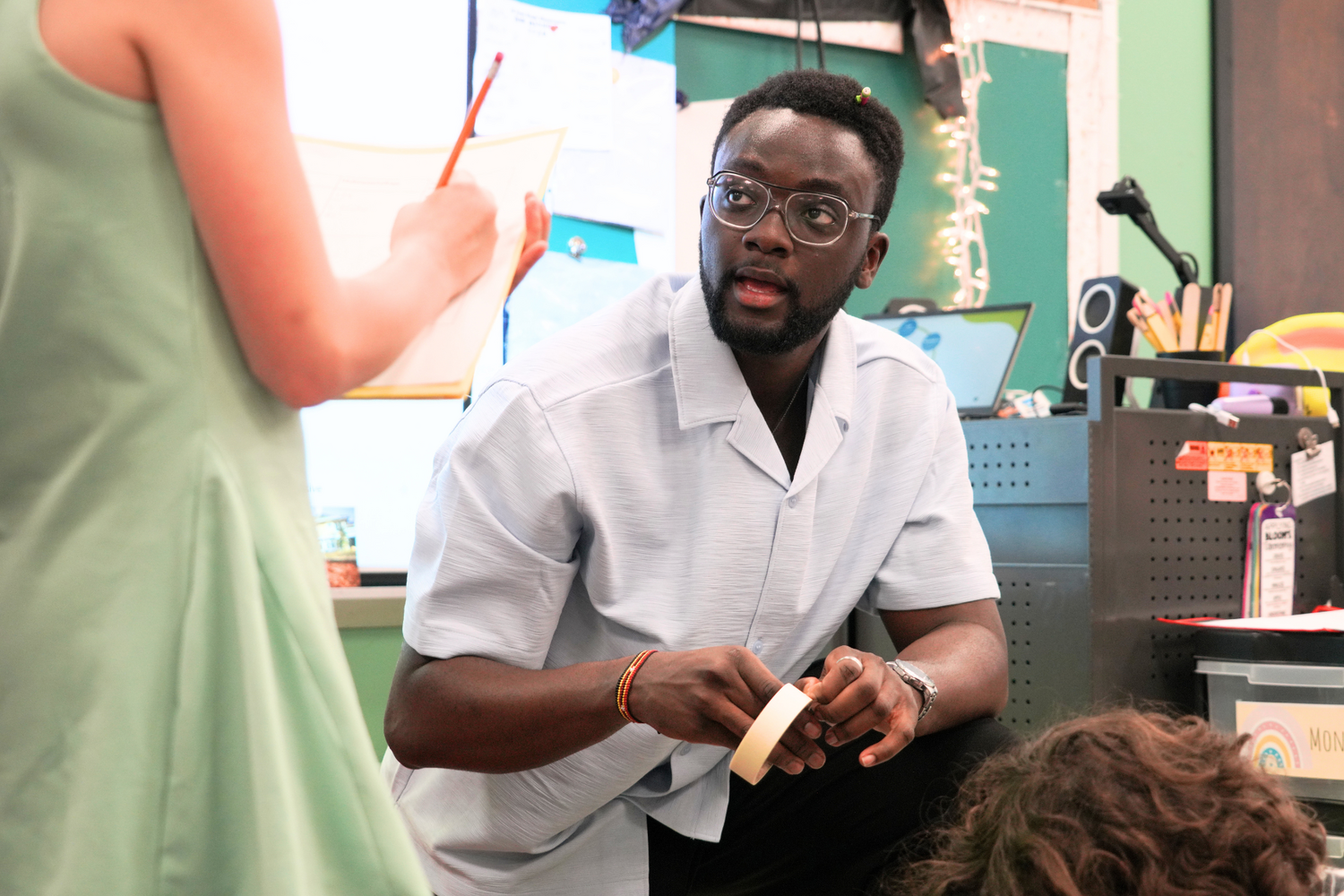
Kyabayinze, a transfer student who came to RWU from Hunter College and changed his major from physics to mechanical engineering, said interdisciplinary opportunities like KidWind are valuable because they offer meaningful takeaways for everyone involved.
“I think everybody has some takeaway from it,” Kyabayinze said. “The kids get to learn about something different in class. So there's that excitement of doing something different, doing some hands on engineering stuff. It's an opportunity for them to spark an interest in a sector, at least for clean energy, that is going to be more important as the years grow.”
A Full-Circle Moment for RWU Alumni
This year’s Celebration Event also brought RWU alumni back to campus, including Hannah Darling ’22, now a Ph.D. candidate in Mechanical Engineering at UMass Amherst, where she studies offshore wind turbines. As an undergraduate at RWU, Darling earned a bachelor’s degree in Environmental Engineering with minors in Sustainability Studies and Mathematics.
Darling participated in KidWind as an RWU student during the pandemic, when the program was conducted virtually. Returning this year as one of the panel experts gave her the chance to see the program in a new way.
“Coming back for this event was so special, I am always happy to return to my alma mater and give back to a program and community that gave me so much when I was a student,” Darling said. “And I was especially grateful to be a part of KidWind again, as it was such a meaningful experience in my own academic journey.”
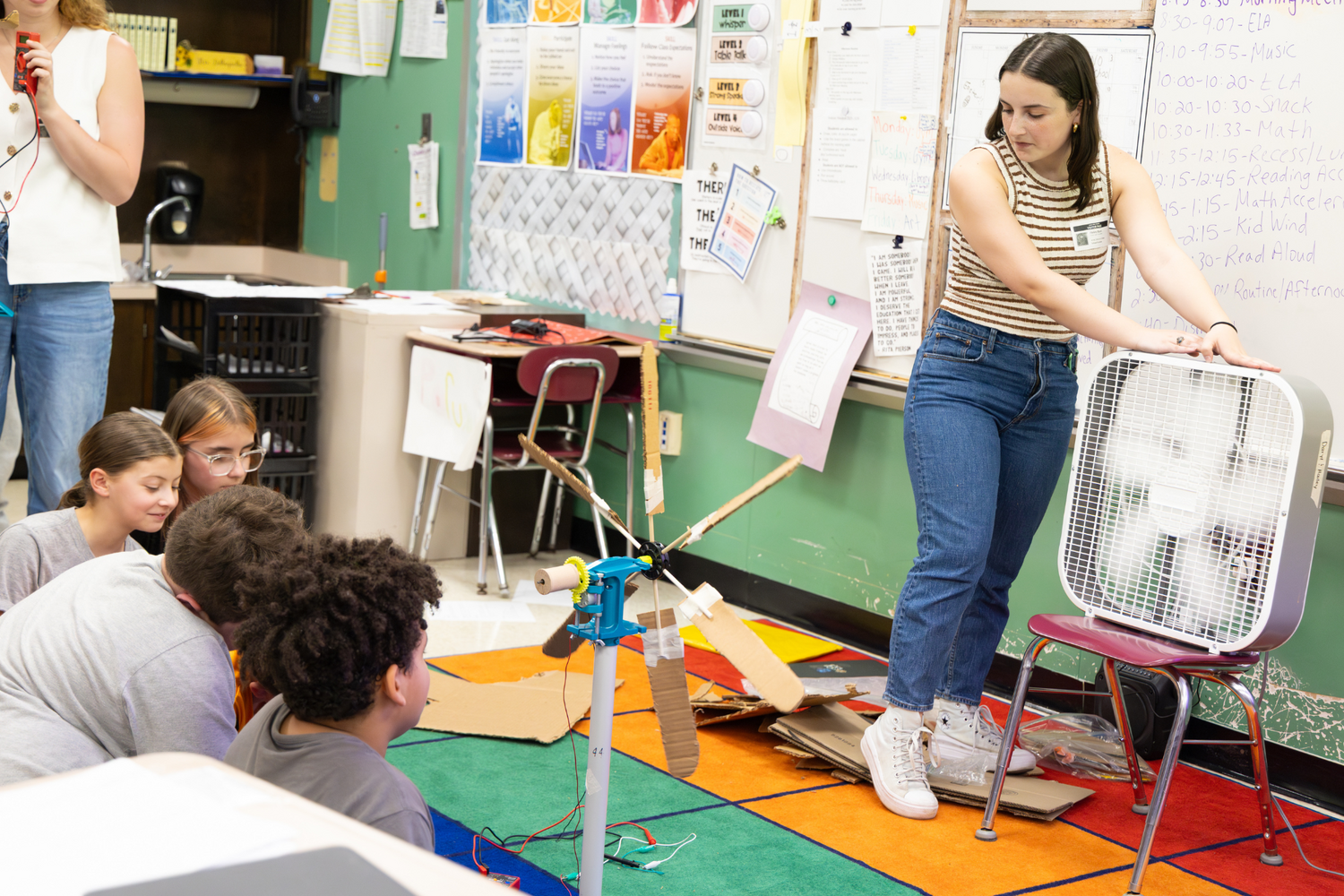
Darling said speaking with fourth graders face-to-face about their designs felt like a full-circle moment.
“When I participated as an undergrad five years ago, it was actually during the pandemic, so all of our interactions with the fourth graders were through a screen and we couldn’t have an in-person Celebration Event,” Darling said. “Being able to come back now for this event as one of the panel ‘experts’ and talk with the students about their designs face-to-face, was definitely a full-circle moment. It was so rewarding to see how excited and proud the students were of their designs and to see the impact this program has first-hand.”
Darling said her RWU experiences, including KidWind, helped shape her path toward graduate research in wind energy.
“I got my first real introduction to renewable energy (in particular, wind energy) in Dr. Benitz’s Sustainable Energy Systems course, ENGR.340, which was also where we did KidWind,” Darling said. “And I loved that class so much that I also went on to take her Ocean Hydrodynamics course, ENGR.448, which extended my learning into offshore wind energy. These two courses were foundational in developing my interest in wind energy.”
For current RWU students, Darling said the value of KidWind may extend far beyond the semester.
“I would encourage students to take experiences like KidWind seriously and fully engage with them, even if they seem small compared to some of the more technical engineering coursework they are doing at the time,” Darling said. “These experiences can be very beneficial, but you only get out what you put in. They are great opportunities not only for giving back to your community, but also for making connections, working as a team, building confidence in public speaking, and for strengthening communication skills, in particular the ability to explain complex ideas to a range of audiences.”
For seven years, KidWind has connected elementary classrooms, college coursework, community partners, and renewable energy professionals around a shared goal: helping students learn by doing. For fourth graders, that means seeing their ideas spin to life in a wind tunnel. For RWU students, it means gaining the experience, confidence, and communication skills to carry into their own classrooms, labs, and careers.