80%
Graduate With More Than A Single Major
The majority of RWU students graduate with a second major or minor, giving them the skills and diverse experiences that are most desirable for employers and graduate school admission.

SSNS prepares students for a variety of careers in the social or natural sciences.
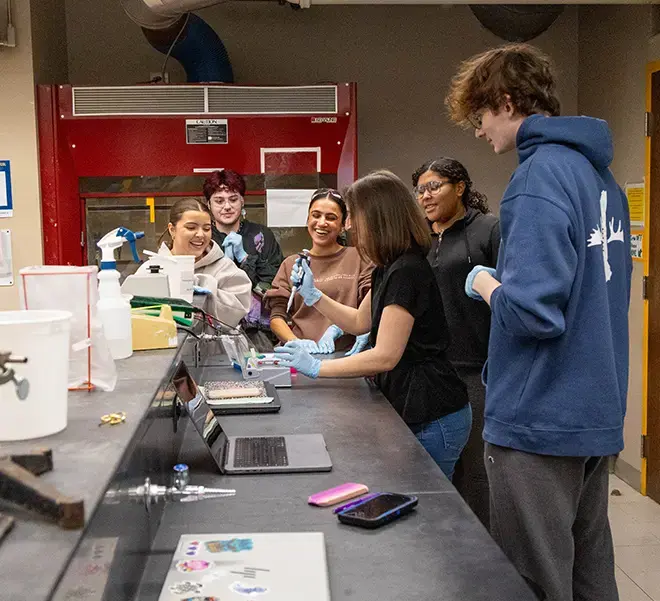
Understand the world. Help shape its future.
What makes people think and act the way they do? How does life thrive—from a single cell to an entire ecosystem? What can we discover when we look at a familiar problem in a new way?
At Roger Williams University’s Feinstein School of Social and Natural Sciences (SSNS), questions like these become the starting point for your education. We bring together the study of people, health, the natural world, and the mathematical principles that help explain it all. Through hands-on learning and scientific inquiry, you’ll develop the knowledge to understand complex challenges—and the skills to do something about them.
Welcome Message from Dean Paul R. Geisler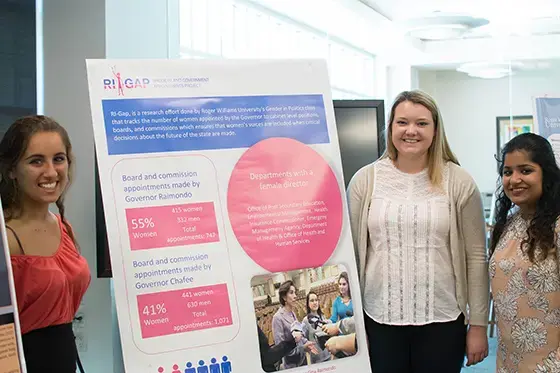
SSNS offers degree options for both undergraduate and graduate students in the fields of social or natural science. An SSNS education provides a foundation for careers and further study in scientific research, healthcare, environmental stewardship, data and technology, education, and more. Across our programs, you’ll strengthen your ability to evaluate information, solve problems, and approach unfamiliar questions with evidence and an open mind.
You don’t need to know exactly where your curiosity will lead. Start by exploring what matters to you.
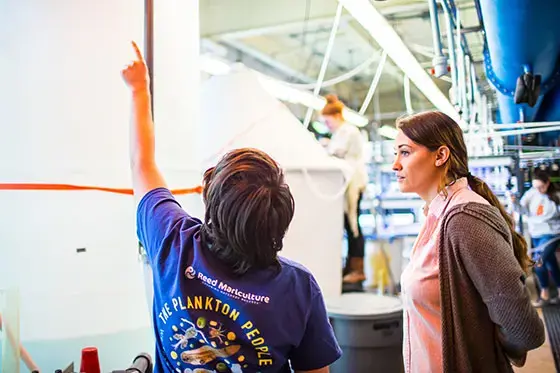
Put your learning to work in the world.
Our waterfront campus on Mount Hope Bay is more than a beautiful setting—it is a place for discovery. Through the Center for Economic and Environmental Development (CEED), students participate in marine research and community partnerships that connect healthy coastal ecosystems with sustainable industries. From aquaculture to aquatic animal health, learning reaches beyond the laboratory into the lives and livelihoods of coastal communities.
That connection between knowledge and impact extends across SSNS. Psychology students collaborate with community organizations, while Public Health students complete field experiences addressing contemporary health challenges. Here, asking “What can we learn?” goes hand in hand with asking “How can it help?”
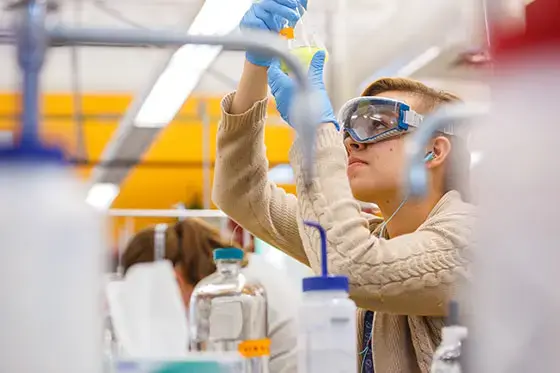
Encompassing social sciences like sociology, politics, psychology, and natural sciences like math, physics, and environmental science, our departments house programs that develop well-rounded students with the skill set to succeed in their careers or future study.
Build connections that help you grow.
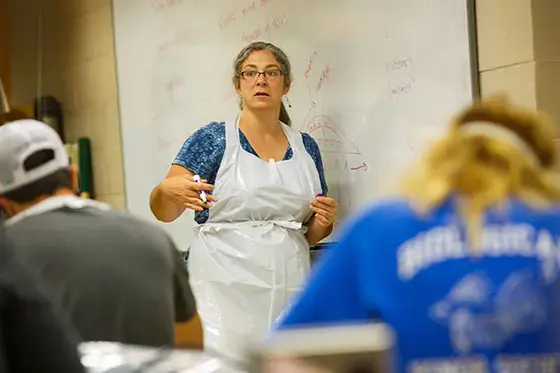
At SSNS, learning is personal. Our faculty work closely with students inside and outside the classroom, building relationships that connect teaching, research, and mentorship. You’ll learn with people who invite your questions, challenge your thinking, and help you develop your ideas.
Bring your perspective, your ambitions, and the questions you haven’t figured out how to answer yet. Whether you arrive with a clear direction or are still exploring, our goal is to help you find both a sense of belonging and the confidence to take your next step.
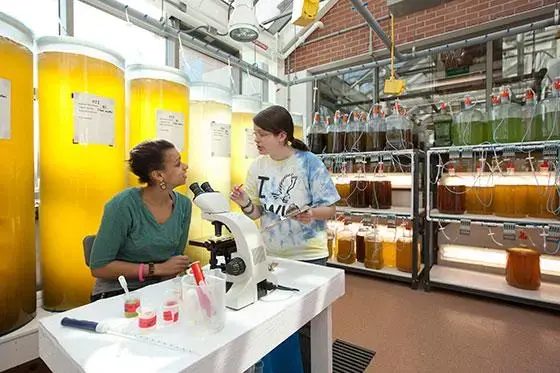
Considering a health profession? Our Pre-Health Professions Advising program offers individualized guidance on course selection, career exploration, relevant experiences, and applications to graduate and professional schools.
Visit Pre-Health Professions Advising for resources on how you can explore your options for health professions pathways.
Don’t just learn about discoveries. Help make them.
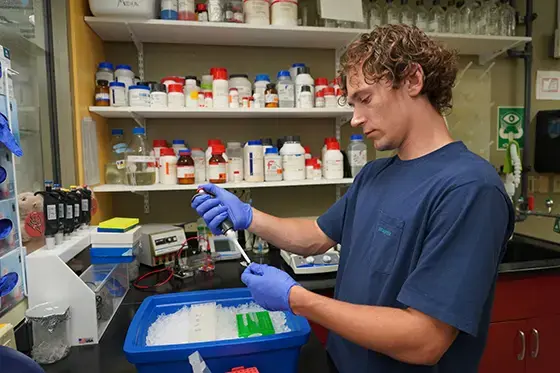
You don’t have to wait until graduate school to take part in research. SSNS offers opportunities to work alongside faculty on research projects as early as your first year, turning curiosity into questions you can investigate.
Depending on your interests, you might explore how memory works, analyze data to uncover a hidden pattern, or investigate a pressing public health issue. Through research, internships, and field experiences, you’ll practice gathering evidence, testing ideas, and explaining what you find. These are opportunities to discover not only how your field works, but also what kind of work excites you.
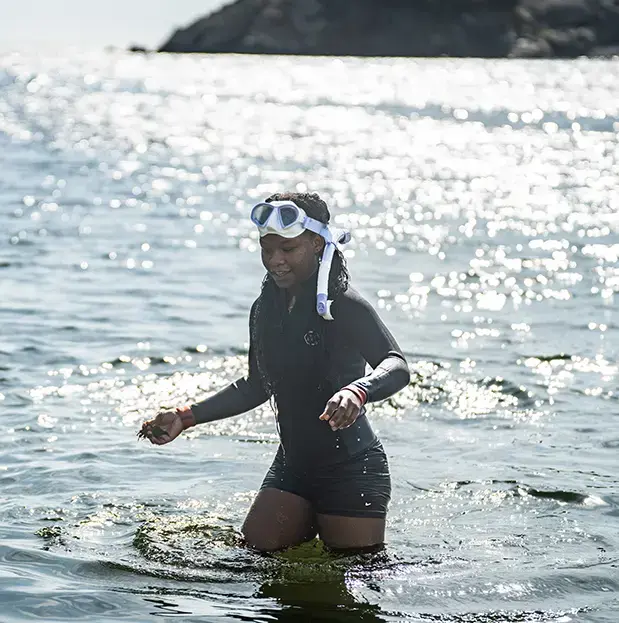
Your interests don’t have to fit into a single category. Explore the chemistry of living systems, the forces that shape our universe, the science of human behavior, or the health of oceans and communities. At SSNS, you can dive deeply into a subject while discovering connections that expand how you see the world.
Combine data science with public health. Connect biology and mathematics. Bring psychology together with an interest in education or business. With opportunities to combine majors, minors, and interdisciplinary experiences, you can build an education that reflects your interests—and opens doors you may not have considered.
Prepare for possibilities—not just one path. Discover what’s possible at SSNS
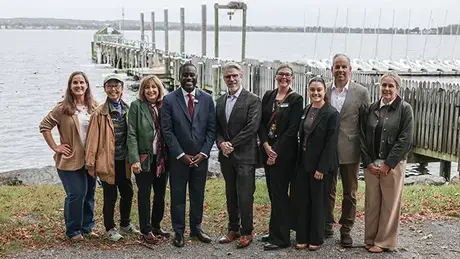
Congressman’s Blue Economy Tour stop highlights RWU’s aquaculture research, marine science, and hands-on student learning.
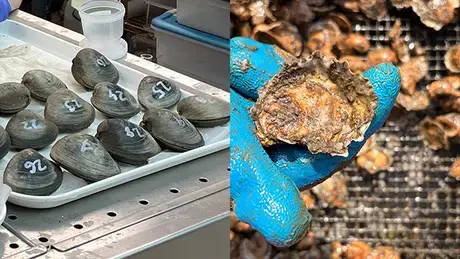
Three Roger Williams University students spent the summer turning their interests in marine science into hands-on experience through the Blue Fellows Program.
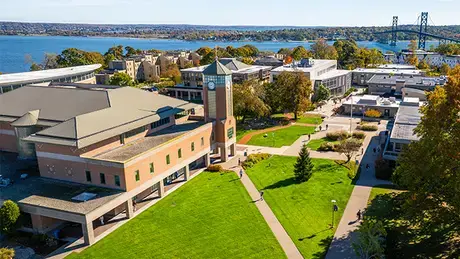
RWU rises 10 positions to No. 25 among Regional Universities North, debuts at No. 17 among private universities, and in value and social mobility.
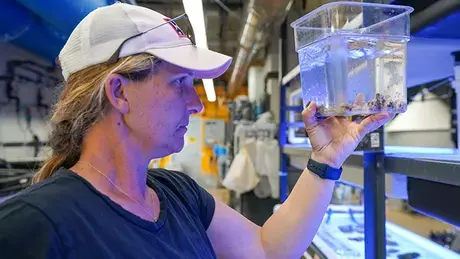
A decade-long, multi-institutional collaboration led by RWU researchers developed methods to spawn, breed and culture the temperate coral Astrangia poculata, creating new opportunities to study coral biology and animal-microbe symbiosis.
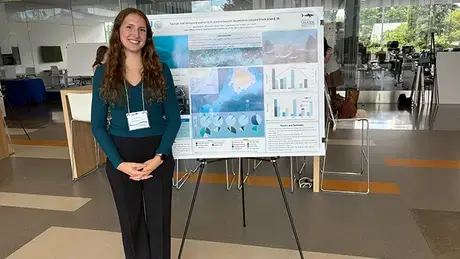
BRISTOL, R.I. – What lives beneath the waters off the Rhode Island coastline and around Block Island? Roger Williams University Marine Biology alumna Grace Baldwin ’26 spent her summer helping