
RWU Blue Fellows Turn Summer Experiences Into Real-World Skills
Three Roger Williams University students spent the summer turning their interests in marine science into hands-on experience through the Blue Fellows Program.
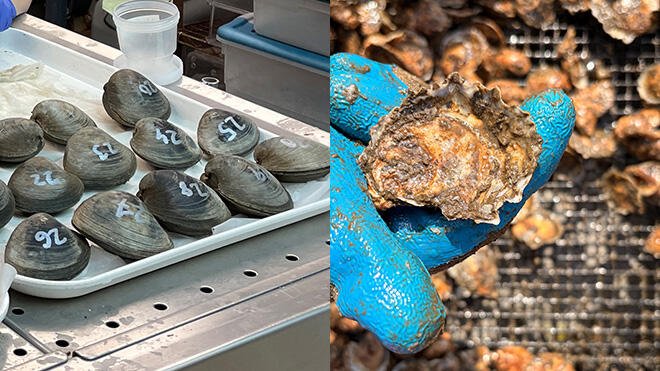
BRISTOL, R.I. – Three Roger Williams University students spent the summer applying what they learned in the classroom to hands-on experiences across marine science, aquaculture and education. Through fellowships with RWU’s Center for Economic and Environmental Development (CEED) and other university programs, Aiden Perham ’27, Collin Phelps ’27, and Ronan Peers ’26 built professional skills while shaping and supporting sustainable shellfish aquaculture and working with high school marine biology students to cultivate the next generation of the blue economy.
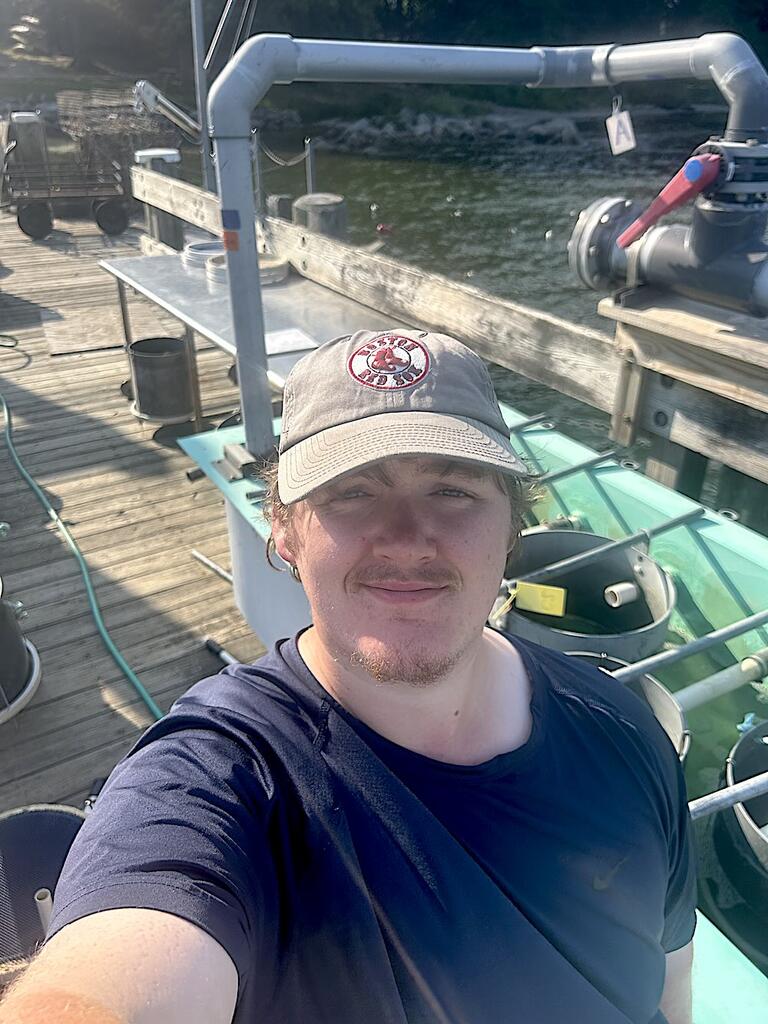
For Aiden Perham ’27, the summer was spent working with oysters, quahogs, and the people who grow them. The Marine Biology major from Weymouth, Mass., worked with CEED's Shellfish Hatchery and Ferrycliffe Shellfish Farm, gaining experience in nursery and farm operations. Perham tested and compared a variety of shellfish growout methods to support Rhode Island’s quahog and oyster populations. One of the newly tested methods is the oyster rag pot, an approach shared by partner organization Oyster River Ecology. “The highlight was working with so many different types of gear, and with some really awesome and funny people.”
The work also gave Perham a chance to experience the unpredictable nature of hands-on aquaculture and research. For Perham, the experience offered lessons that extend beyond the lab or farm — building the patience and persistence that come with working through challenges in the field. “What I will certainly carry is the perseverance gained from facing things when they fail to come to fruition, and continuing beyond those to push the objective you strive to see.”
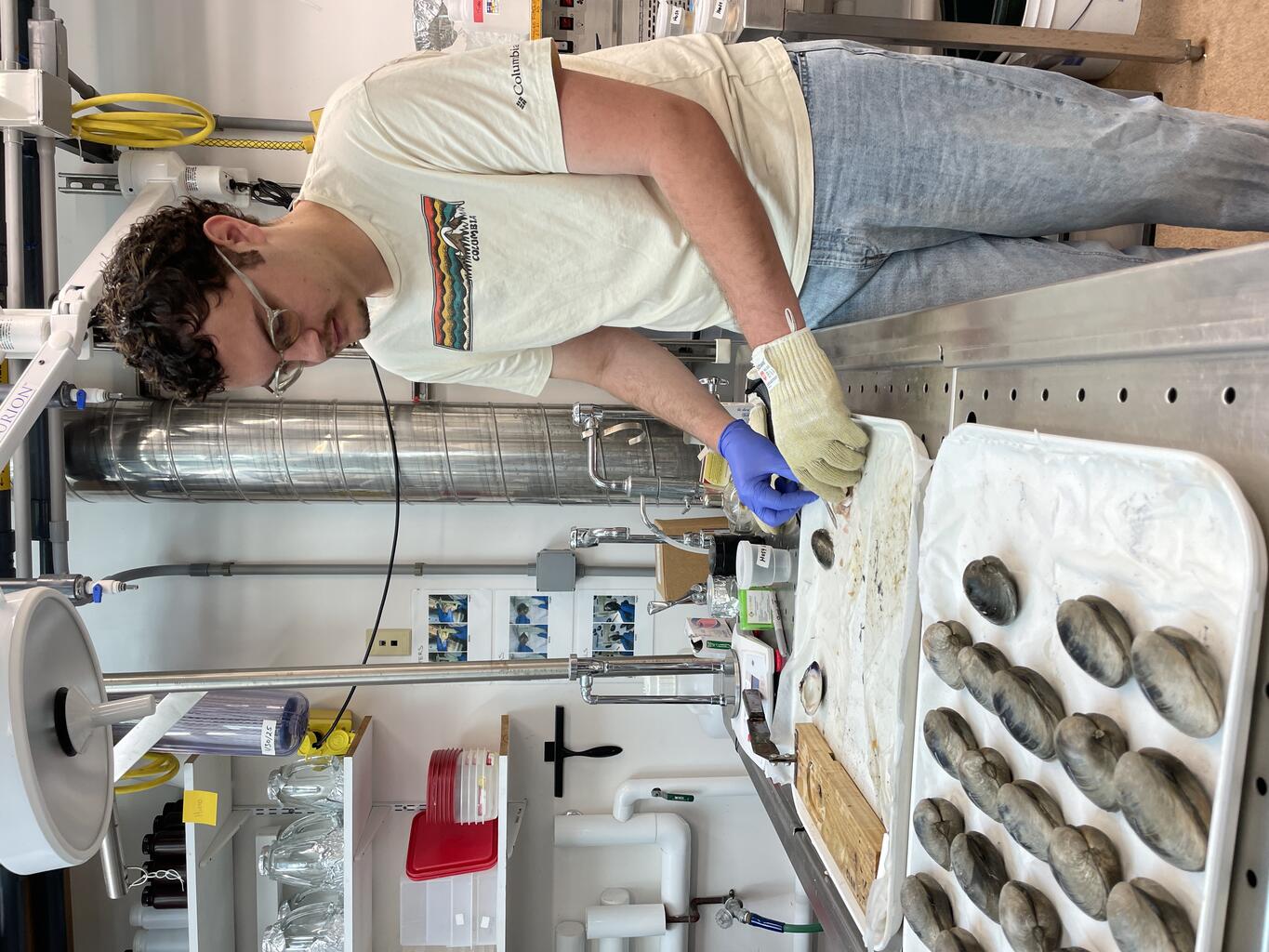
Collin Phelps ’27 brought his interest in biology and pathology to CEED's Aquatic Diagnostic Laboratory. Phelps, a Forensic Science major, biology track, from Northfield, N.H., spent the summer studying the reproductive timing of male and female hard clams from four Rhode Island locations using histological analysis.
His research found a statistically significant difference in reproductive timing between males and females. However, Phelps said that even though additional samples and locations are needed to determine whether the pattern represents a broader trend, the data he generated will help inform shellfish growers and managers in the region. Phelps said he gained important career skills that he can carry into a future career in forensic or clinical pathology. In addition to the specimen processing and laboratory bench skills, he asserted that he has “become much better at communicating my work to those inside and outside the field, which will prepare me for future presentations in graduate school and the workplace.”
For Ronan Peers ’26, the Blue Fellows experience took his marine biology interests beyond the lab and into the classroom. The Marine Biology major and finance minor from Patchogue, N.Y., served as the High School Marine Biology Camp Assistant Director and Scientific Communications Blue Fellow. He helped coordinate hands-on marine science lessons for high school students and supported the camp’s social media and web presence. Over the course of his fellowship, he gained experience in teaching, outreach, and public engagement, while helping get high school students excited about marine science.
Together, the three fellowships demonstrate the range of opportunities available through RWU’s Blue Fellows Program, from shellfish aquaculture and aquatic animal research to marine science education and outreach. By working alongside faculty, researchers, and industry partners, Perham, Phelps, and Peers gained practical experience while developing skills they can carry into graduate school, professional careers, and future work in marine science and related fields.
About the Blue Fellows Program
The Roger Williams University Blue Fellows Program, part of the Blue Solutions Institute at RWU, offers students immersive, hands-on internships with faculty researchers and industry leaders. The program is supported by a generous gift from Elizabeth Moore, a conservationist and environmental philanthropist, and a 2024 RWU honorary degree recipient. Read more about the fellows and their work in the RWU Blue Fellows Spotlight Series.
Blue Fellows Program