
WHM Spotlight: Brenda Clement
HousingWorks RI Executive Director Brenda Clement reflects on leadership, mentorship, and advancing housing opportunities across Rhode Island.
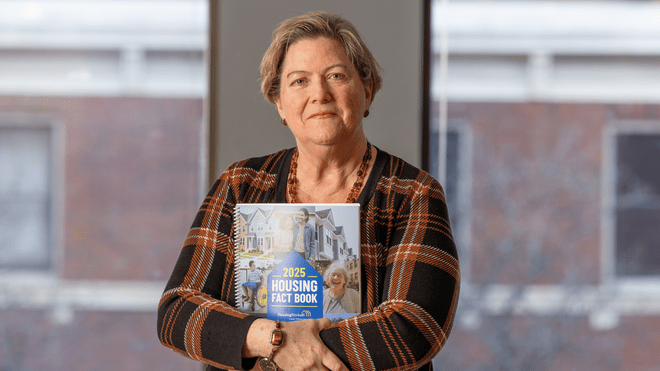
To continue our celebration of Women’s History Month and the remarkable women who help shape the Roger Williams University community, we’re introducing you to Brenda Clement, Executive Director of HousingWorks RI at Roger Williams University.
For more than three decades, Clement has been an influential voice in Rhode Island’s housing policy landscape. This year, she was named one of Providence Business News’ Most Influential People, recognizing her sustained leadership in affordable housing advocacy and data-driven public policy.
A native Rhode Islander from Pawtucket, Clement’s work has long been rooted in the communities she calls home. Her career began nearly 30 years ago in response to rising homelessness and a shortage of affordable housing in her hometown. What began as volunteer work through her church ultimately led to the founding of a citywide organization now known as Pawtucket Central Falls Development. She later became the first executive director of the Housing Network of Rhode Island, helping build a statewide coalition of nonprofit community development organizations.
At RWU, Clement leads HousingWorks RI, a research and policy organization that provides critical housing data and analysis to policymakers and community leaders across the state. Under her leadership, the organization produces Rhode Island’s widely cited Housing Fact Book and hosts the state’s zoning map for the National Zoning Atlas, helping inform decisions at the local, state, and federal levels.
In addition to her work with HousingWorks RI, Clement also serves as a part-time director in the Community Development program in RWU’s Extension School, where she helps connect students with hands-on opportunities in housing research and policy.
Her contributions have earned numerous honors over the years, including the Francis Smith Award from Housing Network RI, a Lifetime Achievement Award from Rhode Island Housing, a Healthy Housing Award from the Rhode Island Department of Health, and a Local Hero Award from Bank of America.
“It is always humbling and nice to receive recognition for work that I enjoy doing. I am blessed to have many friends and colleagues who do this work with me, and a family who loves and supports me.”
For Clement, the work ultimately comes back to a simple principle: stable housing provides the foundation people need to thrive.
Fun Facts About Brenda
- After graduating from Washington College of Law at American University, she clerked for the Rhode Island Supreme Court and later worked as a staff attorney before shifting her focus to housing policy and community development.
- The lifelong Rhode Islander served on the Pawtucket City Council early in her career and remains actively involved on local boards and committees.
- She continues to advocate for housing policy on the national stage and regularly travels to Washington, D.C., to meet with lawmakers and attend national housing conferences.
In Her Own Words
Tell us about your role at RWU and what leadership looks like in your work.
HousingWorks RI is a research and policy organization based at RWU’s Providence campus. We function as a nonprofit within the broader university community, which means we’re financially independent but work closely with faculty, students, and programs across campus.
Our work focuses on research, policy, and advocacy around housing affordability. We collaborate with colleagues in the School of Law, Cummings School of Architecture, School of Engineering, Computing and Construction Management, and the Extension Schools’ Community Development program. Those connections allow us to provide students and faculty with opportunities to engage in housing research and policy work.
There’s really no typical day. The housing policy landscape has been extremely active in recent years, particularly as the state has increased its focus on addressing affordability challenges. We work closely with state leaders and local communities to help implement policy changes and make the case that investment in housing is fundamental to people’s success in life.
It’s demanding work, but it’s also incredibly fulfilling.
What does it mean to you to be a woman leader at RWU?
When I started in affordable housing work and advocacy, I was often the only – or one of very few – women in the room. I have been fortunate to have many strong women in my life, both within my family and among colleagues throughout my career. Hopefully, the work I have done can serve as a model and encouragement for others.
It’s a great fit for us here at RWU because of the many colleagues and programs we collaborate with regularly. Our team at HousingWorks RI is outstanding, and our partners across the university and within the Extension School community are incredibly supportive.
The team at HousingWorks strives to provide reliable data and research that help inform policy and elevate the importance of housing affordability. We believe facts matter, and we will continue adding our voice to the effort to improve housing opportunities across Rhode Island.
What does “Give to Gain” mean to you and what do you give that helps others gain opportunity?
For me, “Give to Gain” is about creating the same kinds of opportunities that others provided to me early in my career. I started in housing as a volunteer and intern, and mentors helped guide me along the way.
At HousingWorks RI, we try to pay that forward by offering internships, research opportunities, and mentoring to students from RWU and other local universities. Mentorship has always been an important part of my work. Over the years, I’ve been fortunate to work with many people who are now doing incredible work in housing and community development across Rhode Island and beyond.
Were there specific people who helped shape your path, and how did their influence guide you?
One of the moments that shaped my career happened early on in Pawtucket during a neighborhood cleanup organized by my church youth group. While we were cleaning up an empty lot, we discovered that someone had been living in an abandoned car – and there were children’s toys in the back seat. That moment was eye-opening. It brought the reality of housing insecurity close to home and made many of us realize we had to do something.
With encouragement from my mother and others in our church community, we started reaching out to people and exploring ways to create housing in our neighborhood. Eventually, we took a leap of faith and purchased several nearby properties to create affordable housing. Those homes are still providing affordable housing today, and that experience set me on the path to a career in housing advocacy.
What has been one meaningful success for you in your work so far?
One of the most meaningful parts of my work is seeing the real impact of stable housing on families. Earlier in my career, my family and I helped manage housing developments directly, and we saw firsthand how stable housing can transform people’s lives – especially for children. When families aren’t forced to move constantly or live in unhealthy conditions, it allows them to focus on education, health, and stability.
Even today, attending ribbon cuttings and groundbreakings for new housing developments is incredibly rewarding. Housing is the foundation for everything else in life. Without that stability, it becomes much harder for individuals and families to succeed.
When you reflect on the journey that brought you to RWU, what experiences most prepared you for the work you’re doing now?
Many different experiences shaped my path. My legal training certainly helped prepare me for policy work, but I also draw on lessons from earlier parts of my life – including community work and public speaking opportunities through my church. Communication is a big part of this work. Much of what we do involves explaining complex housing issues, sharing data, and helping people understand why housing affordability matters.
I also had a lisp as a child and spent time in speech therapy. With the support of my family and teachers, I overcame that challenge and eventually found my voice. Today, I try to use that voice to advocate for policies that improve housing opportunities for everyone.
What advice would you offer to students or early-career professionals stepping into leadership?
Don’t be afraid to take a leap. You may fail, but you may also succeed and discover opportunities you never expected. If you see a problem in your community and feel compelled to help address it, don’t hesitate to step forward. Being bold and taking those chances can open doors you might not even see yet.
Women's History Month Spotlights 2026