
Roger Williams University Brings Leadership Training Expertise to National Police Training Effort
The Promoting Police Leadership Act aims to close a gap in how police commanders are prepared to lead, building on more than two decades of leadership training at RWU.
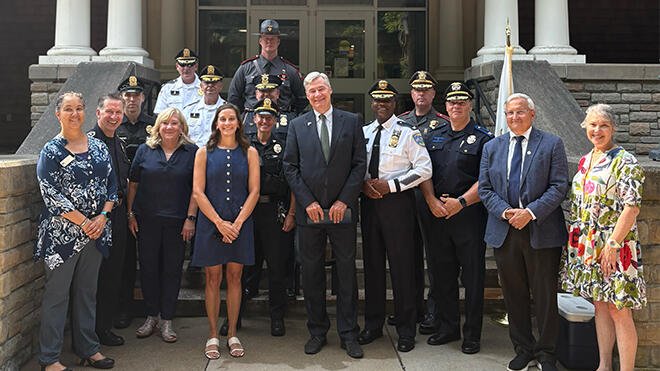
BRISTOL, R.I. – Police commanders make decisions that can shape an entire department – from how officers respond to emerging crime patterns to how agencies manage crises and build trust within their communities. Yet there are currently no national standards for preparing law enforcement officers to take on those leadership responsibilities.
The Promoting Police Leadership Act aims to change that.
The bipartisan legislation would direct the U.S. attorney general and Department of Justice to develop a national framework for commander-level law enforcement training. The framework would address areas such as leadership and strategic thinking, critical incident response, risk management, officer wellness and community trust. It would also emphasize data-driven policing and evidence-based decision making. The bill would establish a voluntary process for certifying high-quality training programs that align with the framework.
For David Lambert, Assistant Dean of Roger Williams University’s School of Justice Studies and Director of its Justice System Training & Research Institute (JSTRI), leadership training matters because commanders are responsible for turning new knowledge and practices into decisions that shape how their departments operate.
“Police leaders establish professional cultures, manage crises and design strategies to address emerging crime and disorder issues,” Lambert said.
Unlike military professionals, who receive leadership education throughout their careers, police officers can reach command positions without ever having the opportunity to attend an organized leadership development program, Lambert said. Because policing is largely managed by state and local governments, access to that preparation can vary among departments and communities.
Whitehouse’s office asked JSTRI to participate in reviewing the legislation after learning about the institute through the Rhode Island Police Chiefs Association, Lambert said. JSTRI also hopes to raise awareness of the legislation across the six New England states that send officers to RWU’s professional development programs. The bill unanimously passed the Senate in June and awaits a vote in the House.
At RWU, leadership development for law enforcement professionals has been underway for more than two decades. JSTRI’s Command Series includes First Line Supervisor, Mid-Management and Executive Development programs. Lambert emphasized that many New England police agencies routinely send newly promoted sergeants, lieutenants, captains and majors to the programs as part of their leadership development.
Participants in JSTRI’s Mid-Management course have highlighted its academics, knowledgeable instructors and opportunities to exchange perspectives with law enforcement professionals from across New England. Lambert said the courses also create professional networks that officers can draw upon as new issues emerge within their agencies. Several participants have continued their education through graduate study at RWU.
JSTRI’s broader professional training also encourages law enforcement leaders to examine whether longstanding policing practices remain the most effective approaches to current problems.
Lambert points to patrol strategy as one example. Rather than relying solely on random preventive patrol, departments can analyze calls for service and incidents to identify areas with higher concentrations of activity. Leaders can then use that information to direct resources where they are needed. JSTRI also offers training in crime analysis, crime mapping and intelligence-led policing to support data-driven decision making.
If the bill becomes law, JSTRI plans to review its Command Series against the national framework and identify areas where its curriculum can evolve. For Lambert, the legislation reinforces the importance of continuous learning as police leaders respond to changing public safety challenges.
“If we can play a small part in transitioning police organizations to evidence-based and data-driven entities, the communities they serve will benefit,” Lambert said.