
Kathleen Kiely ’13: ‘Life Is a Group Project’
From rebuilding WQRI’s music library to shaping multiplatform storytelling at WCVB’s Chronicle, Kathleen Kiely carried lessons in collaboration, adaptability, and audience connection from the radio booth into her career.

When Kathleen Kiely ’13 became WQRI’s music director in 2011, she inherited a radio station without much of a music library.
The station had recently suffered a major equipment failure. Its system had to be rebuilt, and much of its music was gone. Kiely, still relatively new to WQRI, suddenly found herself responsible for helping start over.
“The music director was actually kind of this monumental task that I was not prepared for,” she said.
She spent hours in the station’s lime-green booth in the Recreation Center, uploading CDs and audio files into the new system, organizing songs and coordinating a committee to help rebuild the collection.

The booth itself is difficult for Kiely to forget. Its lime-green, black and purple colors were, in her words, “very aggressive and in your face.” And because everyone was worried about the equipment overheating again, the air conditioning ran constantly.
Kiely remembers wearing sweatshirts and jackets while she worked.
Often, her now-husband, Marty, would volunteer to sit with her and help upload music — something she later realized may have been partly an excuse to spend more time together.
Piece by piece, the library came back.
“We were just trying to build things back up because we were starting with nothing,” Kiely said.
It was not glamorous work. But it taught Kiely lessons about leadership, organization and working with others that would follow her far beyond the radio booth.
Building It Back Up
Kiely arrived at WQRI in fall 2010 after spending the previous summer interning at Boston radio station WROR. She had enjoyed radio and wanted to continue exploring it when she returned to Roger Williams.
She joined the station, became music director the following year and later moved into the promotions director role for 2012-13.
She also found her way behind the microphone.
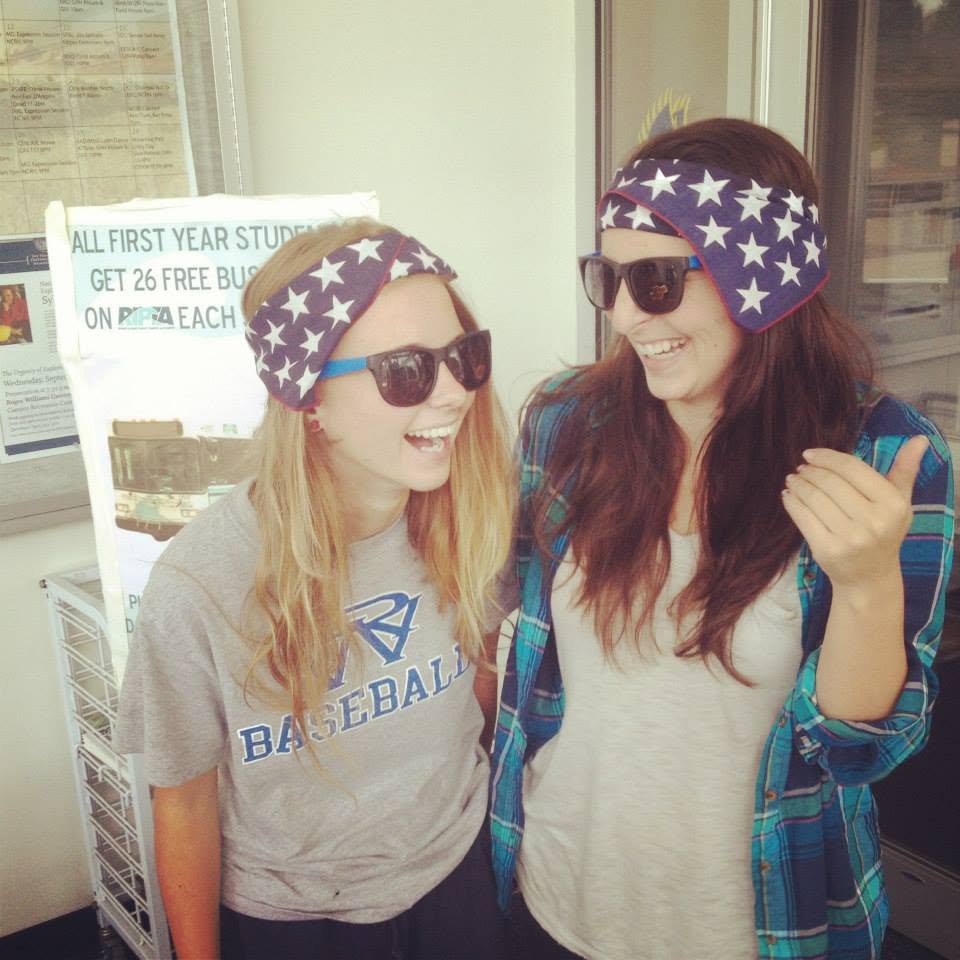
After initially hosting a show by herself — an experience she remembers mostly for how little she wanted to talk alone on air — Kiely teamed up with her friend Melissa Pennington for The Midweek Hump on Wednesdays.
There was not much of a format. They played whatever music they felt like hearing, solicited requests through the show’s Facebook page and occasionally fielded calls from people in Bristol looking for advice. Once they received a call from a father asking whether his daughters should be allowed to go to the mall.
Kiely and Pennington advised against it.
“We had fun doing it and being silly,” Kiely said.
That freedom existed alongside the more serious responsibility Kiely had taken on behind the scenes.
As music director, she had to manage her own time and that of a committee. She could not rebuild an entire music library alone. Someone needed to upload songs while she was in class. Someone needed to review the steady stream of CDs arriving at the station. Someone had to make sure music was categorized correctly.
Not every categorization went according to plan.
For reasons Kiely still cannot entirely explain, the Baha Men’s “Who Let the Dogs Out” was entered into the system as world music. Because WQRI’s automation system was programmed to pull songs from different genres throughout the day, the song began appearing constantly.
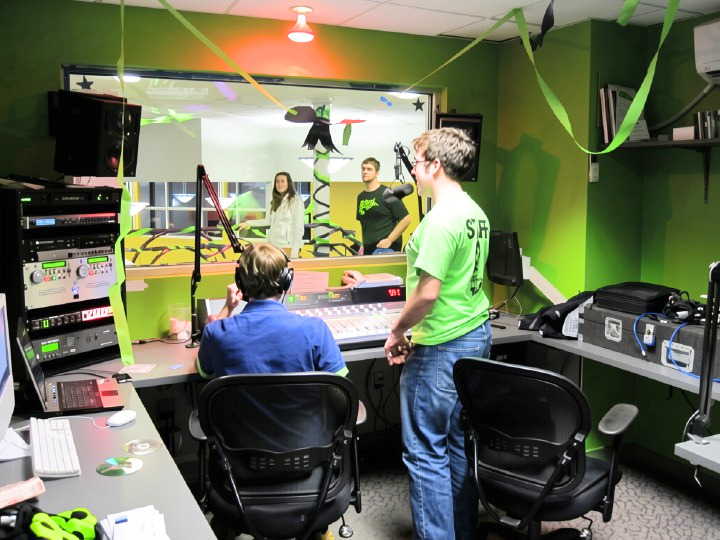
The station spent months trying to figure out why.
“Whenever I hear ‘Who Let the Dogs Out’ by the Baha Men, that’s what I think of,” Kiely said. “I think of WQRI.”
By the time Kiely moved into promotions, she was ready to apply what she was learning in a different way.
The station was still rebuilding its audience along with its infrastructure. Events could be difficult to promote. Attracting one more listener or getting another student through the door felt meaningful.
“One follower to a first show was a big win for us. When students came, they had a good time, and then more people would come, and more people would come.”
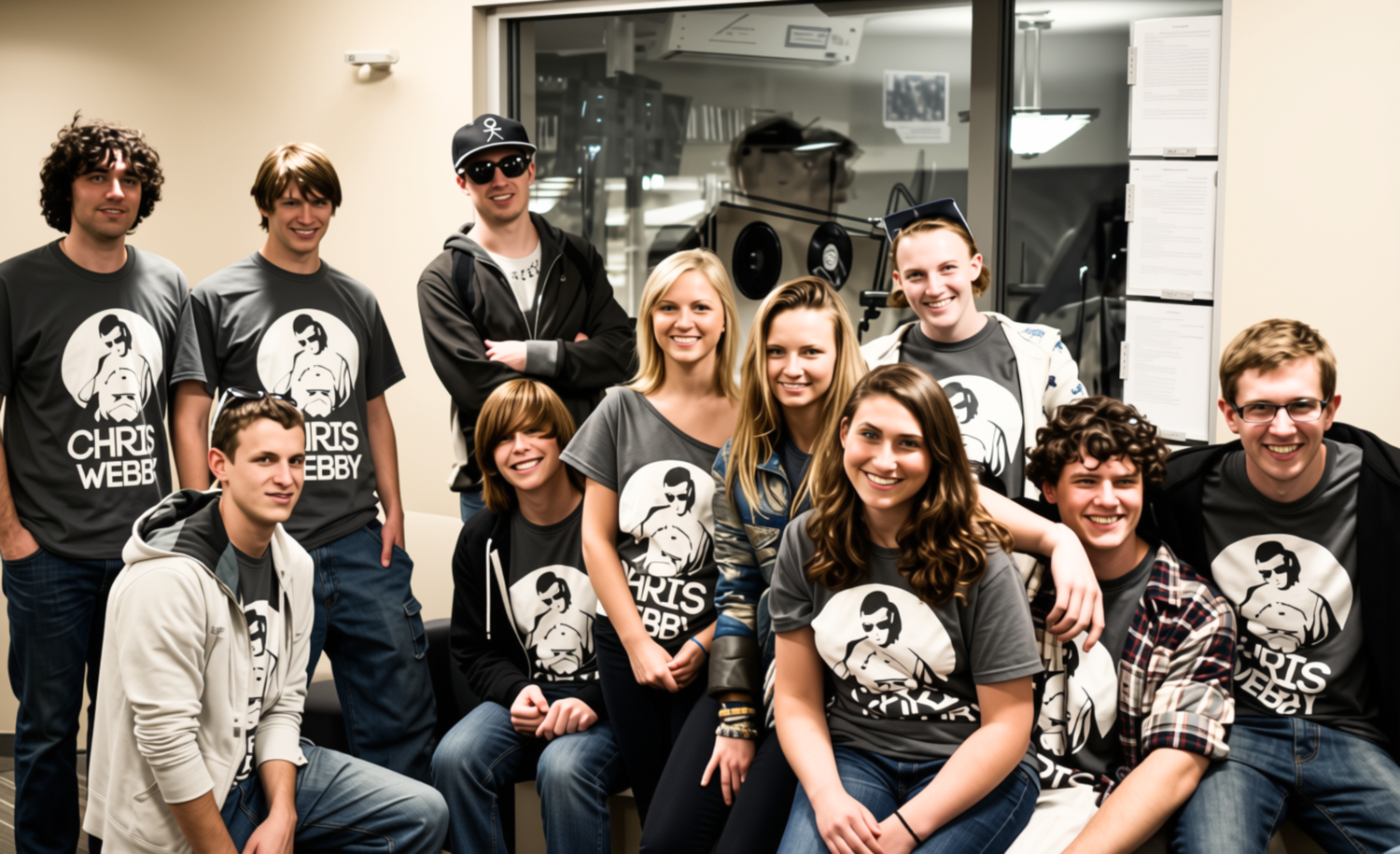
Concerts featuring artists such as Chris Webby and Alex Marley became opportunities to see months of preparation pay off. They also taught Kiely how much work happened before an event ever reached an audience — preparing riders, coordinating logistics, working from checklists and being ready to solve whatever problem appeared that day.
“Weirdly, that’s transferred over so much into what I do now,” she said.
Promotions also taught Kiely to think about something that remains central to her work today: identity.
WQRI, she jokes, was something of a “hot mess” visually at the time — multiple logos, aggressive colors and materials that did not always look as though they belonged to the same organization.
She worked with other executive board members to make the station’s branding more cohesive.
“They didn’t tell a story of who the radio station was — who we were and what we were doing,” Kiely said.
‘Life Is a Group Project’
Kiely graduated in 2013 with a degree in Media Communication, a minor in Sustainability and a CORE concentration in International Studies.
Her WQRI experience brought her together with students from many different academic interests.
Some joined because they wanted careers in media. Others simply loved music or radio and later found ways to apply their academic strengths to the station.
Kiely’s husband, now an attorney, helped write WQRI’s bylaws. Business manager Chris Pena brought his interest in business and entrepreneurship. Others contributed through music, promotions, technology or broadcasting.
“People used what they knew to help the station, but also help themselves in their career path,” Kiely said.
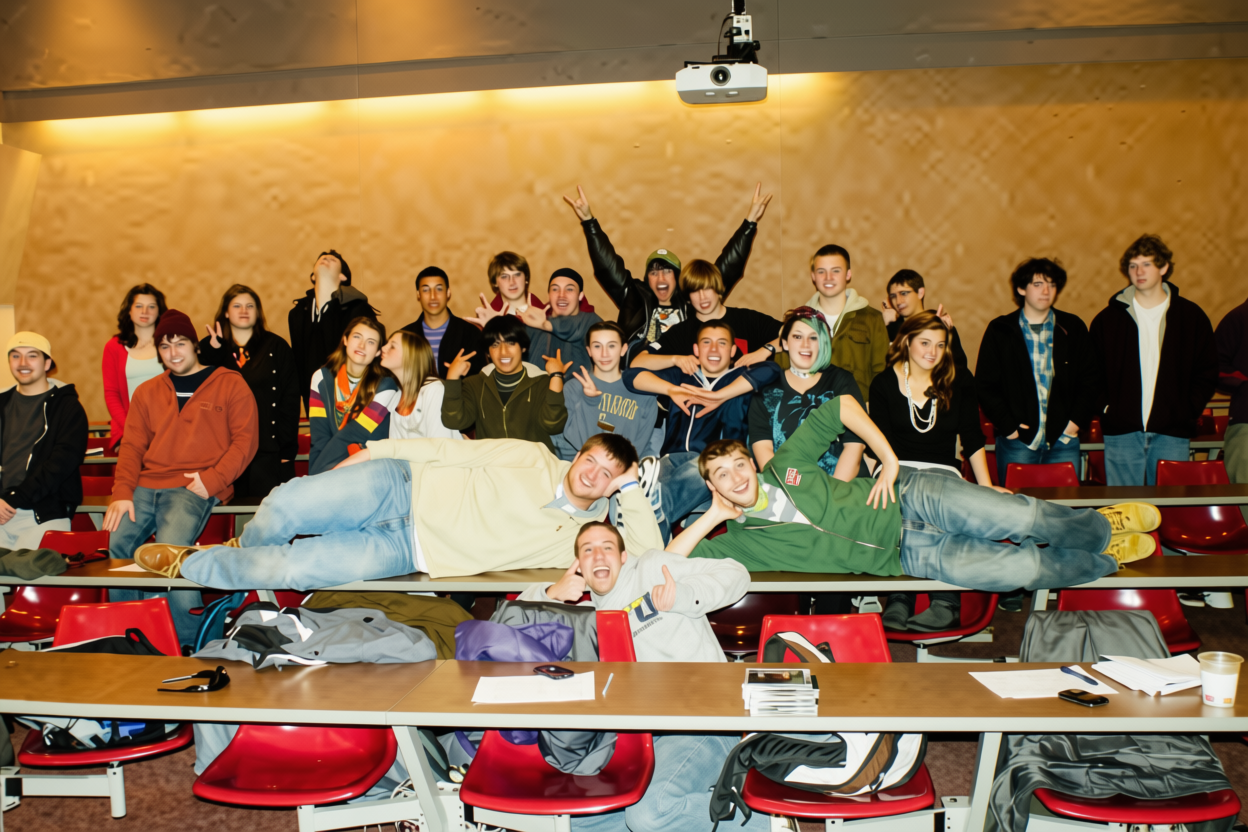
For Kiely, that became one of WQRI’s most lasting lessons.
The station forced students to learn how to manage one another, divide responsibilities and work through problems together. Executive board members had people depending on them. Deadlines mattered. If something went wrong, someone had to figure out how to fix it.
Those experiences followed Kiely into her professional life.
When she was hired at WCVB, she remembers one of the things that stood out was that she already had management experience despite being only 22 and entering her first professional media job.
“Yes, I hadn’t had my first real job in media yet, but I had worked in a media capacity at a radio station, and I held responsibility,” Kiely said.
Asked what WQRI taught her that a classroom could not, Kiely immediately returned to the people.
“Not everyone thinks the way that you do. You’re not a one-man band working solo. … Life is a group project.”
WQRI put that lesson into practice, she said. As an executive board member, Kiely was responsible not just for her own work but for helping manage others and ensuring the organization followed through.
By the time she entered professional internships, she felt more prepared for the rhythms and responsibilities of a workplace.
“I was more prepared to work in an office environment in a news station,” Kiely said. “I think I was definitely prepared because of WQRI.”
‘Ahead of Its Time’
Kiely saw another glimpse of her future during the 2012 presidential election.
As a journalism student, she participated in Hawk the Vote, Roger Williams’ student-produced election-night coverage. WQRI streamed the broadcast while Kiely was dispatched to Barrington to cover June Speakman’s campaign.
Armed with an iPhone, earbuds and her preparation, Kiely waited for the studio to toss the coverage to her.
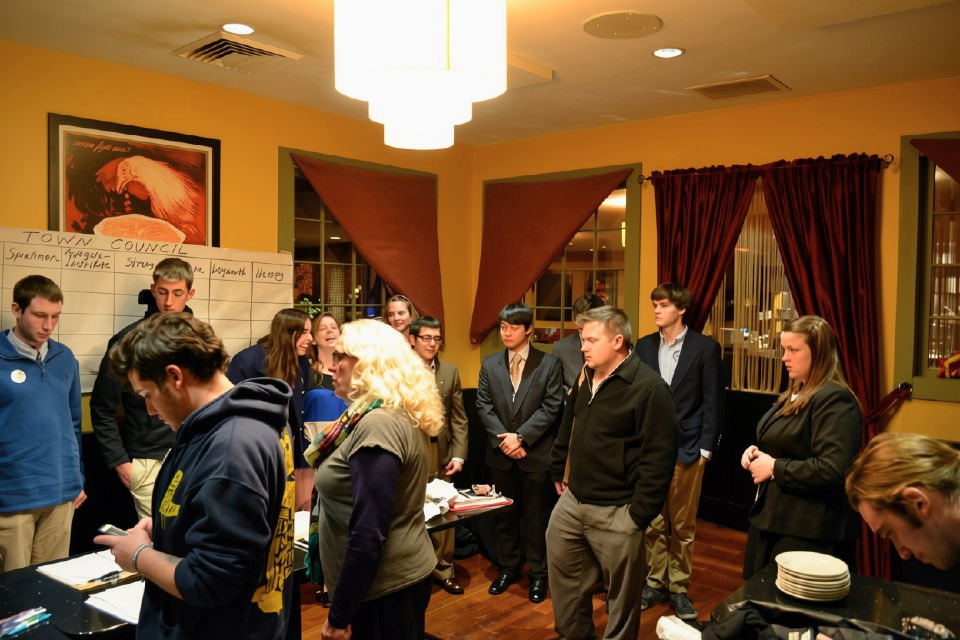
Then she went live.
“They tossed to me, and I’m like, just go,” Kiely said.
Speakman won her race, and Kiely quickly interviewed her. When the segment ended, Kiely remembers feeling almost as if she had blacked out from the adrenaline.
Friends and family told her afterward that she had done well.
“I was like, ‘What did I just say? I have no idea,’” Kiely said. “It was just so quick.”
The experience did not convince her to pursue an on-air career. She already knew she preferred working behind the scenes.
But looking at Hawk the Vote from her current vantage point, Kiely sees something else.
“I think that it was ahead of its time,” she said.
Roger Williams was already pushing students to think digitally and work across forms of media at a time when many traditional broadcast organizations were still figuring out how those platforms fit together.
“I know so many things just from doing things like Hawk the Vote and my classes that I did take at Roger Williams because I think that the curriculum there was based so much on digital and that digital focus."
That became increasingly relevant to her career.
She interned with WCVB’s Chronicle in summer 2012 and remembers watching its producers work and thinking, “This job feels like it could be end game.”
After graduating in 2013 and applying to hundreds of jobs, she received a call that October from her former Chronicle supervisor about a part-time opening.
She has been there ever since.
Kiely became full time in 2015, worked in production and management roles, produced segments and eventually became a full-time producer. In November 2025, she became Chronicle’s first multiplatform content manager, overseeing its digital assets and helping shape strategy across web, streaming and social platforms.
In some ways, it brought her back to lessons she had already encountered at Roger Williams.
When building a digital story, Kiely thinks about how video, written reporting and other media elements fit together to create an experience for the audience.
“I can still hear professors in my ears when I’m crafting stories."
She thinks about what another media element could add, what information the audience still needs and whether everything feels cohesive.
“I learned that at Roger Williams,” Kiely said.
The Authenticity of the Students
The technology surrounding both television and radio has changed dramatically since Kiely was a student.
During her WQRI years, students were still receiving stacks of CDs while Spotify was only beginning to enter their listening habits. Facebook pages were a primary way to promote shows and solicit song requests. Students and family members could stream WQRI online from far beyond Bristol — Kiely even had friends listen from Australia after she studied abroad there.
Today, the competition for an audience is exponentially larger.
But Kiely’s work at Chronicle has reinforced her belief that adapting to new platforms does not require abandoning what gave something its identity in the first place.
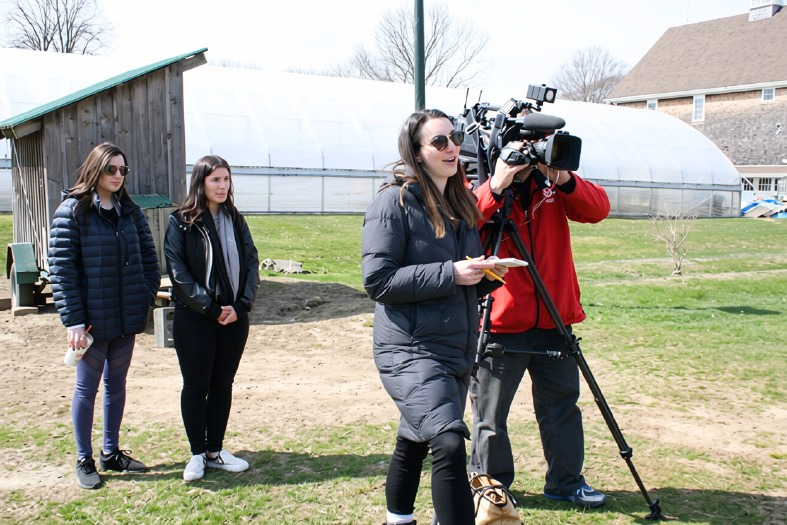
For Chronicle, that foundation is storytelling.
“At the end of the day, Chronicle is known for its storytelling and telling a great story,” Kiely said.
Her job is to adapt those stories for audiences encountering them in different places. Sometimes that means rearranging a television piece for the web or creating something specifically for digital platforms.
The story remains. The presentation changes.
Kiely sees a similar opportunity for WQRI.
Algorithms and streaming platforms can provide nearly unlimited music. What they cannot reproduce is the experience of hearing someone you know behind the microphone.
“You’re listening to your friend on the radio. That is still cool.”
For Kiely, that personal element remains college radio’s advantage.
And after everything that has changed since she sat in that freezing lime-green booth, there is one thing she believes WQRI cannot afford to lose.
“The authenticity of the students," Kiely said.
Student-run radio should remain a place where students create their own shows, develop their own ideas and use their own voices, Kiely said.
“The students just need to be true to themselves,” she said.
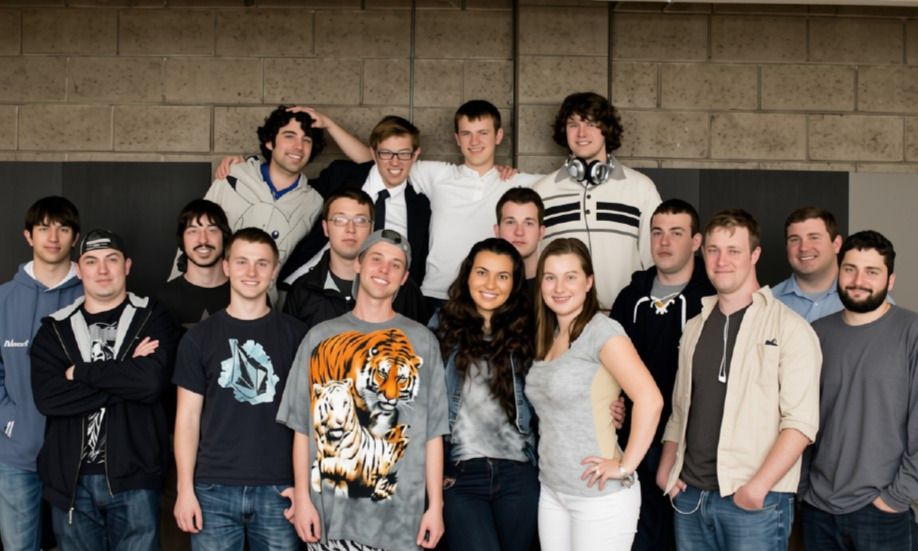
The equipment will change. The platforms will change. The next generation of WQRI students will inherit a station very different from the one Kiely helped rebuild.
But they will still inherit something that depends on people bringing different abilities, personalities and ideas together.
Kiely learned that lesson while reconstructing a music library, promoting concerts, producing radio shows and occasionally wondering why “Who Let the Dogs Out” was playing again.
More than a decade later, the lesson has not changed.
Life is a group project.
Kathleen Kiely’s Five Songs
Baha Men – “Who Let the Dogs Out”
The song became an accidental WQRI staple after it was categorized as world music in the station’s automation system and repeatedly found its way onto the air.- Avicii – “Levels”
Avicii was part of the soundtrack Kiely remembers from WQRI, from listeners requesting his music on The Midweek Hump to the EDM-heavy sound of popular student shows such as The Friday Night Pregame. - David Guetta feat. Kid Cudi – “Memories”
- Nicki Minaj – “Starships”
- Kesha – “We R Who We R”