
Gordon Kent ’91: ‘Respected Far Beyond Its Wattage’
From a midnight DJ shift to general manager, Gordon Kent helped turn WQRI’s 100 watts into a hands-on education in broadcasting, leadership, and learning by doing.
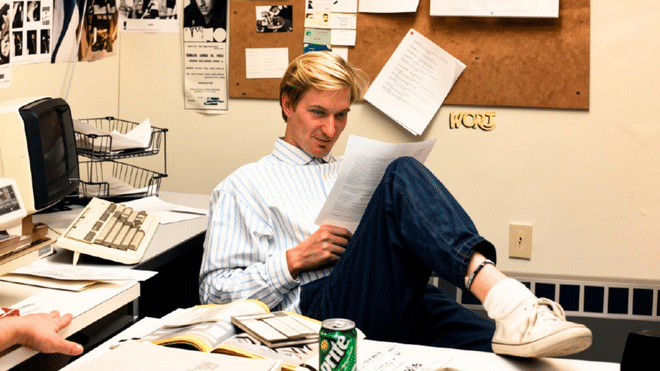
On the morning of March 9, 1989, Gordon Kent ’91 was behind the microphone when WQRI entered a new era.
After years of delays, Roger Williams College’s student-run radio station was broadcasting at 100 watts for the first time. Kent was part of the 6 to 9 a.m. crew alongside Ron Olf, Dawn Glenney, and Sotiri Barbounis, delivering a morning show that mixed news and sports with on-air banter, games, and comedy. From his home in Warwick, station advisor Tony Ferreira called to report that 88.3 FM was coming in “loud and clear.”
Nearly four decades later, Kent doesn’t pretend to remember every detail of that particular morning. What he remembers is what it represented.
“For a while, I didn’t think this was going to happen. I didn’t think the radio station was going to be anything,” Kent said. “And then once it was, I mean, that was something.”
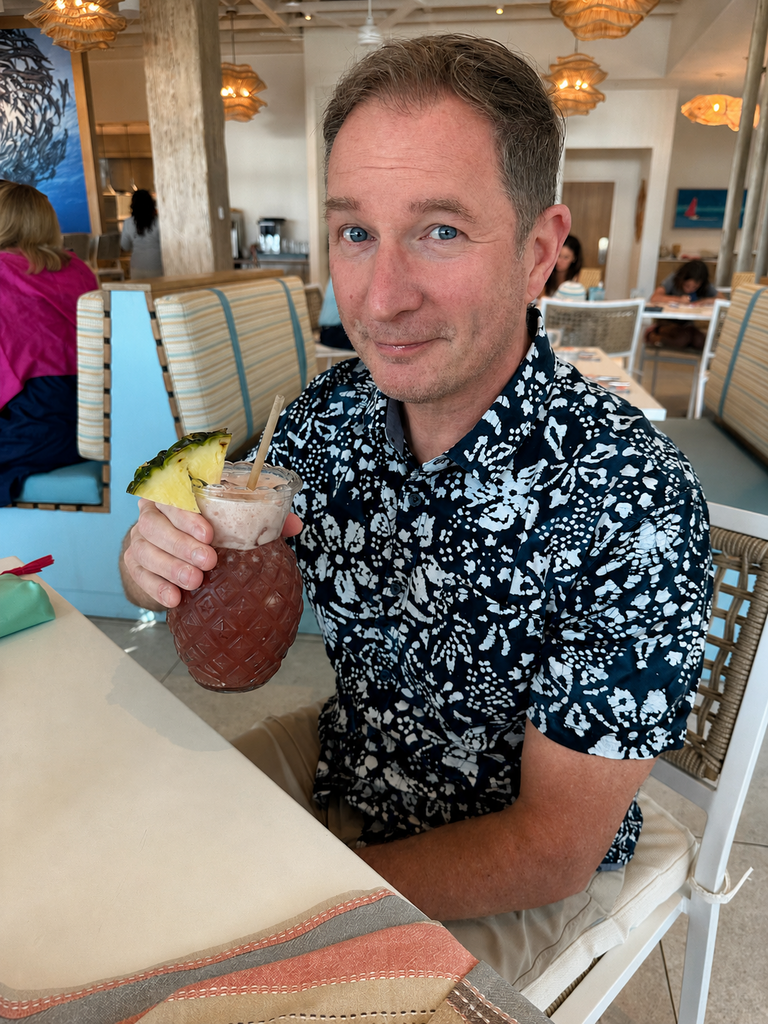
Kent had arrived at Roger Williams two years earlier as a first-year student from Massachusetts’s North Shore who was into punk, skateboarding, cycling, and music. A college radio station was one of the things he specifically wanted in a school.
And initially, his ambitions for it were fairly straightforward.
“I wanted to do nothing but get on the airwaves and play Killdozer and the Cramps and Bauhaus, bring my record collection, and force everyone who tuned in to listen to it,” he said.
His first show, a midnight-to-2 a.m. slot, quickly humbled him. Kent remembers getting the microphone levels wrong and trying a little too hard to sound like a DJ. He invited a friend onto his second show and discovered another lesson: funny worked better than morose.
What began as a fascination with music and the technical side of radio soon became something larger.
Working alongside Olf and Ted Morgan, who had spent years pushing the station toward its expanded FM operation, Kent began to see WQRI not simply as a place for students to play records, but as a place where they could learn how broadcasting actually worked.
“I realized pretty quickly that we could do more than just a college radio show,” Kent said. “We could actually be broadcasters.”
Learning to Run a Radio Station
Kent moved rapidly through WQRI. He worked in production, became music director and program director, and eventually served as general manager during his senior year.
The station was evolving just as quickly.
The move to 100 watts expanded WQRI’s reach beyond campus. Its new operation included an AP news service, computerized music and underwriting schedules, production and news spaces, and technology more commonly found in professional stations. Students reached out to broadcasting companies and record labels, sometimes persuading them to provide equipment, software, music, and other resources.
For Kent, what officially remained a student activity increasingly felt like something else: a working radio station and an educational laboratory.
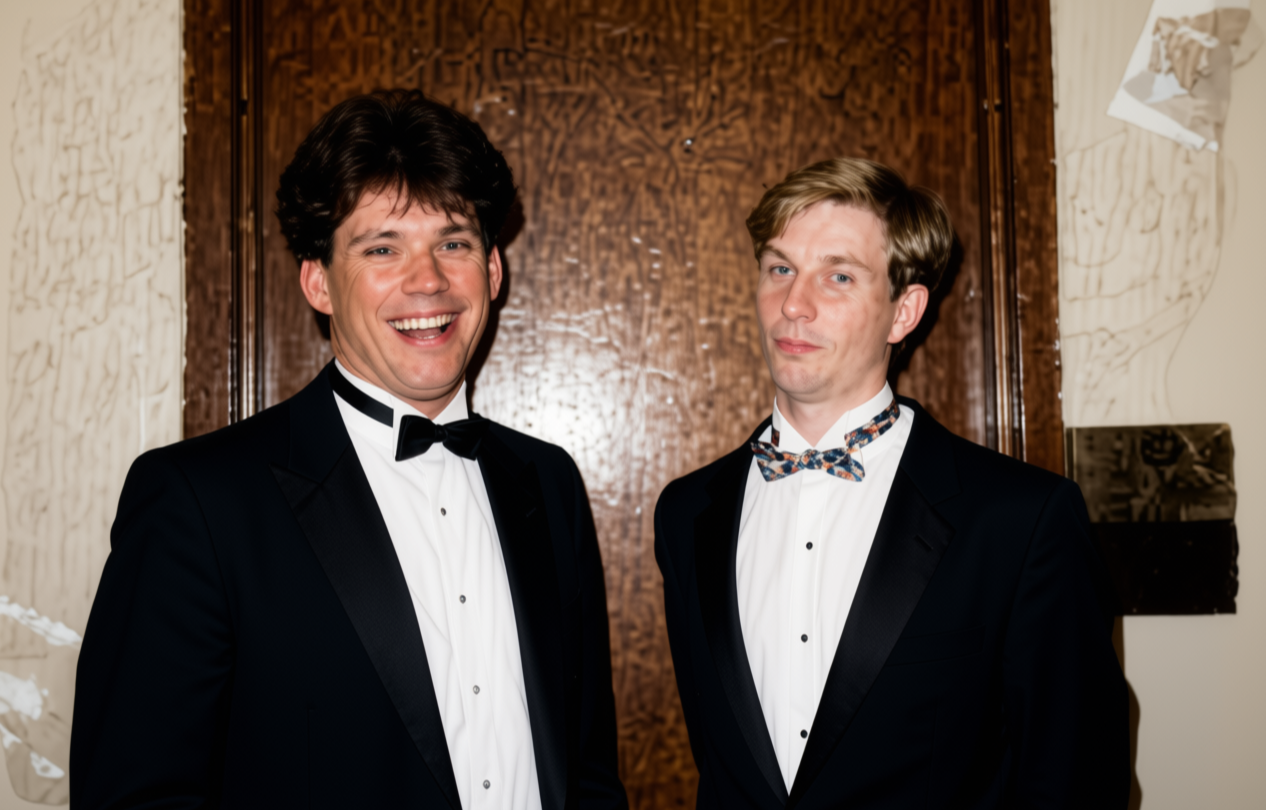
WQRI members conducted live remote broadcasts from Bristol businesses, produced news and specialty programming, worked with community DJs, created promotions, and interviewed visiting musicians and other guests. Students interested in journalism rewrote AP stories for broadcast. Others learned production, programming, promotions, marketing, or the technical side of keeping a station on the air.
And sometimes, the education began with agreeing to something before knowing exactly how they were going to accomplish it.
One memorable example came when WQRI arranged to interview the metal band Anthrax during a Providence tour stop. Once the interview was agreed upon, the students discovered that they were expected to provide transportation and dinner for the band.
There was one problem: WQRI did not have the money for a limousine.
So they found someone whose father owned a limo company and persuaded him to provide one. Then they found a connection to a restaurant for dinner.
“We were just like, ‘We’ve got to figure this out,’” Kent said.
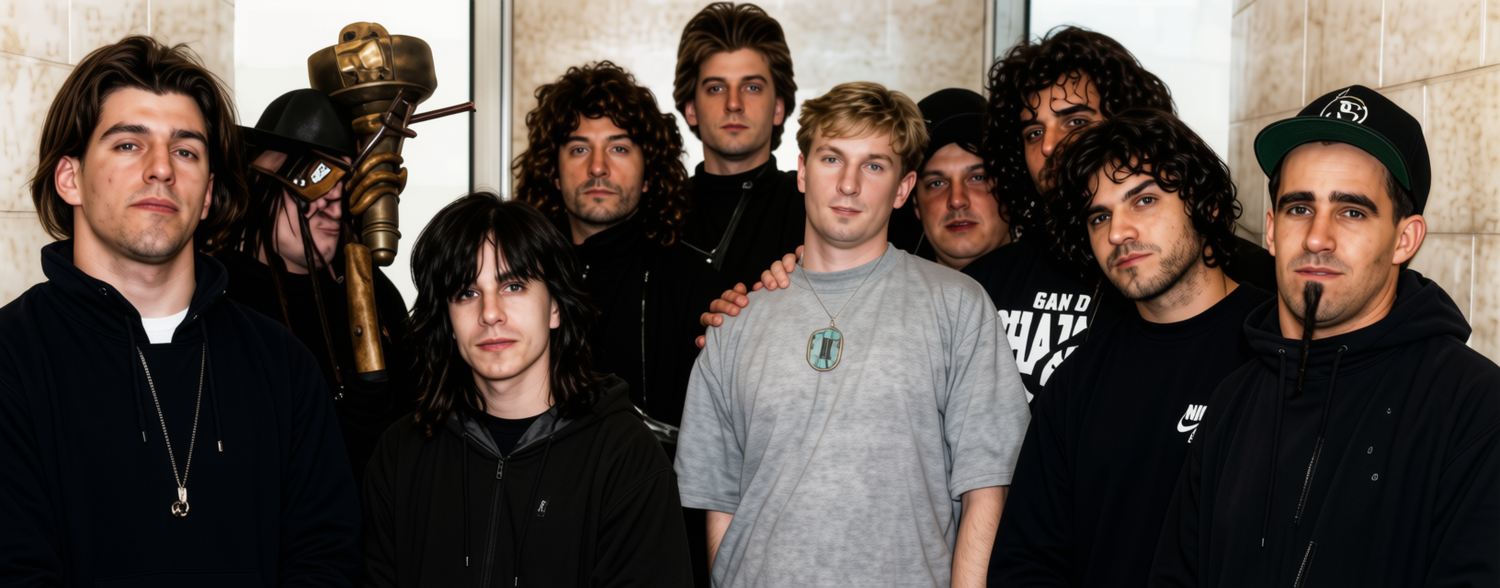
That willingness to figure things out became part of the education. Students learned broadcasting, but they also learned production, journalism, marketing, promotions, budgeting, event planning, relationship building, and how to solve problems when there was no obvious answer.
“If you can pull off a college radio live remote,” Kent said, “you can do most anything.”
A Different Idea of College Radio
There was an irony in Kent’s evolution at WQRI.
He had joined because he wanted the freedom to bring his own records into the studio and play the music he loved. By his senior year, he was helping lead a station that deliberately told DJs they could not simply play whatever they wanted.
WQRI had adopted a structured format designed to build a consistent audience and teach DJs how to work within the expectations of a professional broadcast operation.
Kent did not even particularly like much of the hard rock and metal the station programmed. But he came to understand that running a radio station meant thinking beyond his own musical taste.
Attracting an audience had a purpose.
“I was very much aware that WQRI was a marketing opportunity that attracted listeners. That listenership gave us the ability to bring in corporate support and underwriting dollars, which allowed us to do all sorts of other things for the benefit of the students, the community and, in many cases, the institution as well.”
Listeners helped create relationships. Relationships helped attract resources. And those resources could be reinvested in equipment, programming, promotions, and educational opportunities for the people running the station.
That philosophy put WQRI at odds with the free-form approach common at many college stations.
At the 1990 Intercollegiate Broadcasting System New England College Radio Conference, Kent participated in a panel on college radio programming. The discussion became a heated debate over WQRI’s philosophy.
His reaction afterward, recorded in the student newspaper, was succinct: “I thought I was going to be attacked.”
“We were very unpopular among the traditional college radio set,” Kent recalled. “What I thought we were doing was what college radio was about, which was: You do something different.”
To Kent, conforming to what a college station was supposed to sound like would have been its own form of conformity.
“I don’t think anything was as punk rock as taking what was classic college radio at the time and making it a learning experience that people could use to get a job, or at least learn more about broadcast journalism and the technology,” he said.
Professionalism, he stresses, did not mean trying to turn WQRI into a commercial station. It meant treating the opportunity seriously.
“There was a level of discipline and, I think, self-respect,” Kent said.
A DJ learned how to speak over the opening of a song and finish before the vocals began. Students learned how to write news for broadcast, operate equipment, communicate clearly, prepare for a show, and work quickly under pressure.
Even seemingly small choices of language mattered.
“Be specific in your language. Be useful in your language. You were learning things about broadcast journalism and broadcasting in general that you could apply to other parts of your life. Your writing got better. Your public communication got better.”
Those standards applied beyond the microphone.
Earlier in Kent’s experience, station leaders routinely had to cover shifts when DJs failed to appear. Eventually, people were competing for airtime.
For Kent, that transformation offered another kind of education.
“The ultimate skill I learned was how to lead a group of people toward a singular goal, share that goal, and ensure that a lot of people get value out of it,” he said. “That’s something I’ve carried through my life.”
An Education That Lasted
Kent graduated from Roger Williams College in 1991 with a B.A. in Career Writing and a B.F.A. in Creative Writing. He ultimately built his career outside radio, but not outside the lessons he learned from it.
A product and technology leader with more than two decades of experience in education technology, he most recently held senior leadership roles at Cengage across product, operations, and technology strategy. Today, he serves as Director of Strategic Advancement & Technology at Windham Woods School in Windham, N.H.
His career has centered on many of the same challenges he first encountered at WQRI: bringing people together, introducing new ideas and technologies, building support around a common vision, working through problems, and turning plans into something people can execute.
Kent has also spent much of his career in education, a field that resonates with how he now understands his experience at Roger Williams.
“I have a personal belief that education can demonstrably improve and change your life. For me, the education I got through WQRI, coupled with the education I got at Roger Williams, very much changed the trajectory of my career.”
That education came from having responsibility before necessarily knowing all the answers. As general manager, Kent dealt with budgets, personnel, programming, technology, relationships with businesses and record companies, and the daily demands of keeping a radio station operating.
It was classroom learning put into practice, with consequences that could be heard over the air.
“Being able to put what you learn in the classroom into practice there was hugely valuable,” he said.
Looking back, Kent credits Morgan and Olf with doing the difficult work that made WQRI’s 100-watt era possible. His generation inherited that foundation and decided what to build upon it.
Their answer was a station that functioned as a laboratory: part broadcaster, part business, part classroom.
“It was the passion project of Ron and Ted to build a radio station,” Kent said. “I think it was the passion project of the people I was involved with to build a college radio station that was acknowledged and respected far beyond its wattage.”
More than three decades later, that is what Kent remembers most about what his generation added to WQRI’s continuing story: not simply a stronger signal, a particular format, or even the shows they put on the air, but an expectation of what students could learn by running it themselves.
“It really showed the students that things were possible,” Kent said. “You could work hard and actually see the result. You could write something and put it on the air.”
For Kent, it was the period when WQRI became more than a place to play records.
“It was definitely the time,” he said, “where we went pro.”
Gordon Kent’s Five Songs
Depeche Mode – “Enjoy the Silence”
The extended remix served as the bed for a new WQRI show.AC/DC – “Moneytalks”
WQRI built a promotion around the song, giving away fake AC/DC money transported in a metal briefcase with “security” guarding it.Michael Penn – “No Myth”
A song Kent remembers Tim “Mr. Breakfast” McCarney singing far too frequently after a few drinks.XTC – “Mayor of Simpleton”
For reasons Kent still attributes to a software glitch, WQRI’s computer seemed determined to select it among the first few songs of his morning show.The Pursuit of Happiness – “I’m an Adult Now”
It spent time in heavy rotation, Kent jokes, “because we weren’t.”