
Connor Linskey ’18: ‘Be Yourself on Air’
Four years behind the microphone at WQRI gave Connor Linskey the freedom to experiment, an outlet from academics, and experiences that helped lead him toward a career in journalism.
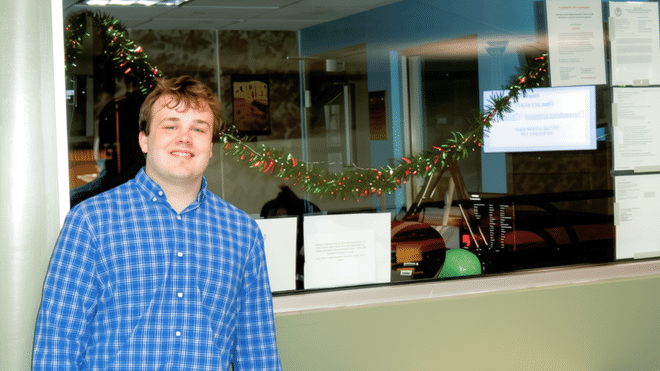
When Connor Linskey ’18 thinks about WQRI, he can still picture exactly where he sat: behind the board in the glass-fronted booth overlooking the Campus Recreation Center, with the computer to his left and students passing on the other side of the window.
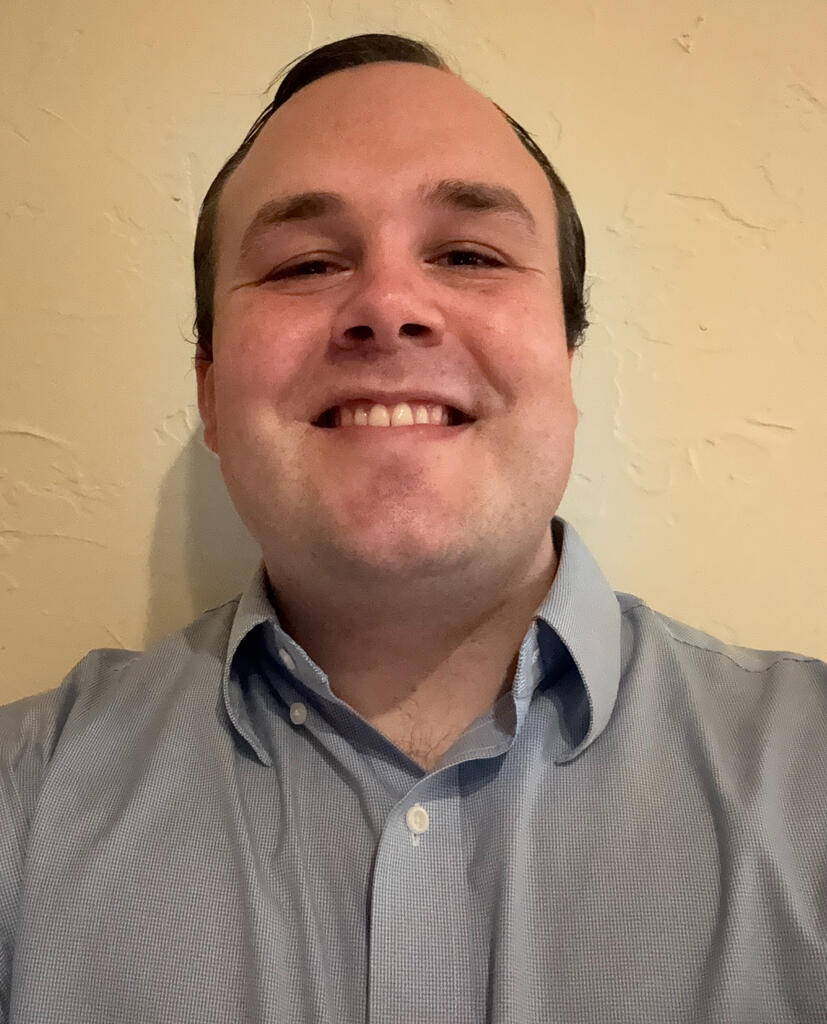
“I just remember where I sat in the booth — my vantage point,” Linskey said. “The first thing I think of is me sitting in the chair behind the board, with the computer to my left, just being on my show. I spent a lot of time there.”
For four years, from 2014 to 2018, WQRI became one of Linskey’s homes at Roger Williams University. It was where a lifelong sports fan first tried broadcasting, where he interviewed RWU student-athletes, and where one radio show could revolve around sports while another could spend an entire episode playing national anthems.
By the time he graduated, he was teaching new DJs how to operate the equipment he had once learned himself.
Along the way, WQRI also became one of the places where he began finding his path toward journalism.
The Freedom to Try Something
Linskey arrived at RWU already interested in broadcasting, particularly because of his love of sports and baseball. WQRI gave him a place to try it through his first show, Sheriff Connor’s Sports Roundup, which brought Roger Williams student-athletes into the booth to talk about their teams and experiences competing for the Hawks.
“I don’t think anyone was doing a show like that at the time,” Linskey said. “So I just decided to come up with it.”
That ability to have an idea and put it on the air became central to his WQRI experience.
“I felt like I had total freedom. I got to do pretty much anything that I wanted, within reason, on those shows.”
Later came Tuesday Two, which Linskey co-hosted with his friend Derek. The premise was built into the name — two hosts, Tuesdays at 2 p.m. — but the content could change completely from week to week.
“Every show we had a different theme, and we’d play a different type of music,” Linskey said. “One show, we just played national anthems the whole time.”
The shows offered Linskey more than a chance to experiment on air. Amid classes, assignments, and everything else that came with college life, WQRI was also somewhere he could step away from academics for a while.
“It was relaxing,” Linskey said. “It was an outlet from school.”
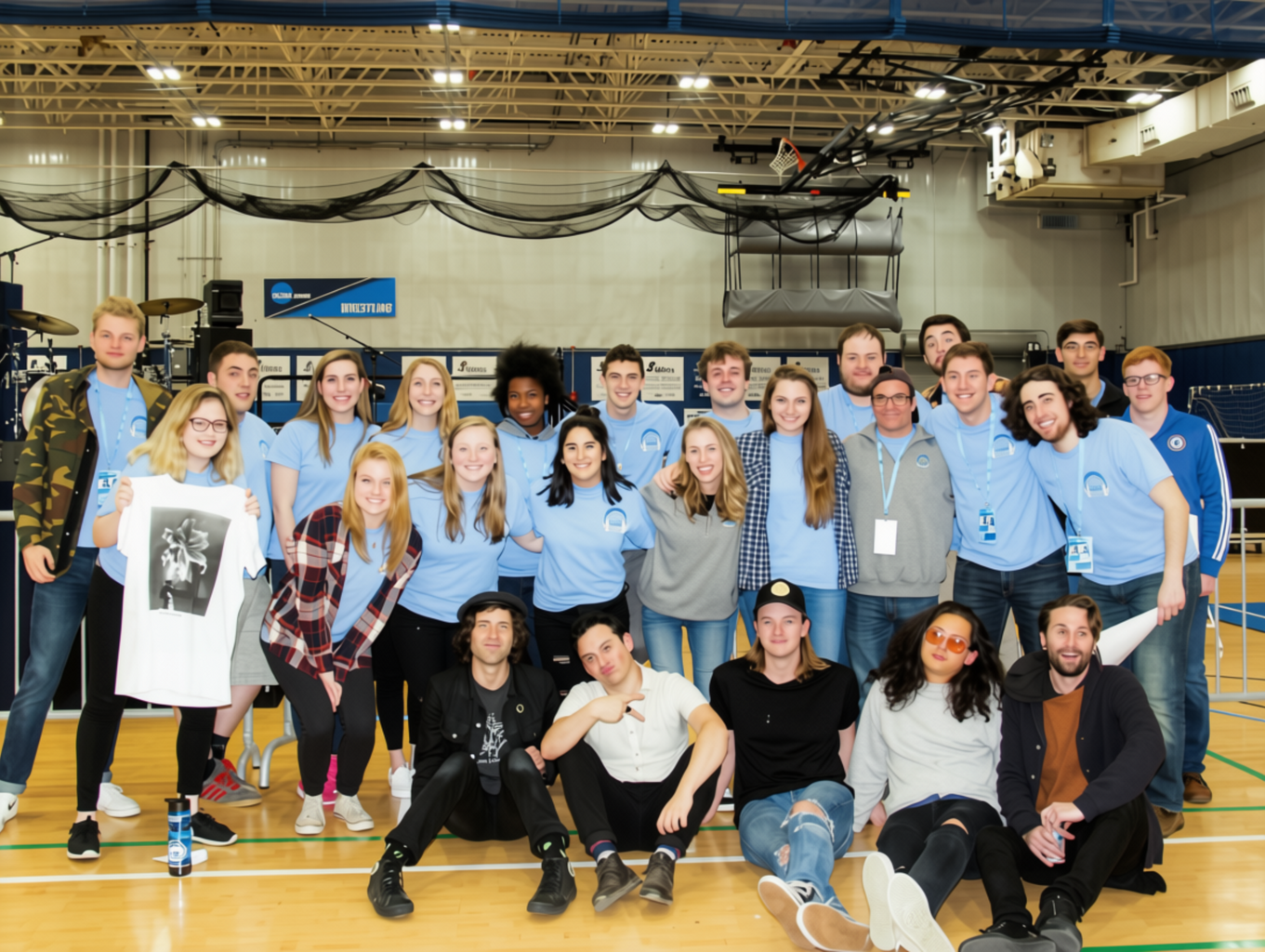
That outlet was also a community. WQRI members carried the station beyond the booth through its mobile unit, live music, and events across campus. By his senior year, Linskey was serving as training coordinator, teaching new DJs how to set up the mobile equipment, operate the board and phone system, and handle the routines necessary to get a show on the air.
A 2017 Hawks’ Herald story found Linskey helping WQRI put on a Coffee House concert and discussing the station’s efforts to connect with the campus and performing artists.
“We want to raise awareness about the station and make relations with artists so they get some coverage,” he said at the time.
Looking back, however, Linskey remembers more than broadcasts, equipment, and events. The friendships he developed through WQRI became as important to his experience as being behind the microphone.
“WQRI was a big part of my college experience. Not just the act of being on the radio — that was fun — but the relationships that I made with other members of the station were a big part of my college experience.”
Finding His Voice
Linskey did not arrive at Roger Williams knowing he would become a journalist. He initially studied English and secondary education, then moved through general communications and public relations while trying to determine where his interests might lead. His experience at WQRI provided an early clue.
“I remember talking to my advisor and asking her, ‘What major aligns with radio?’” Linskey said. “And she’s like, ‘Journalism.’”
The answer became clearer as his RWU experience unfolded. During his junior year, Linskey took Digital Journalism I and participated in the Hawk the Vote lab’s coverage of the 2016 presidential election. He then began writing and photographing for The Hawks’ Herald, where seeing his byline in print helped cement his interest in newspapers and gave him published work to show prospective employers.
He ultimately graduated with a bachelor’s degree in journalism and a minor in Spanish. WQRI was one part of that progression, but an important one. Long before Linskey was covering communities professionally, the station had put him behind a microphone, given him people to interview, and helped him become comfortable speaking to an audience.
“I think it gave me a lot of confidence in myself — confidence in my voice and in talking with people. All of it helped me in my career.”
The experience also introduced him to the need to adjust when things do not unfold according to plan. Linskey remembers being relatively relaxed about preparing some of his shows, occasionally entering the booth, choosing the music he wanted to play, and developing the rest as he went. Professional journalism would require a different kind of preparation, but the ability to react remained familiar.
“A lot of the events I cover and the work that I do are unpredictable,” he said. “You have to adjust on the fly.”
Linskey went on to build a career in local journalism in eastern Connecticut, most recently working as a reporter for the Norwich Bulletin. His work has included reporting, photography, and video, continuing the kind of versatility he first experienced at RWU through WQRI and The Hawks’ Herald.
At an earlier reporting job with the Chronicle in North Windham, Connecticut, his career even brought him back to the medium where he started. Each day, Linskey wrote and recorded a roughly 52-second segment highlighting the newspaper’s headlines for I-98.3 FM.
Years after Sheriff Connor’s Sports Roundup, his voice was back on the radio.
A Place for Students, By Students
By the time Linskey entered RWU in 2014, students could already stream the music they wanted whenever they wanted it. Yet they continued to enter the WQRI booth, create their own programs, and listen to what other students were doing on the air. For Linskey, the reason college radio remained relevant was less about access to music than the people behind the microphone.
“I think it’s because it’s their peers,” Linskey said. “It’s people that you know, and that adds a level of interest that isn’t really there when you’re listening to a radio show with people you don’t interact with on a daily basis.”
That connection also helps explain why Linskey believes the station’s physical presence matters. WQRI’s booth places student radio in the middle of the Recreation Center, where students passing by can see the board, microphones, and computers through the glass — and, more importantly, see other students using them. The same visibility Linskey remembers from his own vantage point behind the board makes the station part of everyday campus life.
For Linskey, that openness represents one of WQRI’s most important qualities. Asked what he hopes the station never loses, he pointed first to its accessibility.
“The fact that anyone can join — that’s something that I hope never goes away. And freedom of expression. I hope it continues to allow students to have a show about really anything, within reason.”
That freedom took Linskey from interviewing athletes as a first-year student to training new DJs before he graduated. Eight years later, he still owns several WQRI shirts and still wears them, even as he wonders how much the equipment has changed and where the station will go next.
If Linskey returned to RWU today and once again found himself training a student behind the board, his first lesson would have little to do with the equipment.
“Be confident in who you are. Be yourself on air,” he said. “Be self-aware that people are out there listening to you.”
It is advice that captures much of what WQRI gave Linskey during his own four years behind the microphone: the freedom to try something, the opportunity to speak to an audience, and the confidence to trust his own voice.
Connor Linskey’s Five Songs
“Illuminate” — Ab-Soul featuring Kendrick Lamar
Linskey first heard the song during his first semester at RWU in fall 2014. Every listen brings him back to meeting new people, making friends, and adjusting to college life.“Rather Be” — Clean Bandit featuring Jess Glynne
Another soundtrack to fall 2014, the song reminds Linskey of Maple 6, his first-year residence hall, and the excitement of arriving at RWU and getting involved on campus.“FourFiveSeconds” — Rihanna, Kanye West, and Paul McCartney
Released in January 2015, the song takes Linskey back to winter at Roger Williams — specifically standing in the hallway before his CORE 104 class.“Closer” — The Chainsmokers featuring Halsey
For Linskey, few songs capture 2016 quite as vividly. It recalls the RWU student body at the time and the view across Mount Hope Bay from a class in what was then Global Heritage Hall.“Castle on the Hill” — Ed Sheeran
The song brings him to spring 2017, when increasingly challenging coursework made the second semester of his junior year particularly stressful.