
17 Students Earn Degrees Through Roger Williams University Extension School Prison Education Program
Rhode Island Department of Corrections ceremonies celebrate academic achievement, workforce readiness, and the transformative impact of higher education.
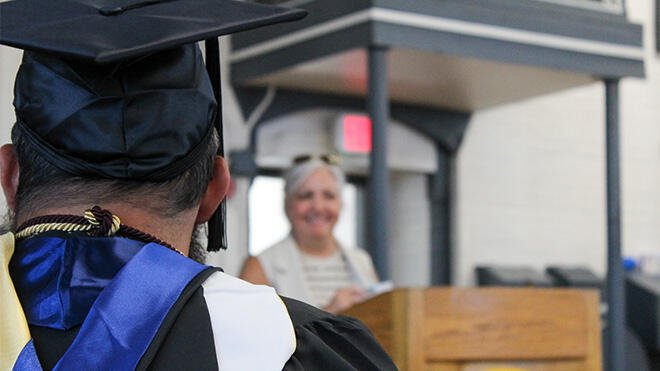
BRISTOL, R.I. – The Rhode Island Department of Corrections (RIDOC) hosted three graduation ceremonies last week for students in the Roger Williams University Extension School (RWU EXT) Prison Education Program, recognizing graduates who completed their academic requirements while incarcerated.
Seventeen students at three correctional facilities earned degrees. The ceremonies underscored higher education’s ability to foster personal growth, career readiness, and lasting achievement.
The first ceremony was held on Tuesday, June 2, at the John J. Moran Security Facility Medium. Five associate degrees and five bachelor’s degrees were awarded. The second ceremony took place at the Maximum Security Facility on Wednesday, June 4, where three associate degrees and one bachelor’s degree were awarded. The final ceremony was held on Thursday, June 5, at the Gloria McDonald Women’s Facility, where three women earned associate degrees.
In addition, 13 students received certificates of completion through the Reentry Campus Program (RCP). Roger Williams University also inducted several graduates into the Alpha Chi College Honor Society and the Alpha Sigma Lambda Honor Society.
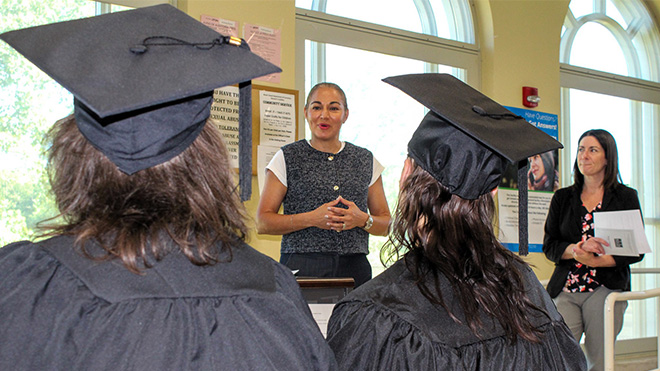
RWU EXT’s Prison Education Program provides incarcerated learners with access to college-level coursework and degree pathways, reflecting the university’s commitment to expanding educational access and creating opportunities for learners from all backgrounds.
Through rigorous coursework and academic support, students develop critical-thinking, communication, and workforce skills that can help them succeed after release.
Carolyn Romano, Interdepartmental Project Manager with RIDOC’s Education Unit, reflected on the significance of earning a degree while incarcerated and the broader impact on communities.
“Education in prison benefits the student, their families, and communities,” said Romano. “These programs provide incarcerated individuals with knowledge, skill, and self-confidence, all of which make them better prepared to secure employment, make positive life choices, and successfully reintegrate into society upon release. This self-improvement can also strengthen family relationships and provide greater economic stability for loved ones. Our communities also benefit through reduced recidivism, increased public safety, and a more skilled workforce.”
Roger Williams University’s Prison Education Program serves incarcerated students throughout Rhode Island, helping learners achieve academic success while preparing for meaningful careers, civic engagement, and lifelong learning.